Walk through any dugout at the end of a long season and the evidence is easy to spot. Zippers still glide. Straps hold. The failures show up at the seams, the bottom corners, and the handle attachments. That pattern is not random. Those are the points where load concentrates and where low-grade fabric gives up first. Selecting a baseball bag on price alone often means buying a product that looks fine in the store but starts shedding threads after a few weeks of daily team use. Material durability is not a cosmetic upgrade. It decides whether the bag survives a season of bus rides, rain, concrete floors, and gear piled on top of gear. A bag that fails early does more than cost money. It leaves a player carrying loose equipment in a duffel or a plastic bin by playoff time.
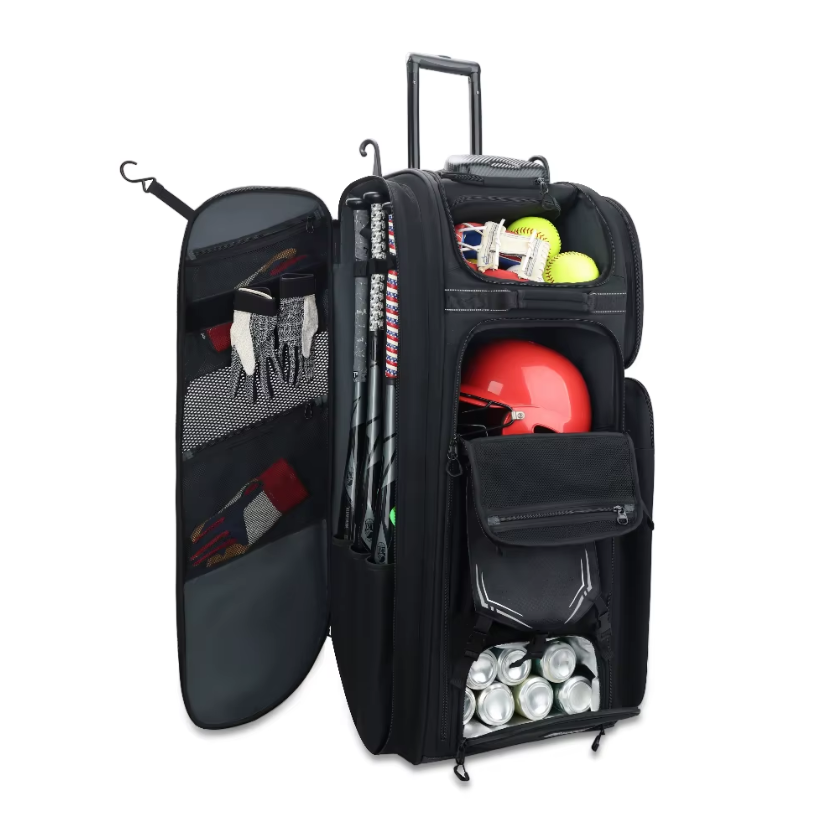
Durability affects three things that matter every day: how the bag handles weight, how it reacts to moisture, and how well it keeps its shape. A lightweight fabric with a loose weave stretches under a full load of bats, helmets, and cleats. Once it stretches, the seams take more stress, and the zipper line starts to wave. Moisture is the second issue. A bag that sits on wet turf or a damp locker room floor absorbs water through the bottom and the seams. Cheap fabric holds that moisture, which weakens the weave and can cause mildew. Shape retention is the third. A durable baseball bag keeps a stable base, so it stands upright when loaded and does not collapse into a puddle of nylon. Those three factors add up to fewer mid-season replacements and less gear damage.
Material durability comes down to a few measurable construction choices. Fabric denier is the weight of the yarn. A 600D polyester is common for budget bags. A 900D or 1000D fabric is heavier and more abrasion resistant. Coating matters just as much. A polyurethane or PVC coating on the back of the fabric blocks water and adds tear resistance. Stitch density is the quiet hero. A tight stitch line with reinforced bar tacks at stress points distributes load better than a loose seam with long stitches. Three practical checks help separate a durable bag from a disposable one:
Look at the bottom panel. A reinforced layer with a bound edge will outlast a single-layer bottom by a wide margin.
Check the seam at the handle. Bar tack stitching and a box-X pattern are signs of load testing.
Feel the fabric inside the main compartment. A coated back feels slightly slick and does not fray easily when rubbed.
These details are not glamorous. They are the difference between a bag that lasts and a bag that looks good until the first heavy road trip.
A high school baseball program in the Midwest ran into this exact problem two springs ago. The team bought a batch of low-cost equipment bags for the junior varsity squad. By the sixth week, three bags had torn at the handle attachment, and two had bottom seams separating. The varsity squad used bags with a 900D coated polyester shell and reinforced stitching at the same stress points. Those bags finished the spring season, went through summer workouts, and were still in service the following spring. The varsity bags weighed about 150 grams more and cost more per unit. The program counted the tradeoff as reasonable because replacements and gear loss dropped. This was not a controlled lab study. It was a real program watching bags get used by teenagers who are not gentle with equipment. The pattern matched what the ASTM D5034 grab tensile test measures: how much pull a seam can take before it starts to fail.
Material durability can be compared with standard tests. ASTM D5034 measures grab tensile strength, which reflects how a fabric or seam resists pulling. ASTM D4157, the Wyzenbeek test, measures abrasion cycles before visible wear. The table below uses representative values from material supplier data sheets for common baseball bag constructions. These are approximate figures, not a certified lab report, but they show the direction clearly.
| Construction | Grab tensile strength (approximate) | Abrasion cycles (approximate) | Water resistance | Common field outcome |
|---|---|---|---|---|
| 600D polyester, single stitch | 180 N | 8,000 | Low | Handle seam failure in 6 to 10 weeks |
| 600D polyester, coated, double stitch | 240 N | 14,000 | Moderate | One season with minor wear |
| 900D coated polyester, bar tack reinforcement | 320 N | 22,000 | High | Multiple seasons under normal team use |
| 1000D nylon with TPU coating | 360 N | 26,000 | High | Strong but heavier and stiffer |
The honest limitation is that heavier fabric adds weight and cost. A durable baseball bag will never be the lightest option on the shelf. It also cannot survive deliberate abuse, like dragging over sharp metal edges or using the bag as a step. Durability extends service life under normal conditions. It does not make a bag indestructible.
A durable material spec means little if the factory does not control how it is cut, stitched, and inspected. Stitch density varies from operator to operator. Coating adhesion changes with heat and pressure. Seam sealing fails when the line runs too fast. KOP runs high-volume bag production with an annual output of more than 6,000,000 pieces, including a large share of wheeled bags, and every unit goes through a standardized testing process before release. Material durability, craft accuracy, and structural stability are checked under a strict quality control system. For a baseball bag, that control shows up in consistent bar tack placement, a bottom panel that stays flat after loading, and seams that do not pucker after a full shift. The result is not a promise that a bag will never wear out. It is a bag that wears out later, and usually at a less critical point.

 EN

 Hot News