A duffel bag usually does not die from a torn shell. The fabric can survive years of abuse while the wheels flatten, the telescoping handle jams, or the carry handle rips away at the stitch line. That pattern is not random. Wheels and handles take concentrated dynamic loads that the main body never sees, and those loads repeat thousands of times over a bag's life. A single weak batch of wheel housings or a handle attachment that was not tested under cyclic load can turn a otherwise durable duffel bag into a return statistic.
The reason standardized testing matters here is that wheel and handle failures are hard to catch by eye. A handle that feels solid in the showroom can develop stress cracks after a few hundred lift cycles. A wheel that rolls smoothly on a smooth floor can seize after repeated impact on curbs and escalator edges. Testing turns those invisible risks into measurable pass or fail criteria before the bag ships.
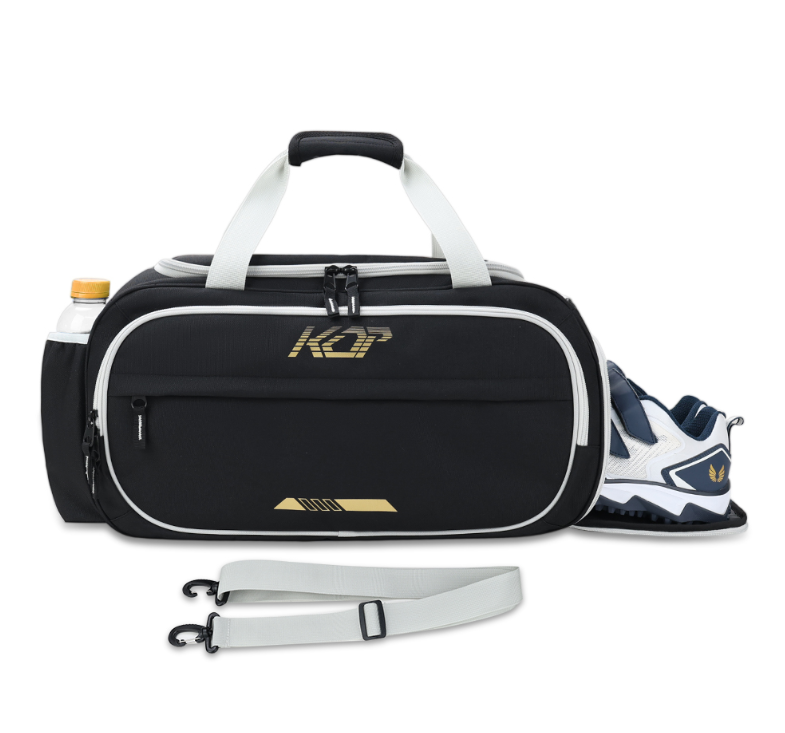
Real travel loads are not gentle. A loaded duffel bag might weigh 20 to 30 kilograms, and every curb drop, stair drag, and baggage carousel transfer sends a shock through the handle and wheel assembly. The testing profile needs to reproduce three load types:
Cyclic lift and carry loads on the handle attachment points.
Rolling fatigue over obstacles and rough surfaces.
Impact loads from drops and baggage handling equipment.
A test that only pulls the handle once at a slow rate misses the fatigue mechanism that causes most failures. The useful test repeats the load at a realistic frequency and checks for play, cracking, or permanent deformation after a defined number of cycles. The table below compares common test targets for wheels and handles against the failure modes they are meant to expose.
| Test Target | Typical Test Method | Load or Cycle Range | Failure Mode Exposed | Limitation |
|---|---|---|---|---|
| Carry handle attachment | Cyclic lift test | 500 to 2,000 cycles at rated load | Stitch pullout, webbing wear | Does not mimic one-off extreme overload |
| Telescoping handle | Extension and retraction cycling | 1,000 to 5,000 cycles | Tube binding, locking mechanism wear | Smooth lab surface hides dirt and grit effects |
| Wheel rolling resistance | Drum or treadmill test | 10 to 50 km equivalent | Bearing wear, tread flattening | Does not replicate stair impact |
| Wheel impact | Drop test on wheel axle | Multiple drops from 0.5 to 1 m | Axle bend, housing crack | Impact angle varies in real use |
| Handle rigidity | Static load deflection | Rated load plus safety factor | Permanent bend, joint separation | Does not capture fatigue from repeated small loads |
The numbers are not universal thresholds. They are starting points that should be adjusted to the bag's intended load and travel environment. A duffel bag designed for weekly gym trips does not need the same wheel impact profile as a bag that rides on airport conveyors every week.
The value of a standardized testing process is consistency. A single pull test on a new handle tells almost nothing. A cycling test that runs the handle through its full range of motion under load reveals whether the locking mechanism wears, whether the tube coating degrades, and whether the mounting bolts loosen over time. The same logic applies to wheels. A rolling test on a smooth drum is a baseline, but a test that includes a raised obstacle every few meters exposes the impact weakness that smooth-drum testing hides.
Incoming material testing should also cover the components, not just the finished bag. Wheel housings, axle materials, and handle tube wall thickness vary by supplier and by production lot. A batch of wheels with a slightly thinner axle wall can pass a visual check and still fail a drop test. Sampling across lots, with the same predefined assessments applied to each batch, is what keeps performance from drifting.
During a production review for a rail operator that issues duffel bags to crew members, a batch of bags developed handle failures within the first few months of use. The handles passed a static pull test at the required load, but they had not been tested after repeated lifting at low temperatures. Crew members stored bags in unheated vestibules, and the webbing became stiff in the cold. When samples were conditioned at minus 5 degrees Celsius and then cycled through 1,500 lift cycles, the webbing at the attachment point showed visible abrasion and stitch loosening that had not appeared at room temperature.
The fix involved a change in webbing construction and a revised attachment stitch pattern, plus a low temperature conditioning step added to the handle test protocol. Returns dropped in the following season. That case is a useful reminder that a single room temperature test can miss a seasonal failure mode that shows up only in real service conditions.
Industry references provide a common language for comparing components. ASTM D4169, the standard practice for performance testing of shipping containers and systems, outlines distribution cycle testing that includes drops, vibration, and impact. SATRA TM31 covers abrasion resistance for footwear and allied materials, and its principles apply to webbing and wheel tread abrasion. These standards do not prescribe a specific duffel bag design, but they give manufacturers and buyers a shared basis for evaluating whether a component is likely to survive its intended distribution environment.
What standards miss is the interaction between components. A handle that passes its own test can still fail when paired with a wheel housing that flexes under load and transfers stress to the handle mount. That is why a standardized testing process should include assembled bag tests, not just component tests. The assembled test catches the system level failures that individual component tests cannot see.
No test protocol can guarantee that a wheel or handle will never fail. A bag can be dropped at an awkward angle, overloaded beyond its rating, or dragged across a surface the designer never anticipated. What standardized testing can do is reduce the probability of premature failure and keep performance consistent across production batches. It also gives buyers a clear basis for rejecting a lot that drifts outside the approved range.
For buyers, the practical question is not whether a supplier tests, but what they test, how often, and whether the test profile matches the intended use. A supplier that can explain the cycle counts, load levels, and conditioning steps behind a handle or wheel claim is usually the one with a real quality system behind the paperwork.
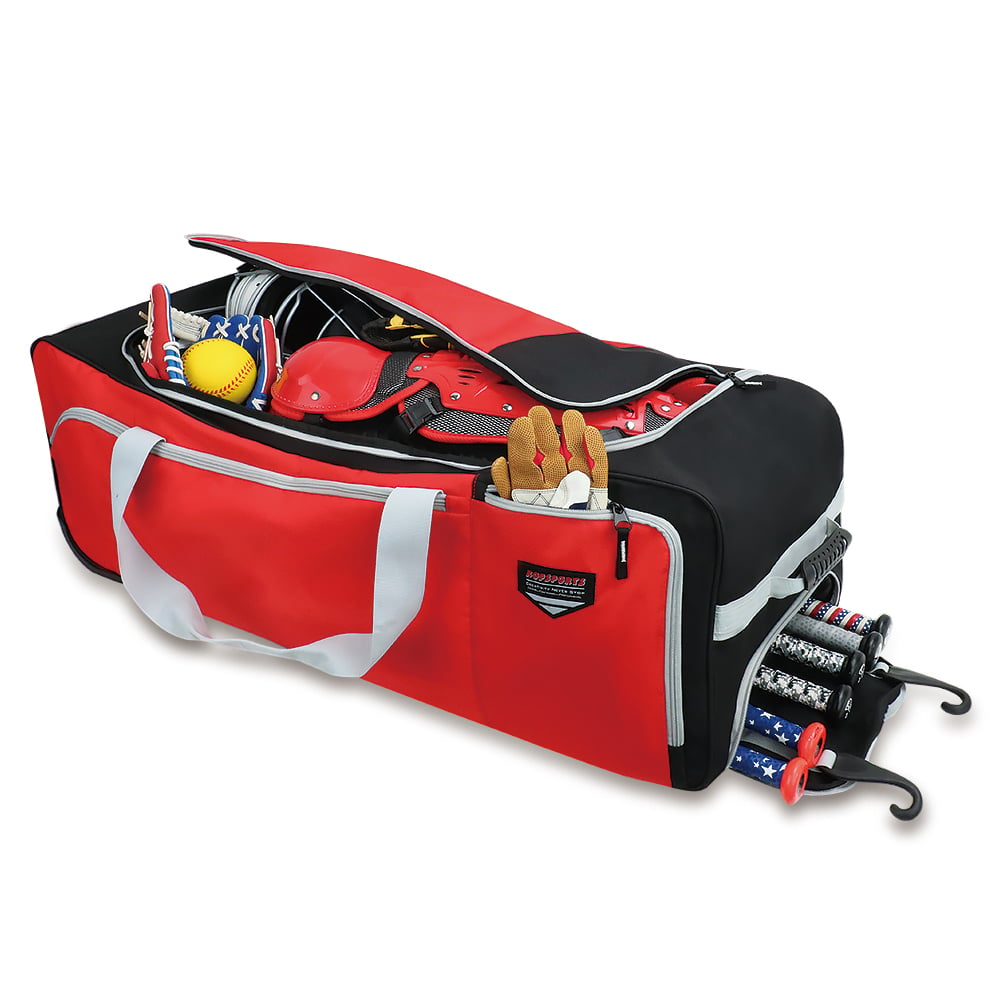
Kopsports builds wheel and handle testing into the standardized testing process that every bag goes through before release, with annual output above six million bags and roughly 40 percent of that volume in wheeled designs. The company's production capacity and strict quality control system help keep component performance consistent across batches, and the roller equipment bag facility is set up to validate wheel and handle assemblies as part of the finished product rather than as isolated parts.

 EN

 Hot News