Pickleball bags live a rougher life than most players expect. The bag gets set down on textured concrete, dragged across painted asphalt, and shoved under benches between games. Paddle edges press against the interior, ball tubes roll around, and the base panel scrapes the ground every time the bag is lifted and dropped. A lightweight nylon bag that looks fine in a store can develop frayed corners and a worn-through base within a single season of regular play.
The abrasion problem is concentrated at specific zones. The bottom panel takes the most direct contact. The lower side panels and corner seams absorb drag and scuffing. Handle attachment points see repeated stress from lifting a loaded bag. Heavy-duty fabrics matter most in those areas, and a bag that uses the same light fabric everywhere is usually a bag that will fail at the base first.
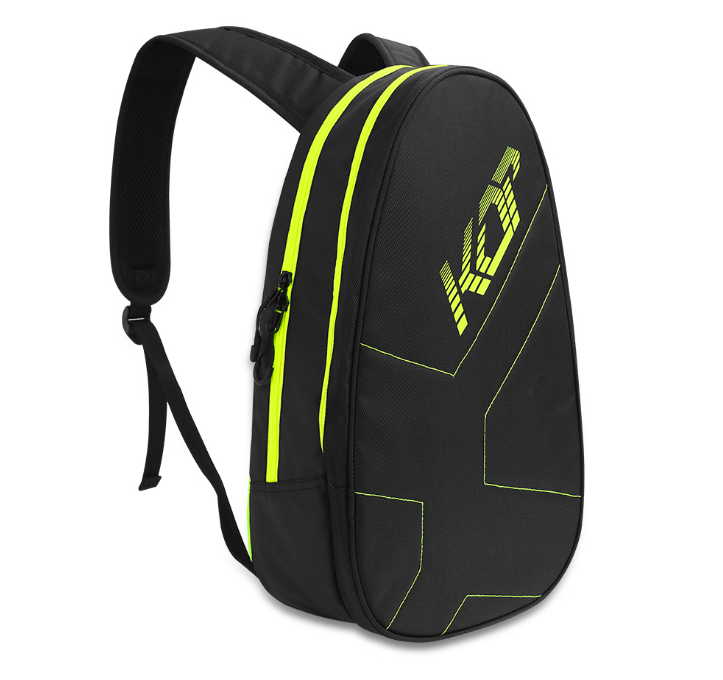
Denier measures yarn weight per fixed length, and higher denier generally means a thicker, more abrasion-resistant yarn. A 600D polyester is a common mid-weight fabric. A 1000D or 1680D nylon sits at the heavy-duty end. But denier alone is not the whole story. Weave density, coating type, and yarn twist all change how a fabric responds to scraping.
A tight plain weave with high yarn density resists abrasion better than a loose weave of the same denier because individual yarns are supported by neighbors and less likely to be pulled out. A polyurethane coating on the back adds another layer of protection, though a brittle coating can crack and flake under repeated flexing. The useful comparison is not just denier but the combination of yarn size, weave, and coating.
| Fabric Construction | Abrasion Cycles Before Visible Wear | Tear Resistance | Weight Penalty | Best Placement on a Bag |
|---|---|---|---|---|
| 420D coated polyester | Low to moderate | Low | Light | Lining, internal pockets |
| 600D coated polyester | Moderate | Moderate | Moderate | Main body, side panels |
| 1000D uncoated nylon | Moderate to high | High | Moderate to heavy | Base panel, high-wear zones |
| 1680D ballistic nylon | High | Very high | Heavy | Base, corners, handle reinforcement |
| Recycled 900D polyester blend | Moderate | Moderate | Moderate | Main body with reinforced base |
The cycle counts in this table come from abrasion testing on comparable fabric weights, and the pattern is consistent. Heavier yarns with tight weaves last longer, but they also add weight and stiffness. The practical design choice is to place heavy fabric where abrasion actually happens rather than making the entire bag heavy.
The base panel is the highest-wear zone on a pickleball bag, and reinforcing it is the single most effective design decision. A common approach is a double-layer base with a 1680D ballistic nylon outer layer and a water-resistant backing. Some designs add molded rubber feet or a thermoplastic polyurethane (TPU) skid patch at the corners, which lifts the fabric off the ground and absorbs scuffing.
Corner guards work on the same principle. A stitched-on patch of heavy fabric or a molded corner cap takes the abrasion instead of the main shell. The limitation is honest: added reinforcement increases weight and can make the bag stiffer and harder to fold. For players who carry the bag short distances, a lighter base may be sufficient. For players who drag the bag across courts and set it down repeatedly, the reinforced base is worth the weight.
A heavy fabric shell is only as good as the seams that hold it together. Abrasion at a seam can wear through the thread before the fabric itself fails. Bonded nylon thread and double-stitched seams at high-stress zones add durability without much weight. Bar tacks at handle attachments prevent the stitch line from pulling open under load.
Zippers face a different kind of wear. Grit and court dust work into the zipper coil and abrade the teeth over time. A covered zipper or a storm flap reduces grit exposure, and a larger coil size resists deformation better than a fine-tooth coil. Metal hardware should be checked for coating quality, since a chipped coating can corrode and stain the fabric.
Standardized testing turns abrasion claims into comparable numbers. ASTM D4157, the oscillatory abrasion test, and ASTM D4966, the Martindale abrasion test, are widely used methods for evaluating fabric wear. Both apply controlled rubbing action and record the number of cycles before visible wear or thread breakage. These tests do not perfectly replicate court dragging, but they provide a consistent basis for comparing fabric lots and catching supplier drift.
A standardized testing process should test the assembled bag, not just the raw fabric. A base panel that passes a flat abrasion test can still fail at a seam or a fold. Testing the finished bag at the base and corners reveals how construction details affect real wear. Sampling across production lots matters too, because fabric from different dye and coating batches can vary in abrasion performance.
A community recreation center that runs daily pickleball sessions issued a batch of lightweight bags to its equipment staff. Within four months, several bags showed worn-through base panels and frayed corner seams from being set down on the textured court surface and dragged between courts. The replacement bags used a 1680D ballistic nylon base with a TPU corner patch and double-stitched seams. After a full year of the same use pattern, the replacement bags showed surface scuffing but no worn-through panels.
That case is not a controlled study, but it shows how placement of heavy fabric matters more than overall bag weight. The replacement bags were slightly heavier, and staff noticed the difference when carrying them long distances. For the actual use pattern, court-side dragging and repeated set-downs, the heavier base was the right tradeoff.
No fabric lasts forever on an abrasive court surface. Heavy-duty fabrics slow wear, but they do not eliminate it. A bag used daily on rough concrete will eventually show scuffing and seam wear regardless of fabric choice. The practical goal is to delay failure past the expected service life and to keep the highest-wear zones reinforced.
Players who mostly carry the bag from car to court and set it on a bench may not need a full ballistic nylon shell. Players who drop the bag on the court, drag it between courts, and store paddles and balls in the same bag will benefit from a reinforced base and heavy side panels. Buyers should ask where the heavy fabric is placed, not just whether the bag uses heavy fabric.
Kopsports builds abrasion-resistant zones into the bag structure through a standardized testing process that checks material durability, craft accuracy, and structural stability before release, supported by annual output above six million bags and a strict quality control system. The company's production capacity and roller equipment bag facility help keep fabric placement and seam construction consistent across batches, which matters when durability depends on the base panel and corners holding up to daily court contact.

 EN




 Hot News