A club coach rarely carries one ball. A typical training session needs a dozen or more, plus a pump, cones, bibs, and a first aid kit. Those balls add up fast. A size 5 match ball weighs about 14 to 16 ounces, so twenty balls land near 18 to 20 pounds before the bag itself is counted. Add water bottles and a coaching board, and the load climbs past 30 pounds. A soccer bag with wheels changes how that weight moves. The bag is not a luxury item for coaches who like gadgets. It is a practical response to a daily load that gets carried across parking lots, fields, and muddy sidelines.
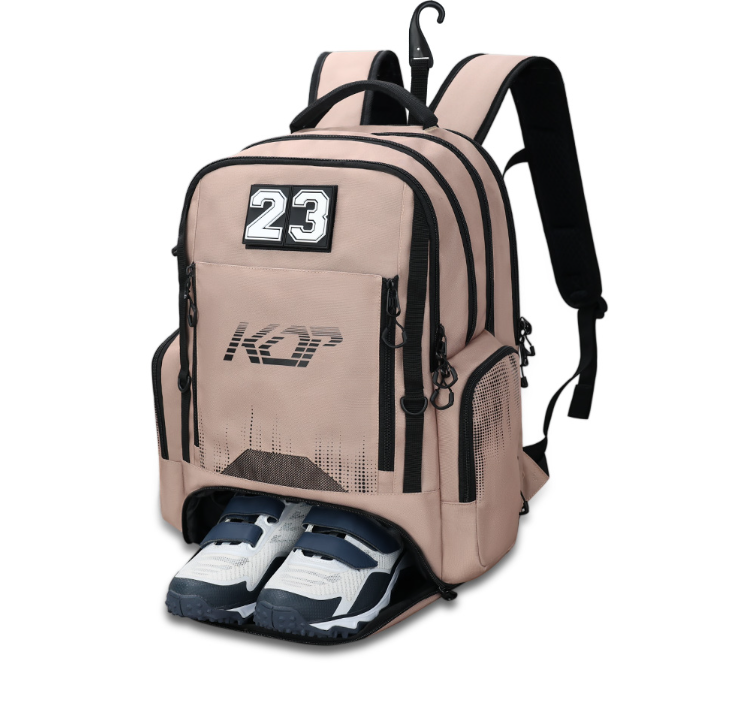
Carrying a loaded duffel on one shoulder puts uneven compression on the spine and loads one side of the body. Occupational safety guidance from NIOSH consistently favors rolling loads over repeated lifting when the surface allows. That does not mean every coach needs a wheeled bag. It means the choice should follow the load and the route. A wheeled soccer bag with a rigid base and a telescoping handle lets the coach push or pull the weight instead of hoisting it. The bag still has to be lifted into a car trunk, so handle placement and balance matter. A bag that tips when loaded is worse than a heavy duffel because it fights the user at every curb.
Wheeled bags earn their place on pavement, gym floors, and packed dirt paths. They struggle in loose sand, deep mud, and stairs. A coach who parks fifty yards from a field in dry weather gets a clear benefit. The same coach after three days of rain may end up carrying the bag anyway. That tradeoff should be stated plainly. A useful comparison:
| Factor | Carry duffel | Wheeled soccer bag | Practical note |
|---|---|---|---|
| Load on body | Shoulder and spine | Handle and wheels | Rolling reduces repeated lifting |
| Capacity for balls | 12 to 18 typical | 20 to 30 common | More room for pump and cones |
| Wet ground | Carried above mud | Wheels sink in soft mud | Hard base helps on gravel |
| Parking lot walk | Repeated switches | Pulls behind | Less fatigue on long walks |
| Stairs and curbs | Lifted easily | Must be lifted | Handle balance matters |
| Storage | Folds flat | Rigid base takes space | Consider trunk height |
A youth club in the Pacific Northwest ran twice daily sessions through a wet fall. Coaches carried twenty four balls in a standard duffel from a gravel lot to two fields. By October, two coaches had shoulder soreness, and balls were rolling out of a torn side seam. The club switched to wheeled soccer bags with a reinforced base and a separate ball compartment. The bags did not solve every problem. On the wettest days, wheels still clogged with mud, and coaches lifted the bags over a drainage ditch. What improved was the daily carry. The load rolled on gravel and pavement, the ball compartment kept gear from spilling, and the shoulder soreness faded after a few weeks.
A wheeled soccer bag usually has more structure than a duffel. That structure supports compartments for balls, a pump, cones, and personal gear. A coach can open one end, count balls, and close it without unpacking the whole bag. Three practical gains:
Fewer lost balls at the end of a session.
Faster setup because cones and bibs stay in one place.
Less strain when the bag is loaded and unloaded twice a day.
The organization benefit is easy to underestimate. A coach who spends five minutes hunting for a pump at every session loses more time than a wheeled bag ever costs in setup.
A wheeled bag is not the answer for every coach. If the route includes stairs, narrow turnstiles, or deep sand, a carry bag or a backpack style may work better. If the bag lives in a car trunk and is lifted once per session, the wheeled frame adds weight and bulk without much gain. Storage space matters too, because a rigid base does not fold down. Buyers should test the bag with the actual number of balls and a typical route. A short trial in real conditions will show whether the wheels help or become another thing to manage.
For club programs and distributors, the frame, wheels, and base are where cheap construction shows up first. A soccer bag line needs consistent wheel housings, axle strength, and stitching at the handle mount. Kops produces more than 6,000,000 bags annually, with about 40% wheeled bags, and runs every bag through a standardized testing process before release. That capacity and quality control support repeatable wheeled bag performance when a program orders across multiple seasons.

 EN



 Hot News