A softball bag is judged on game day, but its weak points are decided long before the first stitch. Strict quality control starts with incoming material review, not with a final visual check. Shell fabric, webbing, zipper tape, foam, and wheel components all arrive in batches, and each batch can behave differently. A supplier with a real quality control system logs incoming lots, checks hand feel and thickness against a reference, and quarantines anything that feels off. That sounds basic, yet it is the step most factories skip when orders stack up. A bag made from a weak batch can pass a quick look and still fail at a seam or a wheel housing after a few weeks of use. Buyers should ask where material review happens and who signs off. The answer says more about the softball bag than a catalog photo ever will.
Material testing is where claims become evidence. Fabric tensile strength is commonly checked against ASTM D5034, which gives both sides a shared method for comparing shell materials. Zipper and seam performance may follow other recognized test methods, and sampling inspection often uses ANSI/ASQ Z1.4. These references do not guarantee a specific service life, but they show whether a supplier can produce records under review. A useful test routine separates incoming material tests from finished bag tests. Incoming tests catch a bad roll before it becomes a thousand bad panels. Finished tests catch assembly errors that material tests cannot see. The honest limit is that no lab test predicts every field condition. Mud, UV exposure, and overloading all change the result. Testing reduces risk. It does not remove it.
| Inspection area | Loose quality control | Strict quality control | What it means on the field |
|---|---|---|---|
| Incoming fabric | Visual check only | Batch records and tensile checks | Fewer seam failures under load |
| Zipper and pulls | Spot check at assembly | Pull force and cycle checks | Fewer jammed zippers mid game |
| Stitching | Speed based output | Stitch density and seam sampling | Stronger stress points |
| Structural frame | Final look only | Load and stability checks | Less sag and wobble |
| Wheel and base | Random handling | Drop and roll checks | Fewer cracked housings |
A softball bag carries cleats, helmets, bats, water, and softballs, so the stress points are predictable. Seam ends, zipper turns, handle attachments, and wheel housings take repeated load. Craft accuracy is not about a fancy stitch pattern. It is about consistent stitch density, clean seam ends, and reinforced bar tacks where the load concentrates. A strict quality control system samples those points during production, not only at the end. Inspectors should check the underside of seams, the back of zipper tape, and the inside of the base. Those hidden areas show whether the bag was built to last or built to look good on a shelf. A softball bag that passes a visual check can still fail at a bar tack that was skipped. Craft accuracy is measurable, and it should be measured.
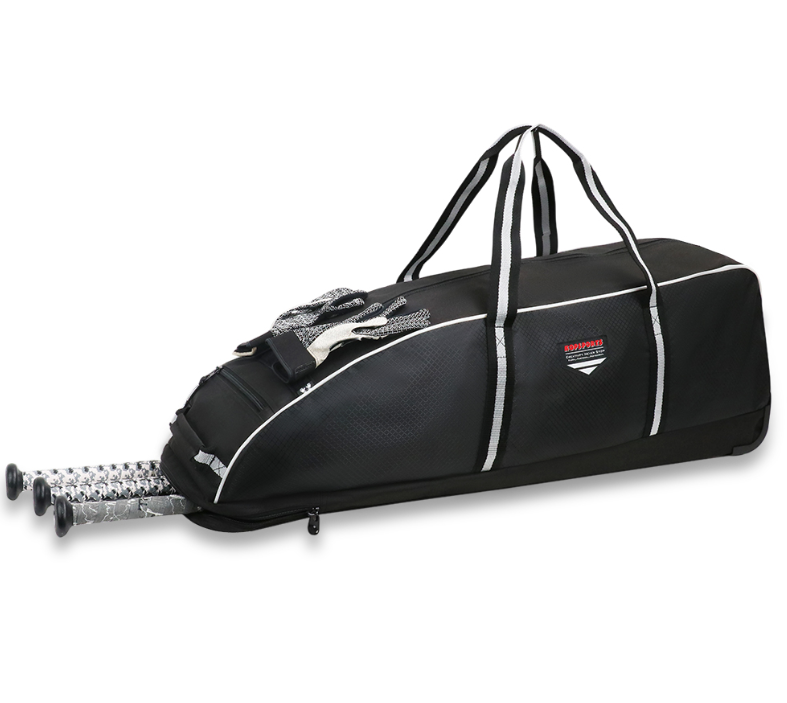
Structure is the part players feel but rarely inspect. A bag that sags when loaded, tips when a bat is dropped in, or wobbles on its wheels is telling players that the frame and base were not tested as a system. Structural stability checks should simulate a loaded bag, not an empty one. That means weight distribution, handle pull, and wheel roll on a rough surface. A strict process tests the bag as a unit, because a strong shell on a weak base still fails. The limitation is that lab simulation cannot copy every dugout floor. A supplier that explains the test setup honestly is more useful than one that promises perfect performance. Structural checks should also cover the connection between the wheel housing and the base, which is a common failure point on wheeled softball bags.
The first bag off the line is not the challenge. The thousandth bag is. Consistency is where a strict quality control system earns its cost. Color matching, panel dimensions, zipper alignment, and hardware placement all drift when production speeds up. A real system uses reference samples, in process checks, and batch records to catch drift early. During a retail program review for a sporting goods brand, the first shipment showed a visible shade difference between two cartons and a pocket line that sat slightly low on one run. The cause was not a bad design. The cause was a skipped reference sample check after a material switch. The revised process added a signed reference sample at each shift start and a batch record tied to the carton label. The next shipment matched cleanly. A softball bag that stays consistent across a run protects the brand on the shelf and the player on the field.
A softball bag built under a strict quality control system is not automatically the right bag for every program. It is, however, easier to evaluate. KOP's production base, material testing routine, and before release inspection give buyers a practical way to compare bags on evidence rather than claims. The focus on material durability, craft accuracy, and structural stability matches the failure points that show up after a season of use. Buyers should still ask for the test records that belong to their order and check how batch issues are handled. A well controlled process does not remove every risk. It makes the remaining risks visible, which is what a serious buyer needs before placing a program order.

 EN




 Hot News