A professional tennis bag is not judged by how it looks under showroom lights. It gets dragged across hard courts, stuffed into car trunks, checked onto flights, and left in hot vehicles. The first failure usually shows up at a seam, zipper tape, wheel housing, or base panel, not in the middle of a large fabric panel. That is why material durability testing happens before release. A tennis bag that passes a visual inspection can still fail after two weeks of real use if the coating cracks, the webbing stretches, or the wheel mount pulls through. Durability tests turn those hidden risks into measurable pass or fail points.
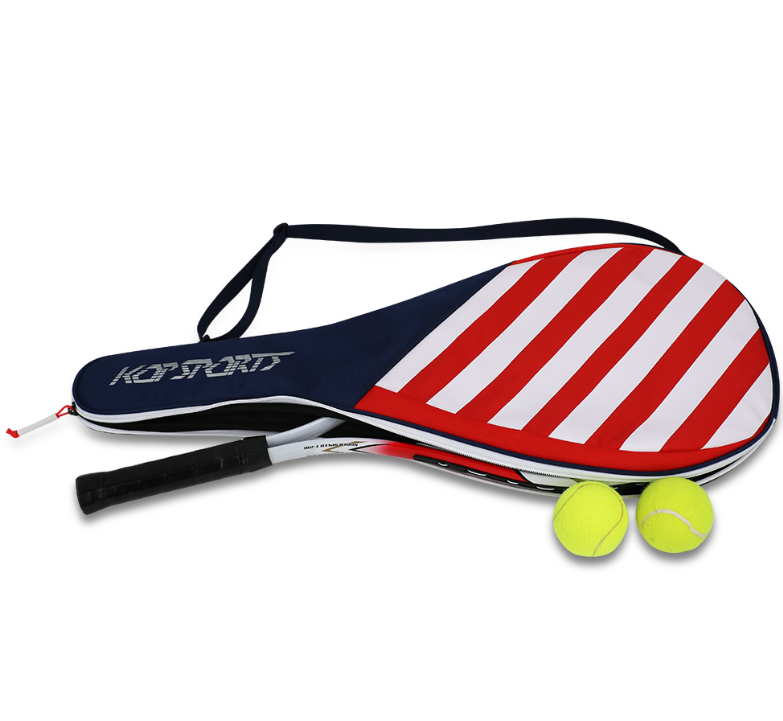
Durability testing is not one machine. It is a sequence of targeted checks. Fabric tensile strength follows methods such as ASTM D5034, which pulls a strip until it breaks. Abrasion resistance often uses ASTM D4157, the Wyzenbeek method, where fabric rubs against an abrasive surface under controlled tension. Color fastness to light can follow ISO 105-B02, especially for bags that spend hours in direct sun. Zipper reciprocation, wheel drop impact, handle pull strength, and seam slippage are also common. Each test maps to a real failure mode, not a generic score. A tennis bag that survives abrasion but has weak zipper tape still fails the release gate.
A useful durability program for a tennis bag measures change, not just a single peak number. For example, coated polyester may start at 900 N tensile strength, but the important question is how much strength remains after flexing, humidity, and abrasion. The same logic applies to wheel assemblies. A wheel that survives a static load can still crack under repeated curb drops. Testing teams compare before and after values, then check whether the material still meets the design spec. The table below shows a practical example of how lab checks connect to field risks.
| Check | Typical method or metric | Field failure it targets | What a weak result looks like |
|---|---|---|---|
| Fabric tensile | ASTM D5034, grab tensile | Tear at handle or seam | Elongation over spec, yarn pull-out |
| Abrasion | ASTM D4157, cycles to wear-through | Base panel rub on court and trunk | Coating worn through in under 3,000 cycles |
| Lightfastness | ISO 105-B02, blue wool scale | Fading and coating embrittlement | Rating below 4 after exposure |
| Wheel drop | Loaded drop on concrete, 3 angles | Cracked hub or bent axle | Hairline crack at hub after 10 drops |
| Handle pull | Static pull to 2x working load | Webbing pull-out | Stitch rupture before target load |
| Zipper cycle | Reciprocating open and close | Slider jam or tape separation | Tape separation before 5,000 cycles |
These thresholds are not universal. A lightweight tournament bag and a heavy wheeled bag should not share the same limits. The point is to define limits from use conditions, then test every batch against them.
One useful case came from a humid southern warehouse retrofit where wheeled bags were staged on a concrete floor with frequent forklift traffic. A batch of wheeled tennis bags looked fine at final inspection, but drop tests on the wheel housings showed hairline cracks after repeated impacts. The fabric was also absorbing moisture at the base panel, which softened the coating and reduced seam strength. The root cause was not one bad material. It was a mismatch between the nylon compound, the wheel housing rib design, and the moisture exposure in that staging area. The supplier changed the nylon grade, added a rib at the hub, and tightened the drying step before coating. That kind of finding is hard to catch by eye. It shows why durability testing belongs before release, not after complaints.
Skipping durability checks can look cheaper at the loading dock, but the cost moves downstream. A failed wheel mount can turn into a return, a replacement shipment, and a damaged retail relationship. A fading coating can make a new tennis bag look old before the season ends. More importantly, inconsistent testing makes it impossible to know whether a change in fabric supplier, adhesive, or stitching tension actually improved the product. A standardized process with fixed fixtures, trained operators, and recorded results gives a brand a traceable baseline. When a batch fails, the data points to the exact step. When a batch passes, the result means something because the same method was used last time.
Durability testing only works when the process is boring and repeatable. That means the same clamp pressure, the same abrasion wheel, the same drop height, and the same pass or fail rule for every batch. It also means testing a sample from the actual production lot, not a golden sample kept in a drawer. A strict quality control system checks calibration records, operator training, and test reports before release. For buyers, the practical question is simple: can the factory show a test history that matches the material lot and the production date? If not, the durability claim is just a brochure line. Kopsports runs a standardized testing process with a strict quality control system before every single tennis bag is released, backed by an annual output of more than 6,000,000 pieces, with 40% wheeled bags and a dedicated roller equipment bag facility. That kind of setup does not guarantee every bag will survive every abuse case, but it makes the release decision traceable and repeatable.

 EN





 Hot News