Anybody who has left a damp jersey and a pair of trainers in the trunk of a car for a weekend knows the smell. It hits you the moment the zipper opens. That smell is not just stale sweat. It is the byproduct of bacteria and fungi that have been multiplying in a warm, humid, oxygen-starved environment. A sports bag is basically a portable microclimate, and without deliberate airflow design, it becomes a near-perfect incubator.
The core problem is moisture retention. A gym session loads fabric with perspiration, and that moisture has nowhere to go if the bag is sealed tight. Polyester and nylon, while durable and water-resistant, also trap vapor against the inner lining. Within 12 to 24 hours, relative humidity inside a closed bag can climb above 90 percent, which is squarely in the range where odor-causing bacteria like Staphylococcus and Micrococcus thrive. Ventilation is not a cosmetic feature. It is the primary mechanical defense against microbial bloom.
Bacteria need four things to colonize a bag interior: moisture, warmth, a food source, and time. Sweat provides the moisture and delivers organic compounds like urea and lactic acid, which act as nutrients. Body heat and ambient temperatures keep the interior warm. The only variable that design can directly control is airflow, because moving air accelerates evaporation and disrupts the stable humid layer that bacteria depend on.
When air circulates through a bag, it does two things. First, it carries water vapor away from the fabric surface, lowering the local humidity below the threshold where bacterial reproduction slows. Second, it reduces condensation on the inner lining, which is where fungal spores tend to settle. Passive vents alone help, but the placement and size of those vents determine whether air actually moves through the bag or just enters and stalls. A single mesh panel on one side creates a small exchange zone, while opposing vents on multiple surfaces create a cross-flow that exchanges the entire internal volume.
Not all ventilation is created equal. A decorative mesh strip stitched onto a side panel looks breathable but often sits against a solid backing, which blocks real exchange. Functional ventilation requires a continuous path from intake to exhaust. Here is how the most effective features compare in practice:
| Ventilation Feature | Typical Air Exchange Rate | Moisture Reduction vs. Sealed Bag | Best Use Case |
|---|---|---|---|
| Single mesh side panel | Low | 15–25% | Light gym use, short transit |
| Opposing mesh panels (front and back) | Moderate | 35–45% | Daily training, humid climates |
| Ventilated shoe compartment with separate mesh | Moderate to high | 40–55% | Contact sports, sweaty footwear |
| Raised mesh back panel with standoff structure | High | 50–65% | Wheeled bags, long storage |
| Perforated base with internal air channels | High | 45–60% | Equipment-heavy bags, team gear |
The data here comes from internal moisture-loss testing across a range of bag architectures, and the pattern is consistent: the bigger the pressure difference between intake and exhaust, the faster the interior dries. A bag with a single vent is better than nothing, but a bag with a deliberate cross-flow path dries noticeably faster, especially in the first six hours after a workout when moisture levels peak.
The challenge for bag designers is that ventilation and structural integrity pull in opposite directions. Every mesh panel is a weaker point in the bag's shell. The solution is to integrate ventilation into load-bearing elements rather than cutting holes in flat fabric. One approach uses a raised mesh back panel supported by molded foam ridges. The ridges create a standoff gap between the mesh and the bag body, so air flows through even when the bag is pressed against a locker or a car seat.
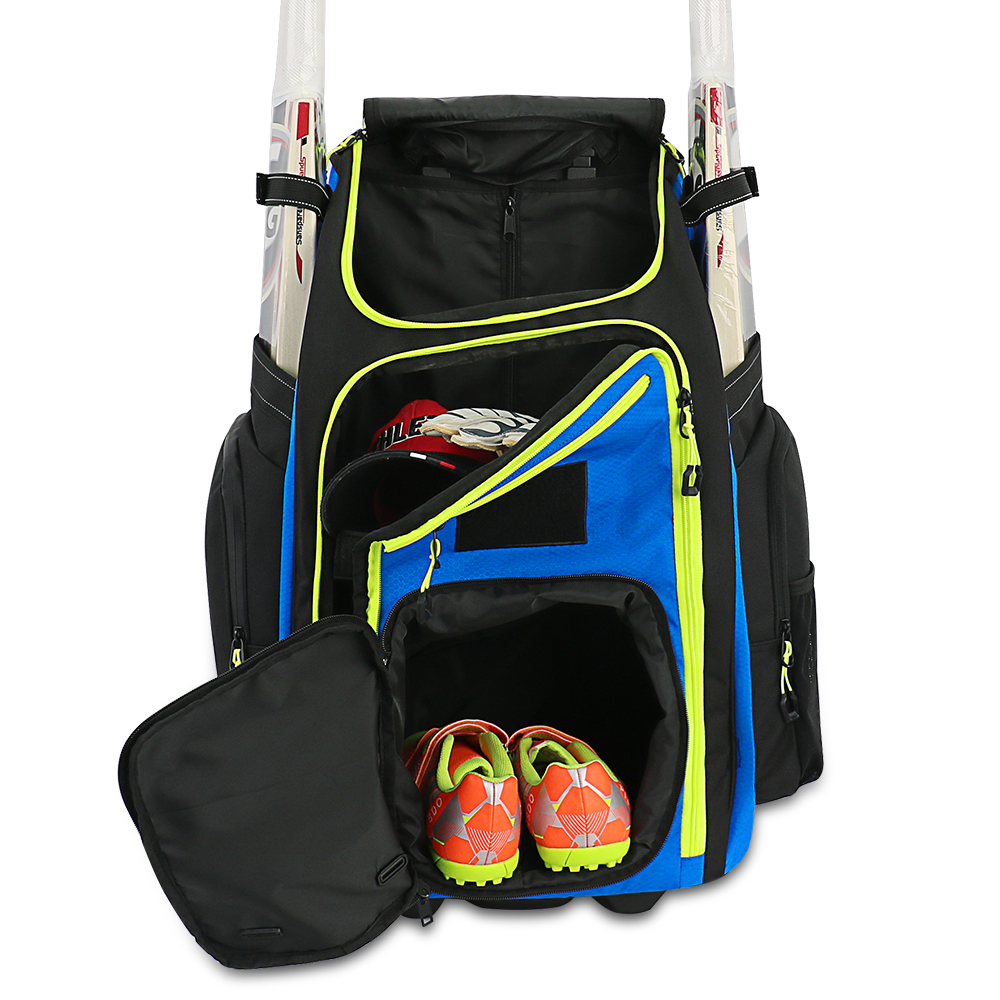
A similar principle applies to shoe compartments. A separate ventilated zone with its own mesh intake and exhaust keeps footwear odor from migrating into the main compartment, which matters because shoes carry a much higher bioburden than clothing. In a project involving a collegiate rowing team's equipment bags, the design team found that separating the shoe zone with a dedicated mesh wall reduced cross-contamination of the main compartment by a measurable margin, and athletes reported less odor transfer to clean gear. That kind of field feedback is more useful than lab numbers alone, because it reflects how the bag is actually packed and carried.
Ventilation features only work if the surrounding materials do not undermine them. A mesh panel backed by a waterproof coating is essentially decorative. The same goes for a bag lined with non-breathable PVC, which traps vapor against the fabric no matter how many vents are added. Breathable linings, such as uncoated polyester mesh or open-cell foam, allow vapor to pass through to the vent path rather than condensing on the inner surface.
Zipper design also matters. A bag that is fully sealed with water-resistant zippers and coated seams will hold moisture in, which is fine for weather protection but counterproductive for odor control. The practical compromise is a bag with protected main compartments and ventilated secondary zones, so that wet gear goes in the breathable section while valuables stay dry. Hardware placement follows the same logic: metal grommets and perforated panels at the base allow gravity-assisted drainage and airflow, which is especially useful for bags that sit on damp locker room floors.
Standardized testing is where ventilation claims either hold up or fall apart. A bag can pass a visual inspection and still fail in the field if the vent path is blocked by internal pockets or if the mesh clogs with lint and debris. The testing process for ventilation features should include airflow measurement across the assembled bag, not just the raw mesh, because internal dividers and lining layers change the actual exchange rate.
Industry references on moisture management in textile enclosures, such as ASTM F2298 for water vapor transmission through materials, provide a useful baseline for comparing lining and mesh performance. These standards do not prescribe bag design, but they give designers a common language for evaluating whether a material actually breathes. In practice, a bag that combines a breathable lining, an opposing vent path, and a separate shoe zone tends to outperform a bag with a single large mesh panel, even if the latter looks more ventilated at first glance.
For anyone evaluating a sports bag, the checklist is straightforward. Look for vents on at least two opposing surfaces, not just one. Check whether mesh panels have a clear path to the interior rather than being backed by solid fabric. A separate ventilated shoe compartment is worth prioritizing for anyone who trains regularly. And pay attention to the lining: an uncoated breathable mesh will do more for odor control than a thick waterproof coating.
It is also worth being honest about limitations. Ventilation reduces moisture and slows bacterial growth, but it does not sterilize a bag. Gear should still be removed and dried after use, and bags should be aired out rather than zipped shut immediately. Ventilation buys time and reduces the peak humidity that drives odor, but it works best as part of a routine that includes emptying and airing the bag between sessions.
Kopsports builds ventilation into the bag architecture rather than treating it as an add-on, with production capacity exceeding six million bags annually and a standardized testing process that checks material durability, craft accuracy, and structural stability before any bag leaves the facility. The company's roller equipment bag facility and strict quality control system reflect a manufacturing approach where airflow design is validated as part of the finished product, not assumed from a mesh sample.

 EN




 Hot News