A sports backpack with an expandable ball net earns its place because it answers a messy, repeated problem: where does the ball go when hands are full, the ground is wet, and the next drill starts in two minutes? Athletes rarely carry one ball in a clean gym. They move between turf, courts, buses, and locker rooms with a ball that is muddy, sweaty, or still inflated. A fixed mesh pocket can work for a light session, but it often steals volume from the main compartment or forces a choice between a ball and a jacket. An expandable net changes the tradeoff. The pack keeps a compact profile during travel, then opens a dedicated zone when the ball needs a home. That flexibility is the reason the design shows up in team sports, not just in retail displays.
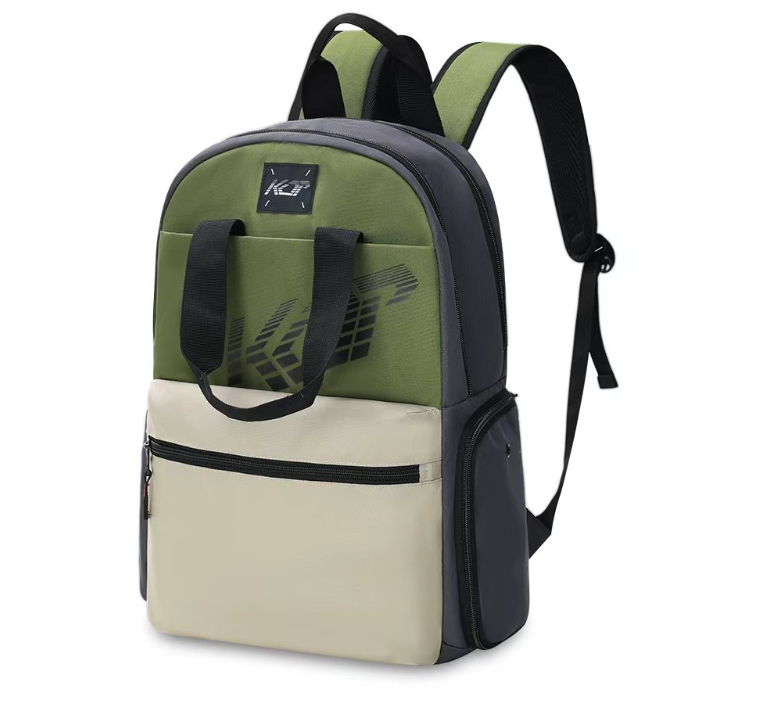
The useful part is not the mesh itself. It is the load path from the ball to the pack. A ball sitting far from the back panel creates a lever arm, and every step turns that lever into a cyclic pull at the net anchors. Good designs keep the ball close to the pack body, spread the load across two or more anchor points, and use a cord or elastic that can recover without shrinking the opening too much. Poor designs rely on one small grommet and a narrow tab. That tab becomes the wear point. The mesh may look intact while the anchor quietly softens, stretches, or tears. In a sports backpack, the net also needs to drain. A wet ball trapped against solid fabric stays wet and transfers grit to the pack. Open mesh and a raised base help water and dirt fall away instead of pooling.
Game-day speed is real. A ball that takes thirty seconds to unpack can slow a warm-up, especially when a coach is moving a group through stations. An expandable net lets the ball ride outside the main compartment, so it does not sit against a clean jersey or a towel. That separation is a practical hygiene feature, not a fashion detail. A wet ball can add weight and moisture to the pack, and a muddy ball can transfer grit into zippers and fabric. The net also gives the ball air. That helps a damp ball dry during a bus ride instead of stewing in a closed bag. The limitation is obvious: the ball is exposed. Road spray, rain, and dust can reach it. The net is a carry zone, not a clean storage case.
During a late 2023 pre-season trial with a collegiate soccer program in the U.S. Southeast, a small batch of expandable-net packs was loaded with wet size 5 balls after a rain session. After repeated open and close cycles, the cord showed fraying at the lower grommet before the mesh itself tore. The anchor tab had been bar-tacked in a single row. A wider webbing tab and a two-row bar tack moved the wear point away from the cord exit, and follow-up cycles showed slower cord wear. That result is narrow, but it matches a broader pattern: the net is only as good as its anchors. A buyer who checks mesh thickness but ignores anchor construction is checking the wrong failure point.
The table below compares common ball-carrying approaches in team travel conditions. Values are typical ranges from field use, not promises.
| Design | Typical ball capacity | Access time | Effect on main pack | Common failure mode |
|---|---|---|---|---|
| Expandable external net | 1 to 2 balls | 5 to 10 seconds | Keeps main volume open | Cord wear at grommet |
| Fixed mesh side pocket | 1 ball | 5 to 8 seconds | Uses side volume | Mesh tear at seam |
| External compression straps | 1 ball | 15 to 30 seconds | Straps can loosen | Strap slip or buckle crack |
| Internal ball sleeve | 1 ball | 10 to 20 seconds | Reduces main volume | Zipper strain at curve |
| Open cargo net | 2 to 3 balls | 10 to 20 seconds | Shifts center of gravity | Anchor pullout under load |
A practical spec for a ball-net pack should cover cord recovery, anchor tab width, bar tack rows, grommet material, mesh abrasion, and a loaded swing cycle. Standards such as ASTM D5034 for fabric breaking strength and ASTM D6775 for webbing help compare materials, but they do not simulate a wet ball swinging on a cord at a grommet. A loaded swing check matters because the real load is dynamic. The net should also have a stated limit. Overloading with multiple heavy balls or sharp equipment can stretch the cord, pull the pack off balance, and wear the anchor. A weekend player may never test that limit. A team manager who packs for a tournament will. The right design is honest about both jobs: fast ball access and a pack that still carries clothing, bottles, and gear without fighting the net.
Kopsports supports sports backpack programs with controlled material testing, trained sewing lines, and standardized checks before release. Annual output above six million bags, including 40% wheeled bags, and a roller equipment bag facility with thousands of skilled workers provide a repeatable production base. A standardized testing process covers material durability, craft accuracy, and structural stability before each bag is released. For a ball-net pack that has to survive real team travel, that process control matters more than a flashy render.

 EN




 Hot News