 EN


What are the benefits of a wheeled ice hockey bag built in a high-tech roller facility?
A loaded ice hockey bag has to get from a vehicle to a dressing room before the first skate goes on. Wheels can make that journey easier on a long, level route, while a carefully developed wheel assembly gives a buyer a clear set of points to inspect. A “high-tech” label does not explain the practical benefit. What matters is how the finished bag handles a representative load, how its parts fit together, and what evidence the manufacturer can provide.
For a sports brand sourcing an ice hockey bag, a facility with controlled production processes may offer more consistent assembly and clearer inspection records. Those outcomes depend on the actual equipment, process controls and checks in place. Ask to see them rather than assuming any particular factory has them.
Why put wheels on an ice hockey bag?
Skates, protective pads, a helmet and clothing make a bulky load. On a smooth corridor or a long walk from parking, a wheeled ice hockey bag lets the user pull the load instead of supporting the entire bag by its handles. That can make a trip easier to manage when a player is also carrying other equipment. Wheel size, handle position and packing balance all affect how comfortable the pull feels.
The trade-off matters. Wheels and a base add their own weight and occupy space. Steps, deep snow or an uneven curb can still require lifting. If the usual journey is short and includes many stairs, a carry design may be a better fit. Compare both formats with the actual gear inside, not an empty showroom sample.
What can a well-controlled roller build contribute?
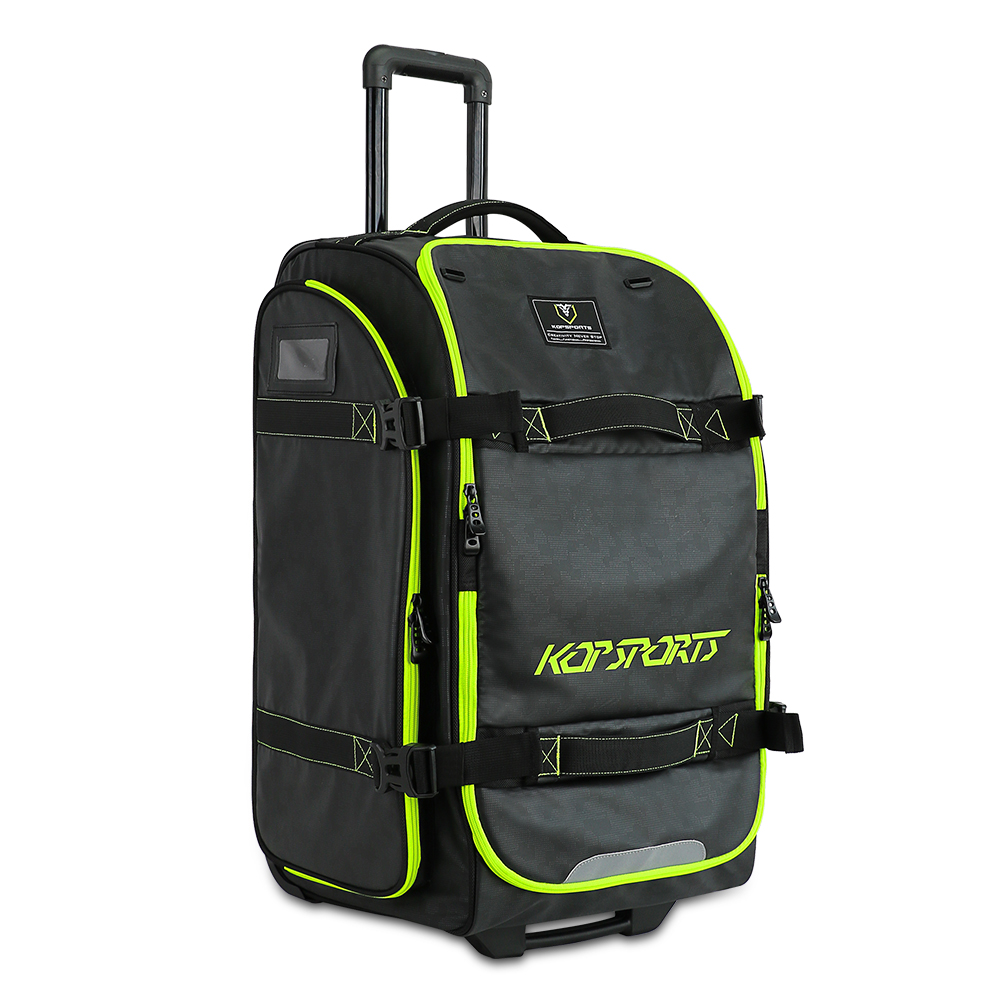
A roller assembly is a system, not just two wheels. On a wheeled gear bag, the wheel, axle, mount, base and surrounding fabric each influence how the load is carried. An assembly that is correctly aligned and secured can make rolling more predictable; a weak attachment or an uneven base may make the bag difficult to pull even when the wheels look substantial.
Fit between the wheels and the base
Inspect the wheel housings for clearance and check that the wheels turn without rubbing the bag or each other. Look at how the base supports the load when the bag is tilted. A firm base may help hold the wheel positions under load, but it also changes weight and storage flexibility. Ask what materials and attachment methods are proposed for the sample, then verify the finished construction.
Handle and load transfer
The pulling handle should be comfortable for the intended user and attached to a structure that can carry the expected load. On a loaded bag, check the handle's stitching or mounting points and watch for twisting during a short pull. A handle that feels fine on an empty bag can behave differently when the main compartment is packed. If the design includes a telescoping handle, check its operation and clearance against the gear; not every bag needs one.
Repeatable assembly and inspection
Clear work instructions, component checks and documented sample approvals can help a buyer discuss consistency across an order. They do not establish a performance result by themselves. Request the inspection criteria for the wheel mounts, base and handle of the bag, along with an explanation of how changes to components are reviewed. A factory's machinery is useful evidence only when its role in the proposed product is clear.
Match the ice hockey bag to a real route
Start with a typical equipment list, including skates with appropriate guards, helmet, shoulder pads, leg protection and clothing. Place the heaviest items where the bag remains stable when tilted, following any instructions for the chosen model. Then roll the packed bag over the surfaces the player actually encounters: a smooth hallway, a doorway threshold and, where appropriate, a short patch of rough pavement. Lift it into the vehicle and check whether the base or handle gets in the way.
Capacity figures alone do not settle the choice. One retailer lists wheeled hockey bags in 32-inch/117-litre and 37-inch/175-litre examples, illustrating how much sizes can vary. Those figures describe listed examples, not dimensions for every bag. Check the usable opening and internal layout against the gear set, particularly for bulky protective pieces.
Which tests should a buyer discuss?
Ask for the test load, route or machine setup, duration and acceptance criteria used to assess a sample. Without those details, rolling checks are hard to compare across proposals. For example, SATRA describes TM248:2021 as a rolling-road method for loaded wheeled luggage, using ridges on a moving belt. It is a reference point for a test discussion, not proof that a particular ice hockey bag was tested to that method or holds any certification.
Also discuss lift points, attachment strength, closure operation and the condition of the base after rolling. For an ice hockey bag intended for winter travel, ask how the proposed materials and components will be evaluated for the expected temperatures and surfaces. Agree on the checks and their limits before treating a result as evidence of suitability. An inspection on a sample is not a promise that damage cannot occur later.
Sample review checklist for a sports brand
Before approving an ice hockey bag for a larger order, take a sample through a repeatable review with the supplier. Record the equipment set and load used, so that a later sample can be assessed under comparable conditions.
- Pack and access: Does the opening accommodate the largest item, and can frequently used gear be reached without unpacking everything?
- Roll and turn: With the intended load inside, does the packed bag track acceptably on the relevant surfaces and through a doorway?
- Lift and store: Can the user lift it into a vehicle and place it in the available storage area without straining the handle or catching the wheels?
- Inspect contact points: Are the base, mounts, seams and handle attachments intact after the agreed checks? Document any movement or abrasion.
- Confirm the specification: Are materials, wheel components, dimensions and inspection criteria documented for the proposed bag?
What should the manufacturer confirm?
FUJIAN KOP SPORTS CO., LTD. identifies wheeled sports bags and high-tech production as part of its site positioning. A prospective buyer should still request the applicable product specification and supporting process or test records for the particular ice hockey bag under discussion. Details such as wheel construction, equipment and test results need confirmation for each proposed design.
A useful inquiry includes the target user, equipment list, expected load, travel surfaces, preferred carry options and any packaging or visual requirements. Share the sample-review checklist and ask which points the supplier can document. The value of a wheeled ice hockey bag comes from the combination of practical handling, an appropriate construction and evidence that supports the intended use; a factory description alone is not enough.
 Hot News