A tennis bag spends a lot of its life in places that are hotter than anyone wants to admit. Trunks, back seats, equipment sheds, and the inside of a car parked in the sun all push temperatures well past what a stringbed sees during play. That matters because tennis strings are polymers and natural fibers under constant tension, and heat accelerates the relaxation of that tension. A racket that felt crisp on Friday can feel loose and unpredictable by Monday without a single ball being hit. Thermal compartments in a tennis bag are a response to that problem, and understanding what they actually do makes them far more useful than a marketing label.
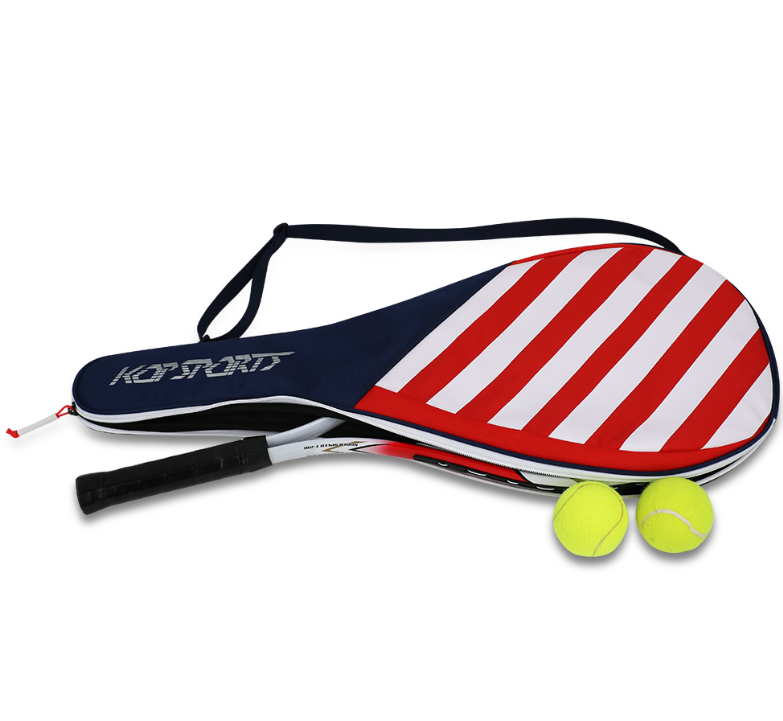
String tension loss is not only about hitting balls. It is also a creep process, meaning the material slowly deforms under sustained load. Heat lowers the activation energy needed for that deformation, so the same string relaxes faster at high temperature than at room temperature. Polyester strings, popular for their durability and spin, are especially sensitive to this effect. Natural gut is more resilient but degrades when heat combines with humidity. Multifilament and synthetic gut sit somewhere in between. Materials research on polymer creep and stress relaxation is well established, and the practical takeaway is simple. A stringbed stored hot will lose tension faster than one stored cool, even if it never leaves the bag.
A thermal compartment is an insulated pocket, usually lined with a reflective or foam layer, that slows heat transfer between the outside of the bag and the rackets inside. It does not refrigerate anything. It buys time. On a short drive to a club, the difference is small. On a full day in a hot car or a weekend at a tournament with the bag sitting in the sun, the difference grows. The insulation works by reducing radiant heat gain and slowing conduction through the bag wall. The limitation is honest. A thermal pocket will not keep a racket cool all day in a sealed car, and it cannot remove heat that has already built up inside the frame and strings.
The table below compares how common storage setups perform over a hot afternoon, using approximate internal temperature ranges reported by players and equipment staff in warm climates. These are field observations, not lab measurements, but the pattern is consistent.
| Storage setup | Approx. internal temp after 4 hours | Tension loss risk | Practical note |
|---|---|---|---|
| Racket loose in a car trunk | 55 to 70 C | High | Worst case, direct sun on metal |
| Standard bag in a shaded car | 35 to 45 C | Moderate | Still warmer than ambient |
| Thermal compartment in a shaded car | 28 to 38 C | Lower | Slows heat gain, not a cooler |
| Thermal compartment in an air conditioned room | Near ambient | Low | Best case for storage |
The numbers vary with car color, window tint, and outside temperature, so treat them as a relative guide. The key point is that insulation shifts the curve, it does not flatten it.
At a tennis club in a hot inland region, stringers noticed a pattern. Rackets dropped off on Friday and stored in players' cars over the weekend were coming back with tension readings noticeably lower than rackets stored indoors, even when the players reported no play. The club started recommending thermal compartments and asked players to bring rackets inside rather than leave them in vehicles. Over a season, the average tension drop on Monday check ins narrowed. The result is not a controlled study, and player habits changed at the same time, but the direction matched what stringers already expected. Insulation helped most when combined with a simple rule about not leaving rackets in a hot car.
A thermal pocket only works if it is used correctly. Rackets should go in without extra gear crammed around them, since bulky items push the frame against the bag wall and reduce the insulating air gap. The pocket should be closed, because an open thermal compartment loses its advantage quickly. Wet towels and water bottles should stay out, since moisture and condensation work against both strings and insulation. If the bag has a separate cooler pocket, keep it separate. One practical habit is to place the racket head toward the insulated side and the handle toward the access opening, so the most temperature sensitive part, the stringbed, sits in the protected zone.
Insulation is only as good as the bag around it. A thermal lining bonded to a flimsy shell will delaminate, and a reflective layer that cracks loses performance. Look for a coated outer shell, sealed or reinforced seams, and a lining that is attached across the full panel rather than spot bonded. Zipper quality matters too, since a thermal pocket that does not close fully is just a regular pocket. ASTM D5034 for fabric strength and ASTM D1683 for seam strength are useful references when judging whether the bag will keep its shape and its insulation over a season. The tradeoff is weight and cost, since insulated panels add bulk. For players who store rackets in cars or travel to hot tournaments, that tradeoff usually pays off.
Thermal compartments are one part of a broader habit. Rackets should come out of the car when possible, strings should be checked for tension loss after hot storage, and bags should not be left in direct sun even with insulation. A thermal pocket does not replace shade or indoor storage. It reduces the rate of heat gain during the trips and waits that are unavoidable. Kopsports, the short name behind the site, supports that kind of practical build with production lines making more than 6,000,000 bags a year, about 40% wheeled, plus skilled workers, roller equipment, and standardized testing before release. A well insulated tennis bag will not defeat a hot car, but it gives strings a better chance through the summer.

 EN



 Hot News