A professional baseball bag is essentially a problem of separating things that do not get along. A helmet, two bats, cleats, a glove, wristbands, a water bottle, and a change of clothes all have different sizes, weights, moisture levels, and cleaning needs. A bag with well-planned compartments lets a player reach into the dugout bag without digging, and keeps muddy cleats away from a clean jersey. A bag with poor compartment design turns into a pile, zippers get overloaded, and moisture circulates through one big pocket. Before comparing bags, list what actually travels to a game, then check the compartment layout against that list. Appearance matters far less than whether the layout matches real use.
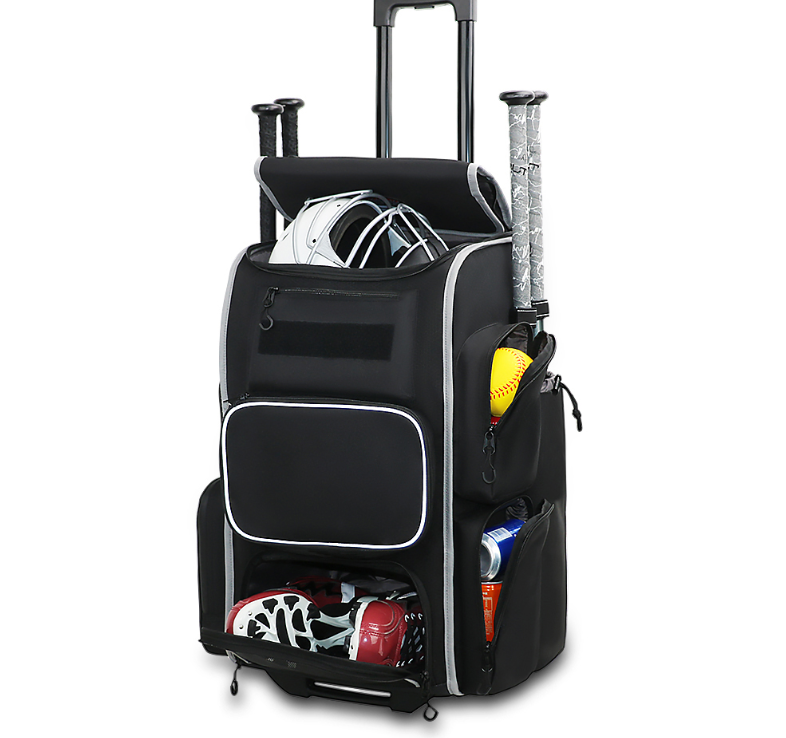
The shoe compartment is the most underrated zone in a professional baseball bag. Cleats carry mud, grass, and moisture. Mixed with clean gear, mud transfers to fabric and humidity spreads through the bag. A good shoe zone meets a few conditions: a sealed or coated divider between it and the main compartment, a base that can be wiped with a damp cloth, and vents or mesh that let moisture escape. Position matters too, with the shoe zone at the bottom or side, away from helmets and gloves. Some designs use a removable wet liner that can be pulled out and rinsed, which is practical in real use. ASTM D737, the standard test for fabric air permeability, is a useful reference when judging whether vents actually move air.
Bats and helmets are rigid items. Stored together, they knock against each other and against softer gear. A professional baseball bag usually gives bats a dedicated side sleeve or external slot, and helmets a padded top compartment or separate zone. The bat sleeve needs enough depth and a retention strap so bats do not slide, while the helmet zone needs a soft lining to avoid scratching the shell. When these items share space with gloves and jerseys, collisions are not the only problem. The bag becomes harder to organize and pack efficiently. Some designs add drainage holes at the bat sleeve base, a detail that earns its keep on rainy game days.
The split between wet and dry zones is one of the clearest differences between a professional baseball bag and a general sports bag. The wet zone holds towels, sweaty wristbands, and rain-soaked gear, while the dry zone carries clean jerseys, gloves, and a spare cap. The divider cannot be a thin fabric layer. It needs a coating or waterproof membrane, and seams should be taped where possible. The wet zone opening should close independently so moisture does not spread. Some bags make the wet zone a removable inner bag for separate washing and drying. That design is popular in practice because it turns moisture control from a whole-bag problem into a localized one.
Compartments are not only the large zones. Small pocket layout shapes daily experience. Phone, keys, tape, sunscreen, and energy gels need fixed spots, or they drift around the bag and take time to find. A professional baseball bag typically includes a few zippered pockets on the outside or top lid, sometimes with a fleece-lined phone pocket. These pockets should be reachable whether the player is standing or sitting, and zippers should run smoothly without catching. These details look minor, but over a season the difference is obvious.
Even a well-planned compartment fails if structural strength is weak. Edges need binding, load-bearing points need bar tack reinforcement, and zippers need reciprocating cycle testing. The base and handle attachments take the highest concentrated stress, so stitch density and material thickness there should exceed the rest of the bag. ASTM D1683 for seam strength and ASTM D2061 for zipper durability are practical references for judging whether construction will hold. The table below compares common compartment types and where they tend to fail.
| Compartment type | Primary function | Key design requirements | Common failure point |
|---|---|---|---|
| Shoe zone | Isolate mud and moisture | Coated base, vents, sealed divider | Divider seam splitting, weak airflow |
| Bat sleeve | Secure bats, prevent collisions | Adequate depth, retention strap, drain hole | Strap loosening, base wear |
| Helmet zone | Protect helmet surface | Soft lining, separate space | Lining detachment, tight fit |
| Wet zone | Hold damp gear | Waterproof membrane, independent opening, removable | Membrane damage, seam wicking |
| Small pockets | Organize small items | Reachable position, smooth zipper | Zipper catching, pocket distortion |
At a college program in a humid region, a batch of baseball bags showed shoe compartment divider seam failures after one season, allowing moisture into the main compartment. The supplier added binding and double-row stitching along the divider edge, and the problem stopped. Compartment design and structural strength have to be evaluated together, since a clever layout on weak construction is still a bag that will split.
Kopsports, the short name behind the site, supports that kind of compartment planning with production lines making more than 6,000,000 bags a year, about 40% wheeled, plus skilled workers, roller equipment, and standardized testing before release. A professional baseball bag with the right compartments still needs a player to use them consistently, but a thoughtful layout makes that habit far easier to keep.

 EN




 Hot News