A softball bag often carries more odor than players admit. Cleats pick up sweat, dirt, and field moisture, then sit in a closed car or a dugout for hours. The smell does not come from sweat alone. Bacteria break down sweat and skin cells, and the byproducts create that sharp locker room odor. When cleats share the main compartment with gloves, helmets, and uniforms, that odor spreads to everything nearby.
A vented shoe tunnel gives cleats a separate zone with a path for air and moisture to leave. The goal is not to perfume the bag. The goal is to reduce the moist, warm pocket where bacteria thrive. A softball bag with a dedicated tunnel also keeps mud and grass debris away from clean gear, which matters during back to back games.
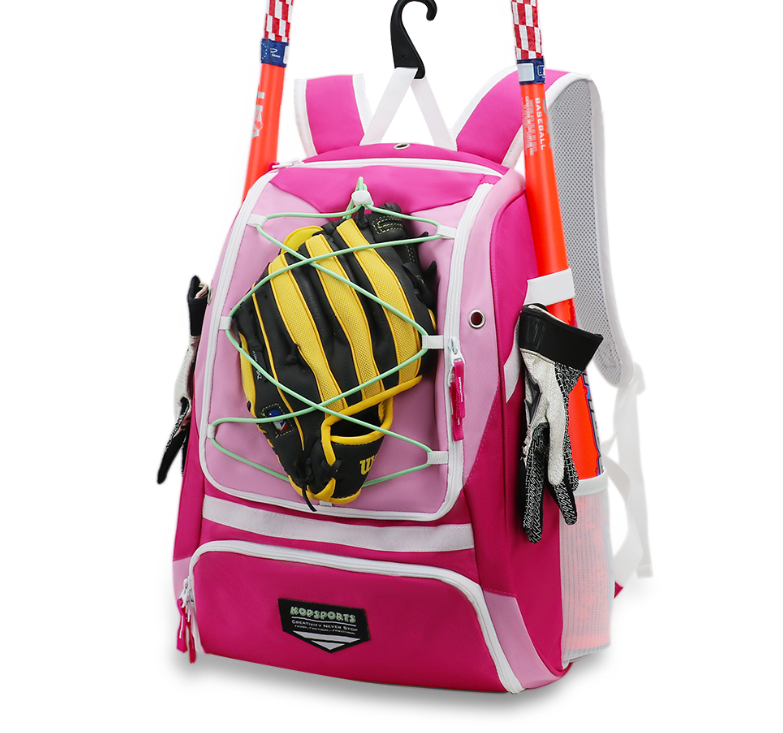
A shoe tunnel works through a simple balance of air exchange and moisture transport. The tunnel usually sits at one end of the bag, separated by a fabric wall with mesh or perforated panels. Outside air enters through vents, picks up moisture from the cleats, and exits as the bag moves or as temperature changes. Even a small amount of airflow helps because standing humid air is the real problem.
Fabric breathability is measurable. ASTM D737 covers air permeability of textile fabrics, and it gives labs a way to compare mesh and coated panels. A highly breathable mesh moves air well but offers less protection from rain and mud. A coated panel blocks water but traps moisture. The practical design uses breathable mesh in protected areas and a water resistant shell where the bag meets wet ground. The tunnel is a compromise, not a magic filter.
The vented tunnel only works when it is used with a little discipline. 1. Knock mud and grass off cleats before they go in. 2. Loosen laces and open the shoe collar so air can move inside the shoe. 3. Keep wet towels and soggy socks out of the tunnel, since they add moisture without airflow. 4. Place cleats sole down or heel first, depending on tunnel shape, so vents are not blocked. 5. Empty and wipe the tunnel after a wet weekend.
Placement inside the softball bag matters too. A tunnel at the end of the bag can vent through side panels without passing air over helmets or gloves. A tunnel that opens into the main compartment defeats the purpose. Some bags use a two way zipper and a mesh divider, which lets the tunnel breathe while keeping small gear from sliding into the shoe zone.
| Storage method | Odor spread to main compartment | Drying pace | Practical note |
|---|---|---|---|
| Cleats loose in main bag | High | Slow | Moisture reaches gloves and helmet |
| Cleats in sealed plastic bag | Low at first | Very slow | Condensation and stronger smell when opened |
| Cleats in vented shoe tunnel | Low when airflow is open | Moderate to fast | Best with mud removed and laces loose |
| Cleats outside bag on a rack | Lowest | Fastest | Not always possible at fields |
During a spring tournament in the Pacific Northwest, a college club team played four games in two days of steady rain. One player kept cleats in the main compartment of a standard duffel. By the second morning, the helmet liner and batting gloves had picked up a sour smell, and the uniform inside the bag felt damp. The cleats had not dried overnight because the bag was closed in a wet car trunk.
A teammate used a softball bag with a vented shoe tunnel and a mesh side panel. The cleats still smelled after removal, but the main compartment stayed drier. The tunnel was wiped out at the end of each day and left open in the hotel room. The difference was not a special coating. It was separation and airflow. Field results like this are why tunnel placement and vent size deserve more attention than marketing language.
A vented shoe tunnel is not a sterilization chamber. It will not remove odor from badly contaminated cleats, and it will not dry soaking wet shoes in a closed car. Players who deal with fungal issues or heavy mud should clean and dry cleats outside the bag first. The tunnel helps manage moisture and odor between games, but it cannot replace basic hygiene.
Climate also matters. In a dry climate, a mesh tunnel can dry cleats quickly. In constant rain, the same tunnel may stay humid unless the bag is opened at home. A softball bag with a vented tunnel is most useful for players who move between field, car, and dugout and need a clean separation between dirty footwear and the rest of the gear. For long storage, remove cleats entirely.
A vented tunnel takes abuse from cleat studs, zipper pulls, and repeated loading. The mesh should be abrasion resistant and backed by a strong seam. The divider needs a stable attachment so it does not sag into the main compartment. Zippers around the tunnel should run on reinforced tape, since this area gets opened and closed more often than expected.
Testing should cover more than appearance. A maker can run a loaded tunnel through repeated open and close cycles, check mesh strength after abrasion, and verify that vents stay clear when the bag is full. A standardized quality control system helps catch process drift before bags reach a field. KOP supports that discipline through high-volume sports bag production, a specialized roller equipment bag facility, and material and whole-bag checks before release. A vented tunnel is a small feature, but it depends on consistent sewing, mesh selection, and assembly to work as intended.

 EN




 Hot News