A locker-sized gym bag faces a simple physical test every morning. It has to slide into a narrow cubby, sit on a shelf or floor panel, and come back out without snagging on a door frame or a hinge. Gym bags that lose their shape under load make that routine harder. A soft bag that sags in the middle can bulge at the bottom, catch on a locker lip, or fold over when a hand reaches inside. Structural stability matters because the bag is not just a container. It is a shape that has to stay predictable in a confined space. The right structure keeps the bag open enough to pack, flat enough to slide, and rigid enough to protect the items inside.
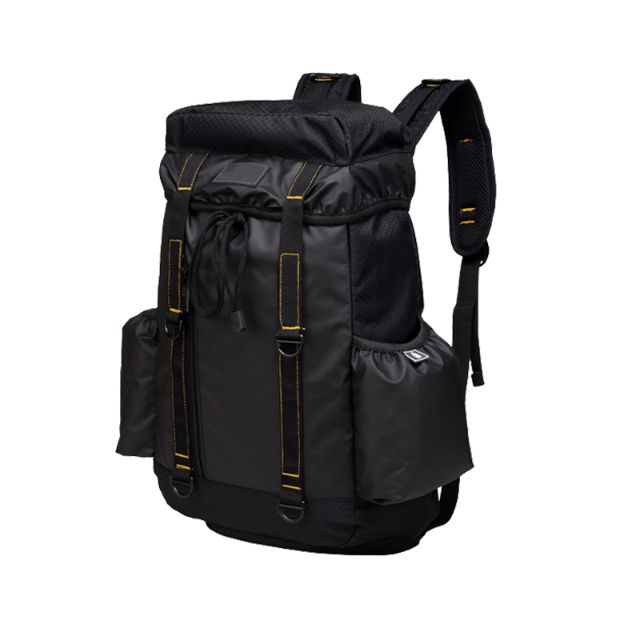
The bottom panel carries most of the load and takes most of the abuse. A gym bag with a thin, unsupported base will bow when a water bottle and shoes go in. That bow changes the footprint and can make the bag jam in a tight locker. A reinforced base with a removable polyethylene board or a stitched-in stiffener keeps the footprint flat. The board should sit inside a sleeve so it does not shift, and the sleeve should be accessible for replacement if the board cracks. A flat base also helps the bag stand upright when it is set on a bench, which makes packing easier and reduces the chance of tipping.
A bag can have a strong base and still fold inward at the sides. That happens when the side panels are too soft or the piping is too thin. A semi-rigid side panel, often made with foam laminated to a backing fabric, holds the wall upright while still allowing some compression. Piping along the seams adds a structural line that resists twisting. The tradeoff is that a stiffer side panel reduces how much the bag can squash into an undersized locker. A bag that is too rigid can be just as frustrating as one that is too floppy. The practical target is a bag that holds its rectangular shape when empty and compresses slightly when packed, without collapsing at the corners.
| Structural approach | Shape retention | Locker compression | Weight and cost | Common issue |
|---|---|---|---|---|
| Unsupported soft base and sides | Low | High | Low | Bows under load and jams in narrow lockers |
| Removable PE base board only | Moderate | Moderate | Low to moderate | Board shifts or gets lost |
| Foam-laminated side panels with piping | Good | Moderate | Moderate | Can feel bulky in small cubbies |
| Semi-rigid frame with soft front panel | High | Low | Higher | Less forgiving in tight openings |
Structure is not only about boards and foam. Seams and zippers hold the shape together. A main zipper that is under tension when the bag is packed can pull the side panels inward and distort the opening. A handle anchor that is stitched through a single layer of fabric can tear and let the bag sag on one side. Bar tacks, box-X stitches, and reinforced anchor patches spread the load. ASTM D1683 for seam strength is a useful reference because it measures how a seam behaves under tension, not just whether it looks neat. A bag can pass a visual check and still have a weak seam at the handle or the base corner, which is exactly where structural failure starts.
During a recreation center retrofit at a university campus, the facilities team measured 180 lockers in two locker rooms. The clear opening was about 11.5 inches wide, and many members were using soft duffels with no base support. Staff noticed that packed bags bowed at the bottom and caught on the locker lip, and some members were forcing the bags in and out. The recreation team tested a replacement bag with a removable base board, foam-laminated side panels, and bar-tacked handle anchors. The new bag held a flatter footprint, slid in more smoothly, and stood upright on the bench during packing. The tradeoff was a slightly heavier bag and a base board that had to be checked after washing. The useful lesson was that structural stability solved a daily friction point, but it did not make the bag weightless or maintenance-free.
A more stable gym bag is usually heavier and more expensive. A rigid frame holds shape well, but it reduces how much the bag can compress into a tight locker. A removable base board adds flatness, but it can be lost or forgotten. Foam-laminated side panels improve shape retention, but they add bulk and can make the bag feel stiff against the body. The honest answer is that structural stability is a balance between shape retention and packability. A locker-sized bag does not need to be a hard case. It needs enough structure to keep a predictable footprint, protect the contents, and survive repeated loading at the handle and base. Buyers should test a packed bag in a real locker, not just look at an empty sample on a table.
KOP’s production base supports that kind of structural planning with annual output above 6,000,000 pieces, about 40 percent wheeled bags, thousands of skilled workers, and professional roller equipment. Every bag goes through a standardized testing process under a strict quality control system before release, covering material durability, craft accuracy, and structural stability. For locker-sized gym bags, the value is a structure that keeps its shape under real packing and real locker clearance.

 EN




 Hot News