A baseball bag capacity question usually gets a simple answer that turns out to be wrong. Parents buy a large wheeled bag for a young player, and the bag ends up half empty on the way to the field and overloaded on the way home. Adult players buy a compact backpack and then run out of room once a catcher's gear or a second pair of cleats goes in. The reliable way to size a baseball bag is to list the gear that actually travels to practices and games, then match usable volume to that list. Age is a rough proxy at best. Position, league rules, and travel distance matter more.

A typical youth player carries a glove, a batting helmet, a pair of cleats, a water bottle, a snack, and maybe a light jacket. That load fits comfortably in a 25 to 35 liter baseball bag. A 30 liter backpack or a small duffel leaves room for a sweatshirt and a spare shirt without turning into a haul. The trap is buying a 50 liter wheeled bag for a 10U player. The bag looks practical, but it encourages overpacking, and a loaded wheeled bag can weigh more than the player wants to pull across a parking lot. A lighter backpack also keeps the load close to the body, which matters when a young player is walking several blocks to a field.
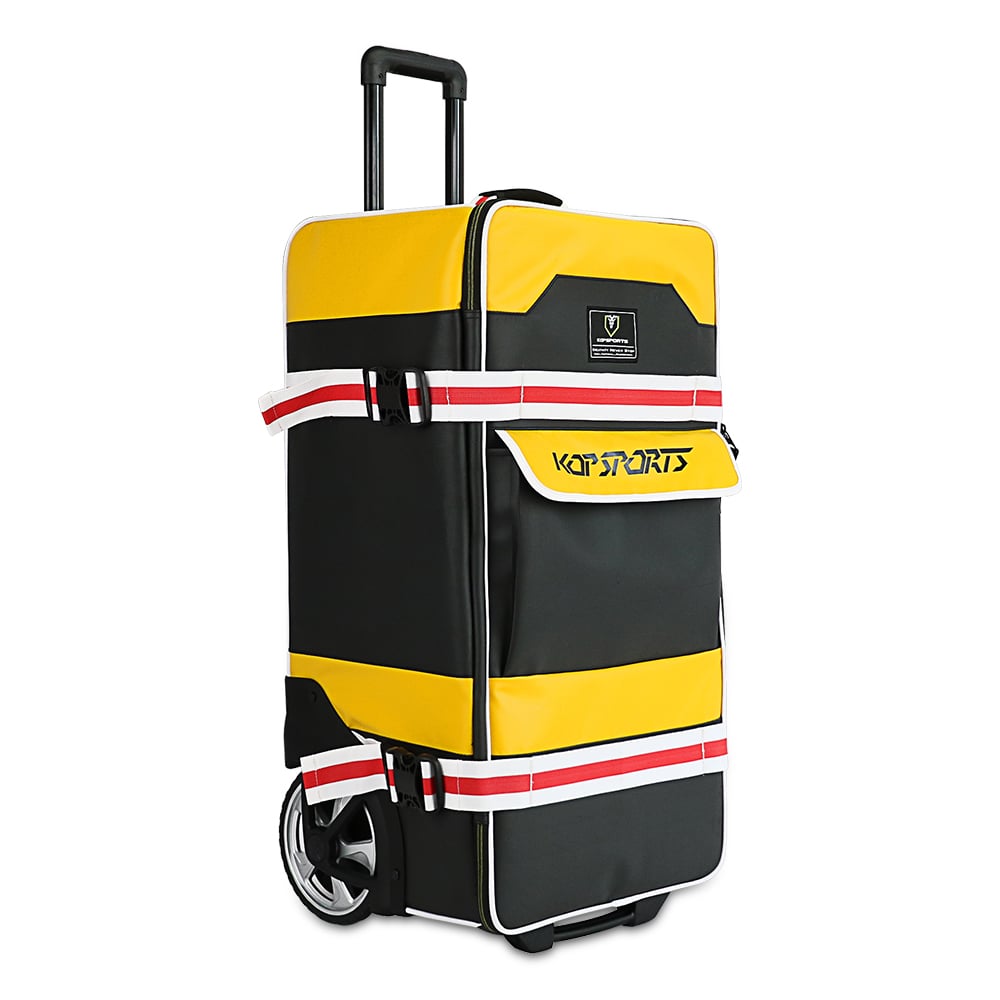
High school and adult league players often carry more than youth players, but the increase is not unlimited. A typical adult load includes two gloves, a helmet, cleats, turf shoes, a few shirts, a towel, a water bottle, and a small first aid kit. That list usually lands in the 40 to 60 liter range. A 45 liter backpack works for a player who drives to the field and carries the bag a short distance. A 55 to 60 liter wheeled bag works better for tournament weekends, when a player needs a change of clothes and a snack supply. The mistake in the other direction is buying a 70 liter team bag for individual use. The bag swallows the gear, shifts around, and makes it hard to find a glove in a hurry.
| Player profile | Practical capacity | Typical load | Main limitation |
|---|---|---|---|
| Youth recreational, 8 to 12 | 25 to 35 liters | Glove, helmet, cleats, bottle, snack | Overpacking if bag is too large |
| High school or adult league | 40 to 60 liters | Two gloves, helmet, cleats, turf shoes, shirts, towel | Wheeled bags get heavy on stairs |
| Travel ball, weekend events | 50 to 65 liters | Core gear plus change of clothes and snacks | Needs strong seams and zippers |
| Catcher or pitcher with extra gear | 60 to 75 liters | Catcher's gear or multiple gloves and layers | Extra volume adds weight fast |
A catcher's gear changes the math. A chest protector, shin guards, and a catcher's helmet take up volume that a standard player bag was never designed to hold. Some catchers use a separate gear bag and a smaller personal bag, which is often the better solution. A single 75 liter bag can hold everything, but it becomes heavy and hard to carry. Pitchers may carry multiple gloves, a jacket, and extra layers for cold mornings, which pushes a personal bag toward 60 liters. The honest answer is that position-specific gear may call for a two-bag system rather than one oversized bag. Buyers should measure the bulkiest item, usually the catcher's helmet or chest protector, before choosing a capacity.
During a spring season, a travel baseball club tested three bag capacities with its 12U and 16U teams. The 12U group started with 45 liter wheeled bags. Coaches noticed that players were stuffing jackets and snacks into the main compartment, and the handle anchors on several bags began to tear by midseason. The club switched the 12U group to 30 liter backpacks with a separate shoe pocket. Players carried less, packed faster, and the handle failures stopped. The 16U group used 60 liter wheeled bags and reported fewer problems, though catchers on both teams ended up carrying a second gear bag. The useful lesson was that capacity should follow the real load, and a smaller bag can solve problems that a larger bag creates.
A large baseball bag carries more weight, and that weight concentrates at the handle anchors, the wheel housing, and the main zipper. A 60 liter bag loaded with shoes, a helmet, and a water bottle puts more stress on those points than a 30 liter bag. Seam strength matters, and ASTM D1683 is a useful reference because it measures how a seam behaves under tension. Zipper strength matters too, and ASTM D2061 covers the kind of repeated loading a main zipper sees over a season. A bag can look roomy and still fail at a bar tack or a zipper tape seam. Buyers comparing capacities should also compare construction at the stress points, not just the liter number on the tag.
No single capacity fits every player. A youth player who walks to a local field needs less volume than a travel player who spends a weekend at a complex. A catcher may need a two-bag system. A player who drives to a field may accept a heavier wheeled bag, while a player who takes public transit may prefer a backpack. The practical checks are simple. 1. Pack the real gear list into a sample bag. 2. Lift the loaded bag and walk a short distance. 3. Check whether the main zipper closes without forcing. 4. Look at the handle anchors and wheel housing. 5. Confirm that the bag fits the trunk or back seat that will carry it.
KOP’s production base supports that kind of capacity planning with annual output above 6,000,000 pieces, about 40 percent wheeled bags, thousands of skilled workers, and professional roller equipment. Every bag goes through a standardized testing process under a strict quality control system before release, covering material durability, craft accuracy, and structural stability. For baseball bag programs, the value is a capacity range built around real player loads and real stress points, not around a single oversized number.

 EN





 Hot News