A tournament pickleball bag carries a different load than a casual court bag. There are match paddles, backup paddles, balls, a towel, a change of shirt, snacks, water, a bracket sheet, tape, and sometimes a first aid kit. The bag gets opened and closed between every match, often while the player is walking to a new court. Compartment layout decides whether that routine stays calm or turns into a scramble. A well-organized tournament bag does not need dozens of pockets. It needs a small number of zones with clear jobs, so a player can reach for a specific item without unpacking half the bag.
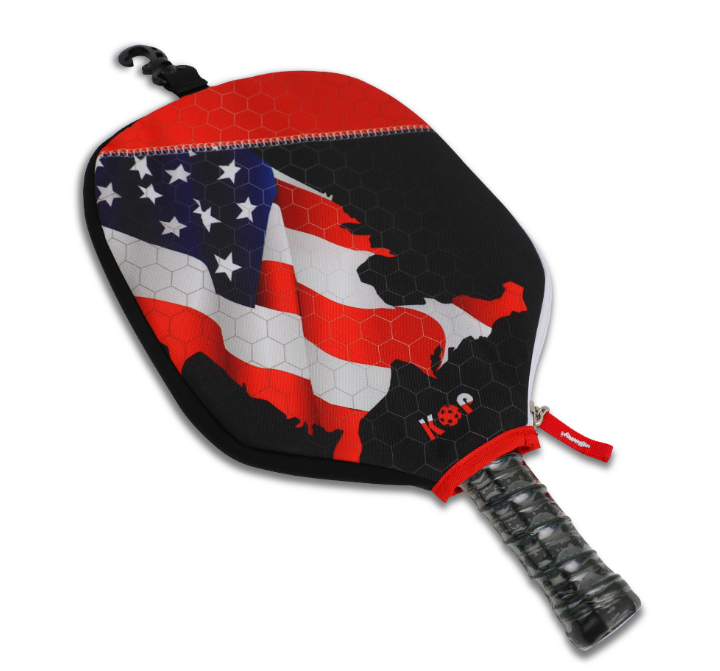
Paddles are the most expensive and most fragile item in a tournament bag. A padded paddle compartment or sleeve keeps faces from rubbing and protects edge tape. For tournament use, the compartment should hold at least two paddles, because most players carry a primary and a backup. Separate slots are better than one wide sleeve, since two paddle faces pressed together can wear at the edges. The compartment should sit against a flat back panel, not float in the middle of the bag. That placement keeps the paddles away from a swinging water bottle and makes them easy to pull out when the player is rushing to a court.
Loose balls are the classic tournament bag problem. They roll to the bottom, slide under a towel, and turn up after the player has already checked three pockets. A dedicated ball pocket or a ball tube slot fixes that. A breathable pocket helps with airflow, but the more important detail is a closure that keeps balls from spilling when the bag is set down. A cinch top or an elastic opening works well. Some tournament bags use an exterior ball pocket, which is convenient because the player can grab a ball without opening the main compartment. The tradeoff is that an exterior pocket can bulge and catch on things, so it needs a low-profile shape.
Tournament days are long, and players often change shirts between matches. A separate clothing section keeps a clean shirt away from a damp towel and dirty shoes. A shoe compartment with a wipeable lining is useful, but it should not share space with the clean clothing zone. A small wet pocket for a towel and a damp shirt keeps moisture away from paddle grips and spare clothes. That separation matters more on humid days, when a towel stays damp for hours. The goal is not to isolate every item. It is to keep the three moisture sources, shoes, towels, and wet clothes, from spreading into the rest of the bag.
| Compartment | What it holds | Key design detail | Common failure |
|---|---|---|---|
| Padded paddle sleeve | Two paddles | Separate slots, flat back panel | Faces rub and edge tape wears |
| Ball pocket | Balls or ball tube | Cinch top, low-profile exterior | Balls spill when bag is set down |
| Clothing section | Clean shirt, shorts | Separate lining, away from shoes | Damp towel shares the space |
| Shoe compartment | Court shoes | Wipeable lining, vent panel | Odor and dirt spread to clothes |
| Wet pocket | Towel, damp shirt | Sealed seam, roll-top closure | Moisture wicks into main bag |
| Quick-access top pocket | Phone, keys, bracket sheet | One-hand reach, soft lining | Pocket blocked by handle |
Quick-access pockets are where a tournament bag earns its keep. A top pocket for a phone, keys, and a bracket sheet should be reachable with one hand while the bag is on a bench. A small exterior pocket for tape or a snack helps, but every added pocket adds seams and hardware. The practical rule is to place quick-access zones where the hand naturally falls, not where the pattern looks balanced. A side pocket for a water bottle needs depth and a drain hole, because a shallow pocket lets a heavy bottle launch out when the bag is set down. A pen loop or a small clip for a bracket sheet is a low-cost detail that saves time between matches.
During a regional tournament, a group of 24 players tested three bag layouts across a two-day bracket. The first bag had one large main compartment and a single exterior pocket. Players lost balls under towels and spent time digging for a bracket sheet. The second bag added a padded two-paddle sleeve and a ball pocket, which fixed the paddle and ball issues, but wet towels still ended up against clean shirts. The third layout kept the paddle sleeve and ball pocket and added a small wet pocket with a sealed seam and a separate shoe compartment. Players reported faster between-match changes, and the most-used feature was the top quick-access pocket for the bracket sheet and phone. The useful lesson was that organization comes from matching each zone to a specific routine step, not from adding pockets at random.
A compartment plan looks clean on a drawing and gets complicated in production. A wet pocket means a lining, a sealed seam, and a zipper that can handle moisture. A shoe compartment means a wipeable lining and a vent panel. A padded paddle sleeve means foam, a false bottom, and stitching that does not create a hard edge against the body. Each zone adds pattern complexity and a chance for a weak seam or a bulky overlap. That is why compartment design and quality control belong together. A standardized testing process before release should cover zipper cycling, seam strength, and lining adhesion. ASTM D2061 for zipper strength and ASTM D1683 for seam strength are useful reference points, because compartment failures usually show up at closures and seams, not in the middle of a panel.
More compartments are not automatically better. Each one adds weight, cost, and pattern complexity, and too many small pockets can reduce the usable volume of the main compartment. A player who carries only one paddle and a water bottle does not need a six-zone tournament bag. A player who plays multiple events in one day may need every zone listed here. The honest approach is to list the items that actually travel to a tournament, then choose a layout that gives each item a clear home. A bag with four well-placed zones usually beats a bag with ten overlapping pockets.
KOP’s production base supports that kind of compartment planning with annual output above 6,000,000 pieces, about 40 percent wheeled bags, thousands of skilled workers, and professional roller equipment. Every bag goes through a standardized testing process under a strict quality control system before release, covering material durability, craft accuracy, and structural stability. For tournament pickleball bag programs, the value is a compartment layout that follows the match-day routine and holds up under real seams and real packing.

 EN



 Hot News