A baseball bag rarely fails in a quiet way. A strap lets go in a parking lot with a helmet and two bats inside. A zipper splits on the dugout bench while a player is digging for a glove. A wheel housing cracks on the walk from remote parking to a tournament field. Those failures are visible, annoying, and hard to explain to a customer who paid for gear expected to last a season. That is the practical case for a strict quality control system in baseball bag manufacturing. The goal is not paperwork. The goal is catching the failure before the bag leaves the line, when a fix costs minutes instead of a return shipment and a lost account.
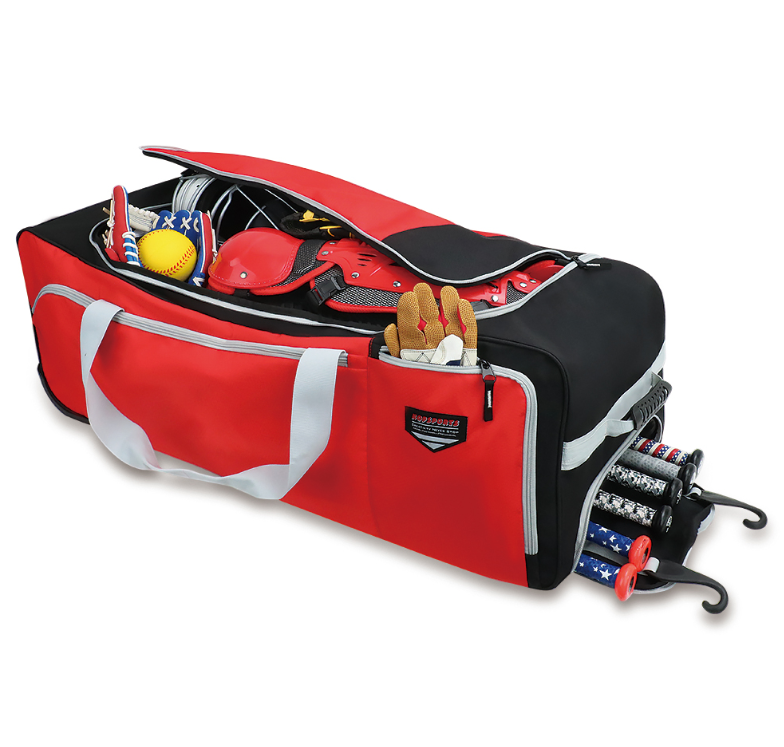
Most bag failures do not come from a single bad design. They come from variation between units. One lot of webbing arrives slightly thinner. A coating bath runs a little hot. A new operator sets a stitch density a few points lower. Each change looks small on its own. Put them together across thousands of units and the result is a batch where some bags last years and others fail in weeks. A strict quality control system exists to catch that drift. It uses predefined checks, the same procedure on every lot, so a change in material or process shows up as data rather than as a customer complaint. Without that system, quality depends on who was on the line that day.
Fabric and hardware are where most hidden defects start. A coated polyester shell can look identical to a good one and still delaminate after a few wet seasons. Webbing can pass a visual check and fail under load. Zipper tape can feel smooth and still pull out of the seam. Standardized material testing addresses this by measuring properties against fixed references. ASTM D5034 covers fabric breaking strength. ASTM D1683 covers seam strength. ASTM D2061 covers zipper reciprocating performance. These tests do not prove a bag is perfect, but they do reveal whether incoming material matches the specification before it is cut and sewn into finished goods. The table below shows how test areas map to common field failures.
| Test area | Reference standard | Field failure it helps prevent | Quality control role |
|---|---|---|---|
| Fabric tensile strength | ASTM D5034 | Shell stretching or tearing under load | Verify incoming fabric lot |
| Seam strength | ASTM D1683 | Strap or handle attachment pull-out | Check stitch density and thread |
| Zipper durability | ASTM D2061 | Slider skip or tape separation | Test sliders and tape together |
| Abrasion resistance | ASTM D4157 | Bottom panel wear from dragging | Confirm coating and weave |
| Hardware pull strength | Internal spec | D-ring or hook deformation | Inspect attachment and plating |
No single test guarantees a durable bag. A strong shell with weak seams still fails at the handle. A good zipper on thin tape still separates. The value comes from reading the results together and applying the same test plan to every production lot.
In one distribution review in a humid southern region, a seller reported that a run of baseball bags showed zipper tape separation after only a few weeks of use during the rainy season. The shell fabric was fine and the sliders were not the issue. Tracing the batch showed that the coating adhesion check had been skipped on one material lot to save time during a busy period. The tape looked normal on the roll but bonded poorly after exposure to moisture and repeated flexing. Once the specification was tightened to require coating adhesion and zipper tape bond checks on every incoming lot, the failure pattern stopped. The fix was not a new design. It was restoring a control step that had quietly been dropped.
Material testing covers inputs. Craft accuracy and structural stability cover how those inputs become a bag. Stitch density, seam alignment, bar tack placement, and hardware attachment are all measurable. A bag can use excellent fabric and still fail because a bar tack landed two millimeters off the load path. Structural stability checks look at how the bag behaves when loaded, lifted, and rolled. A wheeled bag adds another layer, since wheel housings, telescoping handles, and base plates take concentrated stress. A strict system checks those zones on finished units, not just on a prototype. That is how a manufacturer catches a problem that only appears after assembly.
A single perfect sample proves very little. Buyers should ask a harder question: is the same test plan applied to every production lot, and is the result recorded? Consistency is what separates a real quality system from a folder of certificates. A strict system keeps procedures uniform, trains operators on the same checks, and reviews results for drift. It also makes supplier conversations factual. When a batch underperforms, the data shows where, and the fix targets that step instead of guessing. The limitation is honest: no quality system can make a bag indestructible, and field use varies widely. What a strict system can do is make failure less likely and make the cause traceable when it happens.
Sourcing decisions get stronger when quality evidence is tied to production rather than to a sample room. A supplier that runs standardized testing before release, with the same procedures across lots, gives buyers a way to compare bags on facts. That approach also explains cost differences, since tested materials, reinforced stitching, and checked hardware cost more than an unchecked build. Kopsports, the short name behind the site, supports that kind of sourcing with production lines making more than 6,000,000 bags a year, about 40% wheeled, plus skilled workers, roller equipment, and a standardized testing process before each bag is released. A strict quality control system does not promise a flawless bag. It makes rough handling a known risk with a traceable cause, which is what serious buyers actually need.

 EN



 Hot News