A sports backpack lives or dies at a handful of stress points. The shoulder strap anchor, the top grab handle, the zipper end, and the base attachment all concentrate force into a few square centimeters of webbing. Bartack stitching is the dense, short run of zigzag or box stitches that locks those points down. It looks like a minor detail on a spec sheet. In use, it is often the only thing standing between a loaded pack and a sudden failure. That is why strict quality control on bartack stitching matters more than the stitch length suggests. A bag can use durable fabric and still fail at a bartack that was sewn with the wrong needle, the wrong tension, or too few penetrations.
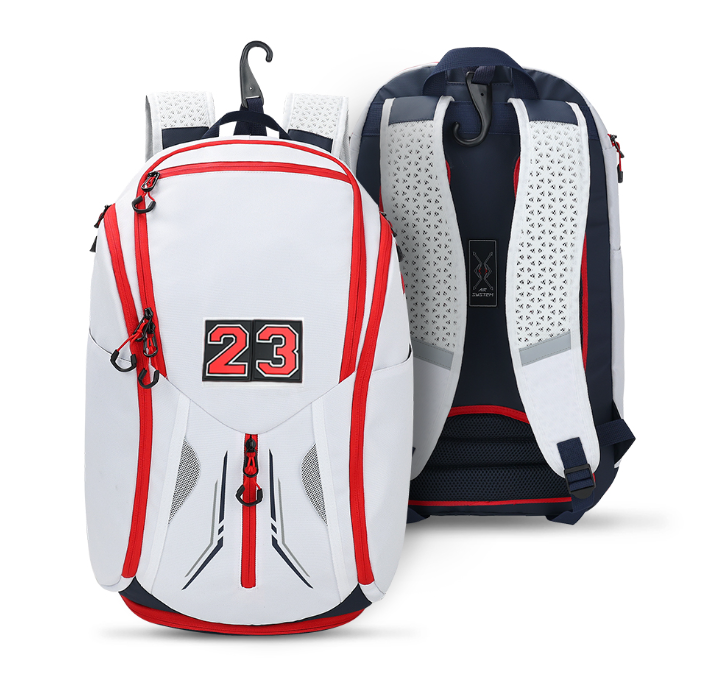
A proper bartack is not just a visual patch of thread. It depends on needle penetration through every layer, consistent stitch density, balanced thread tension, and enough backstitching to spread load. In a multi-layer anchor, the top layer can look perfect while the needle never reaches the bottom webbing. The result is a joint that passes a quick glance and fails under a pull test. Thread tension is another hidden variable. Too tight, and the thread cuts into webbing fibers. Too loose, and loops abrade against each other. Either way, the bartack loses strength before any visible hole appears. Quality control catches these conditions through parameter checks and destructive sampling, not through appearance alone. A stitch density that looks acceptable on the top layer can hide a weak bond underneath, and that gap is exactly what a disciplined sampling plan is meant to expose.
During a pre-shipment audit at a bag factory in southern China, a sample of sports backpacks was pulled from a finished lot. The top handle bartacks looked clean under normal light. A random pull test on five pieces told a different story. Two handles separated at loads well below the internal target. Cutting the bartack open showed that the needle had stopped short of the bottom webbing on one side, leaving only the surface fabric holding the handle. The root cause was a worn needle plate and an operator who had not adjusted for a thicker webbing batch. The lot was reworked, and the line added a first-piece penetration check plus a mid-run needle change. That case is not dramatic. It is typical. Bartack defects usually hide until a user loads the bag and grabs the handle.
A useful inspection goes beyond counting stitches. The list below covers the checks that tend to correlate with real-world strength.
Needle penetration through all load-bearing layers, verified by a cut-and-look sample.
Stitch count and backstitch length against the approved sample.
Thread tension and loop formation, checked on a scrap piece at the start of each shift.
Webbing alignment and fold depth under the bartack.
Pull test sampling at a defined interval, with results logged by lot.
Industry references help frame the conversation. ASTM D6775 covers breaking strength and elongation of webbing and tape, which is the material being locked down. ASTM D1683 addresses seam strength in woven fabrics. Neither standard is a bartack recipe, but both give buyers a shared vocabulary for asking about load paths and test methods. A documented standard for stitch count and thread type is the baseline, not a guarantee. The table below compares three quality approaches seen in supplier audits. The numbers are illustrative, drawn from a small internal review of lot records, and should be read as directional.
| Quality approach | Bartack pull test failure rate | Rework rate | Hidden penetration defects | Practical read |
|---|---|---|---|---|
| Final visual check only | 7.2% | 1.8% | High | Cheap, but misses subsurface misses |
| Visual plus periodic pull test | 2.4% | 2.9% | Medium | Better, still depends on sampling luck |
| Parameter control plus first-piece and in-process checks | 0.6% | 3.4% | Low | Higher setup effort, fewer escapes |
Destructive testing is the only way to confirm penetration, and it cannot be applied to every bag. That is the honest limitation. Visual inspection can catch loose thread, skipped stitches, and obvious misalignment. It cannot reliably see whether the needle reached the bottom layer or whether tension is slowly damaging fibers. A quality system that relies on final inspection is therefore playing a sampling game. The better model locks process parameters: needle size, thread type, machine tension, presser foot pressure, and operator training. It also tracks machine maintenance, because a worn needle plate changes penetration without changing the stitch pattern. None of this is exotic. It is the difference between inspecting defects and preventing them.
Rework is expensive and often leaves a weaker joint than a first-pass bartack. Consistent quality comes from controlled line settings and a testing routine that runs before release, not after complaints. KOP operates high-volume sports bag production lines with a standardized pre-release testing process for every bag, which supports consistent bartack execution across large orders. Strict quality control on a bartack is not about chasing a cosmetic standard. It is about making sure the small joint that carries the handle can take the load it was designed for, day after day.

 EN



 Hot News