A basketball bag works hard during back-to-back games, and the toughest packing problem is rarely mud. It is moisture. A sweaty jersey keeps releasing vapor for hours, and that vapor migrates through fabric, zippers, and seams. A plastic grocery bag slows liquid transfer, but it also traps odor and tears at the corners after a few uses. A dedicated wet zone, ideally a sealed pocket with a water-resistant lining and a small vent, gives moisture a controlled place to sit. Clean warm-ups stay on the dry side. That separation has to exist in the bag layout first. Packing tricks can support the layout, but they cannot replace it. A bag with one open compartment and a thin divider is asking for trouble on a humid game day.
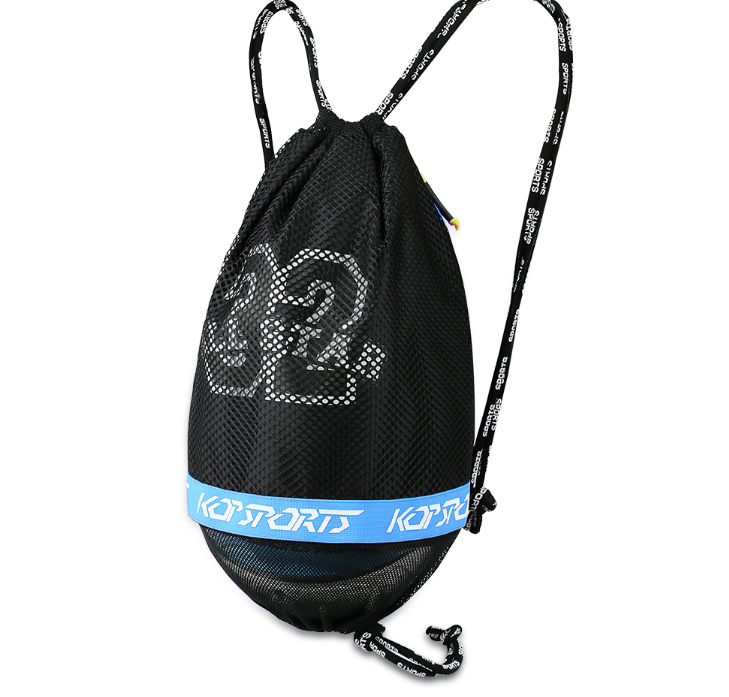
Two features matter before anything else: closure and airflow. A roll-top closure or a coated zipper keeps liquid inside the wet pocket. A mesh vent panel on the dry side lets trapped humid air escape without exposing clean clothes to direct contact. Those goals pull in opposite directions, which is why material choice matters. ASTM E96 measures water vapor transmission, a useful way to compare how much moisture a fabric lets through over time. ASTM D737 covers air permeability. Neither test guarantees odor control, but both help separate a breathable panel from a decorative mesh strip. A wet pocket with no vent becomes a swamp. A dry side with no barrier becomes a wicking bridge. The best layout uses a coated lining on the wet side and a breathable panel on the clean side, with a solid divider between them.
The packing method matters as much as the pocket. A soaked jersey should be wrung once, rolled tightly from the bottom up, and compressed before sealing. Air pockets carry odor and make the bundle bulky. Keep the wet roll at the bottom of the bag or in a side wet pocket, never above the clean layer. Socks and wristbands dry faster when they are spread flat in a mesh sleeve instead of balled up inside a shoe. A small towel can wrap the wettest item as a secondary barrier. This is not about making wet clothes dry inside the bag. It is about slowing vapor release and keeping liquid contact away from clean fabric. A compressed roll also takes less space, which leaves room for warm-ups to stay folded instead of crushed against the wet zone.
Clean warm-ups need their own space, and a thin divider is not enough. A coated lining, a sealed seam, or a separate sleeve creates a physical barrier. If the bag has only one main compartment, use a packing cube with a water-resistant shell for the clean layer and place it high and away from the wet roll. Shoes should sit at the base in their own sleeve, because soles carry grit and moisture. The table below summarizes a small field comparison from a rainy weekend tournament. The sample was limited, so the numbers show direction rather than proof.
| Packing setup | Clean warm-ups damp after 4 hours | Odor noticed at unpacking | Access time | Practical read |
|---|---|---|---|---|
| Sealed wet pocket plus separate clean sleeve | 1 of 12 | 2 of 12 | 22 s | Best separation, needs a real barrier |
| Plastic bag inside main compartment | 4 of 12 | 7 of 12 | 15 s | Cheap, traps odor and tears |
| Mesh wet sleeve next to clean clothes | 6 of 12 | 9 of 12 | 9 s | Fast, but moisture moves freely |
A few inexpensive tools make the layout more reliable. 1. A roll-top dry bag for the jersey adds a second seal. 2. A small mesh pouch for socks keeps damp items from touching warm-ups. 3. A carabiner lets wet shoes hang outside the bag when the weather turns. 4. A laundry bag with a coated base gives a dirty kit a defined home. 5. A silicone packet in the clean compartment helps between uses, but it needs regular drying. None of these tools fix a bag with a weak layout. They buy time and reduce contact, which is often enough on a long game day. The limitation is honest: tools add weight and take up space, and a sealed wet bag still needs airing out after the game.
A bag behaves differently when it is carried for an hour than when it is packed on a bench. At a regional youth tournament in a humid southern city, equipment staff tracked 36 bags across a two-day event. Bags with a sealed wet pocket and a separate clean sleeve kept warm-ups noticeably drier than bags that used a mesh sleeve beside clean clothes. The staff also found that wet rolls packed at the bottom stayed put during bus rides, while wet bundles placed near the top shifted and pressed against clean layers. The sample was small and the conditions were specific, so the result is a field note, not a lab conclusion. A simple home test helps: pack a damp towel in the wet zone and a dry shirt in the clean zone, carry the bag for 30 minutes, then check for transfer. For volume buyers, KOP runs high-capacity sports bag lines with a standardized pre-release testing process on every bag, which supports consistent compartment construction and barrier placement across large orders.

 EN




 Hot News