A heavy-duty lacrosse bag fails at joints before the fabric gives out. The shell may be strong, but a seam that drifts two millimeters or a bartack that misses the load line creates a hard spot. Under a full load, repeated rolling and lifting push stress into that spot. Craft accuracy is the discipline of keeping panels, seams, and hardware aligned to the intended load path. When the path is clean, force moves from handle to frame to base without sharp turns. When it is not, one row of stitches carries more than its share. That is how a bag with good materials can still wear out early.
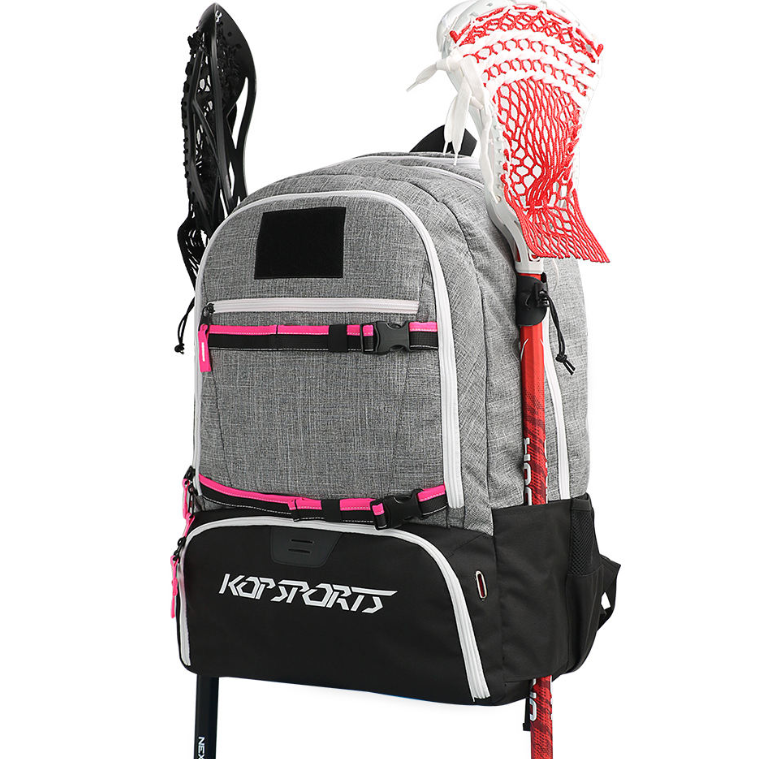
Stitch density is not a vanity number. Too few stitches per inch leaves long yarn floats that catch on gear and pull open. Too many stitches can perforate the fabric and create a tear line. The useful range depends on fabric weight, coating, and thread size, so a single spec across every panel is a warning sign. A bound seam distributes load across a folded edge, while a simple overlap seam concentrates it at the stitch line. ISO 13935-2 covers seam tensile strength, and ASTM D1683 addresses seam slippage. Those methods do not guarantee a good bag, but they reveal whether a seam can take repeated load without opening. In a wheeled lacrosse bag, the bottom seam and the seam around the wheel housing deserve the closest look.
Hardware attachments are where craft accuracy shows up in daily use. A handle root that is sewn through one layer of fabric will loosen after repeated lifting. A wheel housing that is mounted slightly off center will make the bag track sideways, and the user will correct by dragging. Zipper ends take a beating because the slider stops and reverses at the same point. Bar tacks, box stitches, and reinforced tape spread that load. The goal is not more stitching everywhere. It is the right stitch in the right place, with the right thread tension. A bag that is overbuilt in one area and underbuilt in another can still fail at the weak point.
Craft accuracy starts at the cutting table. If two side panels are cut slightly different, the bag will pull to one side when zipped. If the bottom panel is short, the frame has to bend to meet the seam. That preload is invisible at first, but it adds to every load the bag carries. A clean cut and consistent seam allowance keep the bag symmetrical. Symmetry matters on a wheeled bag because the frame and axle need parallel support. A twisted body can make the wheels toe in or out, which increases drag and wear. The fix is not a stronger wheel. It is a panel that matches the pattern.
| Craft variable | Common issue | Effect on service life | Inspection point |
|---|---|---|---|
| Seam allowance | Panel drift at curves | Stress concentrates at zipper | Measure at corners and wheel housing |
| Stitch density | Long floats or perforation | Seam opens or fabric tears | Check bottom seam and handle roots |
| Hardware alignment | Off center axle mount | Bag tracks sideways and drags | Roll loaded bag on flat floor |
| Zipper end finish | Loose tape at stop | Slider jams and tape pulls out | Open and close under load |
A production audit in the Pearl River Delta a few years ago found that two lines were using the same materials and patterns but producing different failure rates. The difference was thread tension on the bottom seam. One line ran tight, which looked neat but perforated the coating. The other ran slightly loose, which sealed better but left longer floats. A simple pull test at the seam and a visual check at the wheel housing caught the drift before shipment. That is what a standardized testing process is for. It looks at material durability, craft accuracy, and structural stability as separate checks, then repeats them across batches. A bag that passes one test but fails another is not a clean release.
Buyers can check a few things without a lab. 1. Open and close the zipper under load and watch the tape at the ends. 2. Roll the loaded bag on a flat floor and see whether it tracks straight. 3. Look for bartacks at handle roots and wheel pockets. 4. Compare seam allowance at corners, where drift is easiest to spot. 5. Check that the bottom panel sits flat without bulging. Craft accuracy extends service life because it keeps load paths predictable. It cannot make a bag immune to abuse. A bag dragged over sharp concrete or overloaded beyond its frame will still fail. The realistic benefit is slower wear at the joints that usually fail first. KOP supports that consistency through high-volume sports bag production, a specialized roller equipment bag facility, and a standardized quality control system that checks every bag before release. Consistent craft and testing reduce the odds that a small seam error becomes a field failure.

 EN



 Hot News