A helmet bag spends most of its life in places that are not gentle. It rides in a trunk, gets stacked under gear, and slides across a bench. The shell can take a knock without showing it, but the liner and the outer finish are another story. Low-density foam compresses easily and feels soft in the hand, yet it can bottom out under a sharp impact. Once the foam is fully compressed, the helmet is essentially resting against the bag wall. High-density foam holds its cell structure under load and spreads force across a wider area. That difference matters most when a bag falls onto a hard corner or gets pinched between heavier items.
A helmet bag with high-density padding does not make the helmet indestructible. It changes how impact energy enters the shell. The foam deforms first, then recovers, so the helmet sees a lower peak force and a longer pulse. That is the basic logic behind protective packaging and it applies to headgear transport as well.
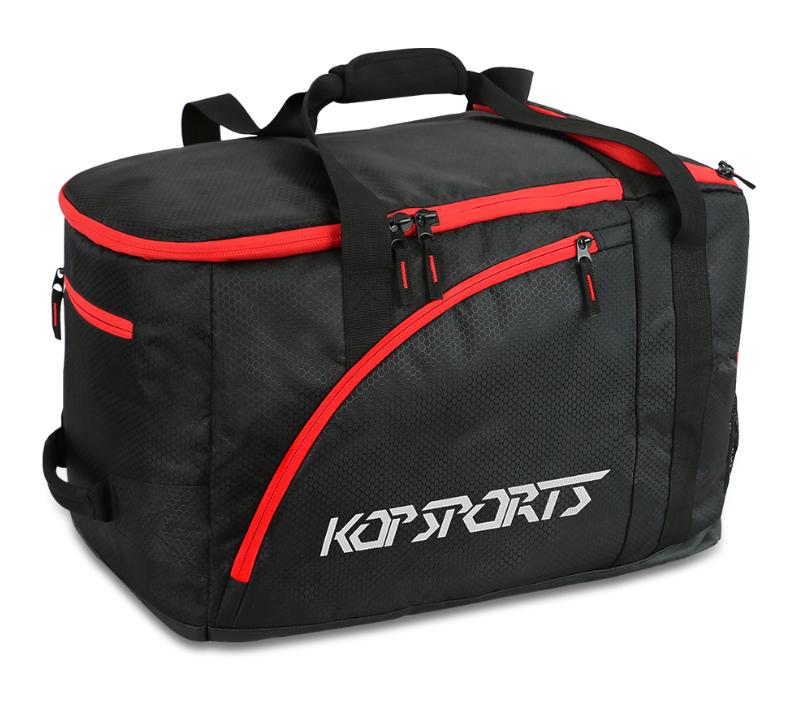
Foam density is mass per unit volume, and it tells only part of the story. A denser foam usually has more cell walls per unit area, which helps resist compression. Thickness controls how much travel the foam has before it bottoms out. A thin sheet of high-density foam can still be too stiff or too shallow for a heavy helmet. The useful combination is moderate density with enough thickness to deform gradually.
ASTM D3574 covers flexible foam tests, including compression force deflection and indentation. ASTM D1596 measures dynamic cushioning performance, which is closer to a real drop. Those standards do not certify a helmet bag, but they give a way to compare foams beyond a squeeze test. A foam that feels firm in the hand can still transmit shock if it is too thin. A softer foam can work if it has enough depth and a stable backing.
| Padding setup | Impact absorption | Shape support | Added weight | Recovery after load |
|---|---|---|---|---|
| No padding, fabric wall only | Very low | None | None | Not applicable |
| Thin low-density foam | Low to fair | Fair | Low | Slow, may stay compressed |
| High-density foam, moderate thickness | Good | Good | Moderate | Fast, holds shape |
| High-density foam with hard backer | Very good | Excellent | Higher | Fast, but stiff |
Padding is not only about drops. A helmet bag has zippers, buckles, and seams, and those hard parts can rub against the shell every time the bag is carried. High-density foam creates a stable barrier between the helmet and the bag hardware. The foam does not fold around a zipper tooth the way soft fabric does. It keeps a consistent gap, so the finish stays away from abrasive edges.
The liner benefits too. A helmet liner is designed to sit against the head, not to be crushed by a water bottle or a tool pouch. Padding that holds the shell in place reduces liner compression during transport. The bag should still have a soft inner lining, because foam alone can be abrasive if it contacts the shell directly. A brushed fabric or mesh cover over the foam is a practical detail to check.
A fully sealed padded bag can trap sweat and humidity. High-density foam is often closed cell, which means it does not absorb much water, but it can still block airflow. Vent panels and mesh sections let air move while the foam stays in place. The goal is to avoid a wet helmet sitting in a warm bag for hours.
Players and riders should still air out a damp helmet after use. Padding slows moisture transfer, so a wet helmet left in a closed bag will stay wet longer. A removable liner or a vented back panel helps, but the bag cannot replace a drying routine. The honest claim is that good padding manages transport shocks and surface protection. It is not a drying system.
At a club racing paddock in the Midwest, a helmet bag was set on the roof of a trailer while tools were unloaded. A gust knocked it off, and it landed on a concrete edge near the wheel of a kart stand. The bag had high-density foam around the crown and a reinforced base. The helmet came out with a scuff on the bag shell but no visible damage to the helmet finish. A second bag in the same paddock, a thin foam model, had been dropped from a similar height earlier in the season. Its helmet showed a cracked vent cover and a pressure mark on the liner.
The difference was not luck. The padded bag had enough foam thickness to deform at the contact point and spread the load. The thin bag compressed to the shell and passed the impact through. Field stories like this are not controlled tests, but they match what the lab data suggests about thickness and density.
High-density foam adds weight and bulk. A helmet bag built around thick padding is not the best choice for a short walk from a car to a field, or for a spare helmet that stays on a shelf. Padding also cannot correct a bag that is too small. A helmet that is forced into a tight compartment will press against the foam and the zipper, and the padding may not stay in the right place.
A simpler bag with a soft lining works when the helmet is not sharing space with tools, cleats, or heavy gear. The protective advantage of high-density foam shows up when the bag is packed with other items, moved often, and set down on rough surfaces. That is the use case worth designing for.
Foam only works if it stays where it was placed. Look for padding that is bonded or stitched into a pocket, not loose inside the shell. The foam should cover the crown, the base rim, and the area around the visor, since those are common contact points. A removable foam insert can be checked and replaced, but it should not shift during transport. Zippers should be backed by a fabric guard so teeth never press into the padding.
Testing should include repeated compression and a check that the foam recovers its thickness. A standardized quality control system helps catch inconsistent foam density before bags reach a paddock. KOP supports that discipline through high-volume sports bag production, a specialized roller equipment bag facility, and material and whole-bag checks before release. Padding is a simple idea, but consistent density, thickness, and placement decide whether it protects a helmet or just looks protective.

 EN



 Hot News