A heavy basketball bag fails at the seams long before the fabric wears out. That sounds obvious, but the reason is often missed. Every stitch line is a load path. When stitch length varies, when needle tension drifts, or when the seam wanders away from the reinforcement tape, a few stitches end up carrying more stress than the rest. Under a full load of shoes, water bottles, and extra gear, those few stitches become the starting point for a tear. Craft accuracy is not about making a bag look neat. It is about spreading force evenly across the seam so no single point gets worked to death. ASTM D1683, a standard test method for seam slippage, exists because seam behavior is a real engineering variable, not a cosmetic detail. ASTM D5034 measures fabric breaking strength, but a strong fabric sewn with uneven stitches can still fail early. A heavy basketball bag lives or dies at the needle line.
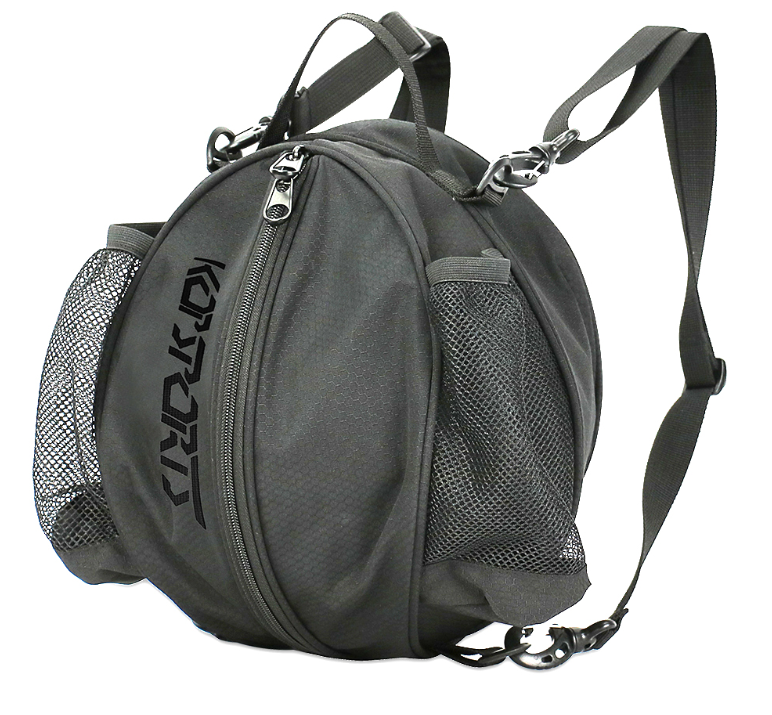
A zipper on an empty bag is easy to judge. A zipper on a packed bag is a different story. When a heavy basketball bag is filled, the zipper tape is pulled sideways, and any small misalignment between the tape, the panel, and the teeth turns into a jam or a split. Craft accuracy shows up in how the zipper tape is fed, how the panel is cut on the curve, and how the seam allowance is held steady around corners. A zipper that is sewn with uneven tension can look fine on a shelf and still bind after a month of use. The same logic applies to the bottom curve and the main opening. If the two sides are not cut symmetrically, the slider has to fight the bag every time it moves. Long-term reliability starts with a zipper that tracks straight when the bag is full, not just when it is empty.
Reinforcement is often treated as a material decision. Add webbing, add a patch, add a bar tack, and the problem is solved. In practice, execution decides whether reinforcement works. A handle patch that is slightly off center pulls the load into one side of the seam. A wheel housing that is mounted without a flat, aligned base will loosen under repeated rolling and lifting. A D ring that is sewn with a short backstitch can creep out of its anchor. During a preseason equipment audit at a university basketball program, staff found that a batch of heavy basketball bags was failing at the bottom webbing within three weeks. The fabric was intact. The problem was uneven stitch spacing where the webbing met the base panel, which concentrated stress on two stitches. Once the seam was re-specified with consistent stitch density and a longer backstitch, the same design held up through the season. The lesson is simple. Reinforcement without craft accuracy is just extra material in the wrong place.
| Craft accuracy level | Stitch spacing control | Zipper tracking under load | Stress point execution | Typical long-term outcome |
|---|---|---|---|---|
| Low | Wide variation, loose tension | Binds or splits when full | Short backstitch, off-center patches | Early seam tears and zipper failures |
| Medium | Mostly uniform, occasional drift | Works when lightly packed | Reinforcement present but inconsistent | Mixed field life, some premature failures |
| High | Tight control, checked at stress points | Tracks straight with full load | Aligned patches, consistent backstitch | Stable performance across repeated use |
Heavy bags do not only fail in dramatic ways. Many failures start as silent fatigue. A panel that is cut slightly short pulls the neighboring panel out of shape. An edge that is not finished cleanly can fray under repeated abrasion and slowly reduce the seam allowance. Craft accuracy in cutting and edge finishing is what keeps the bag geometry stable. When panels are symmetrical, the load distributes the way the design intended. When edges are sealed or bound consistently, moisture and grit have less chance to work into the seam. This is especially important on the base and the lower side panels, where a heavy basketball bag takes the most contact with floors, benches, and vehicle trunks. A bag can use durable materials and still lose reliability if the cutting table and the sewing floor are not held to the same standard. Material durability sets the ceiling. Craft accuracy determines how close the finished bag gets to that ceiling.
Craft accuracy is difficult to judge from a product photo. That is why a standardized testing process matters. Checks for material durability, craft accuracy, and structural stability should happen before release, not after complaints come in. In a practical setting, that means measuring stitch density at defined stress points, checking zipper alignment on a loaded sample, and reviewing reinforcement placement against the pattern. It also means checking consistency across units. A sample that passes by hand selection does not prove a production run is reliable. The useful question is whether the tenth bag and the thousandth bag are built to the same tolerances. A strict quality control system supports that goal by keeping the assessment uniform and repeatable. The limits are honest here. No inspection process can catch every hidden defect, and no bag design is immune to extreme abuse. What testing can do is reduce the chance that a heavy basketball bag leaves the line with a known weak point.
A heavy basketball bag is a load-bearing product, even if it does not look like one. It carries weight, gets dropped, rolled, and pulled. The difference between a bag that lasts and one that fails early often comes down to repeatable assembly. Consistent stitching, aligned zippers, properly executed reinforcement, and symmetrical panels are not glamorous features. They are the reasons a bag still closes cleanly after months of use. Kopsports supports that kind of consistency through high-volume bag production, dedicated wheeled bag lines, and standardized testing before release. The point is not to make a complicated bag. The point is to make the glove pocket, bottle sleeve, main compartment, and base panel behave the same way in every unit. Craft accuracy is what turns a good design into a reliable heavy basketball bag.

 EN




 Hot News