A strap that feels plush in the store can turn into a pressure point after twenty minutes of walking with a loaded basketball bag. Thickness gets the attention because it is easy to measure, but comfort under load depends on how that thickness behaves when it is compressed. A thick layer of low-density foam can bottom out and leave the shoulder pressing against a hard webbing edge. A thinner layer of higher-density foam can hold its shape and spread force across a wider area. The useful question is not simply how many millimeters of padding a strap has. It is whether the padding keeps working when shoes, water bottles, and a change of clothes are pulling down on it. A basketball bag is a load-bearing product, and the shoulder strap is where that load meets the body.
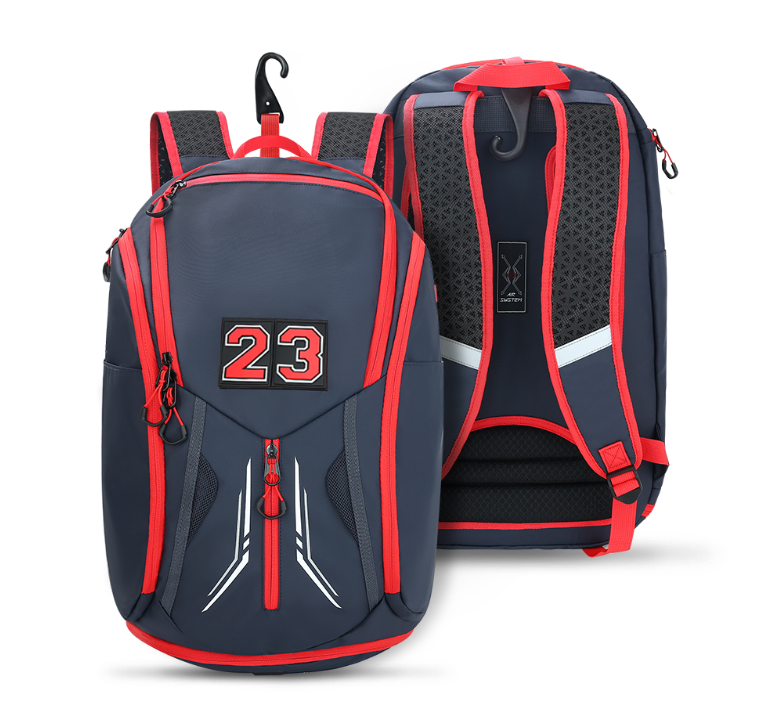
In practical field use, a padding range of about 12 to 15 millimeters with a medium to high density foam tends to offer a better balance than 20 to 25 millimeters of soft foam. The reason is compression. Soft foam compresses quickly under a heavy load, and once it compresses past a certain point, the effective cushion becomes thin and hard. Medium-density foam at 12 to 15 millimeters keeps a working layer between the shoulder and the strap core. It also adds less bulk, which matters on a bag that already has wide straps and a full main compartment. This is not a universal rule. A very light load may feel fine with thicker soft padding, and a very heavy load may call for a wider strap rather than more thickness. The thickness number is a starting point, not a final answer.
Two straps can both claim 15 millimeters of padding and feel completely different. Density and compression set decide how the foam behaves over time. A low-density foam may lose rebound after repeated loading and stay flattened. A higher-density foam resists compression set and returns to shape. ASTM D3574 covers flexible foam testing, including indentation force deflection and compression set, which are useful ways to compare foams beyond a thickness label. The standard does not tell a shopper which strap is comfortable, but it gives manufacturers a common language for behavior under load. A strap with 15 millimeters of high-density foam can outperform a 25 millimeter strap built with foam that flattens in a week. Thickness without density control is just a number printed on a spec sheet.
| Padding setup | Behavior under a loaded basketball bag | Pressure spread | Long-term shape | Practical comfort result |
|---|---|---|---|---|
| 10 mm low-density foam | Bottoms out quickly | Narrow | Flattens early | Sharp pressure on the shoulder |
| 12 to 15 mm medium-density foam | Keeps a working cushion layer | Moderate to wide | Holds shape well | Balanced comfort for most loads |
| 20 to 25 mm soft foam | Feels plush at first, compresses deep | Wide at first, then uneven | Can stay compressed | Comfort fades as load increases |
| 15 mm high-density foam with wide strap | Stable under heavy load | Wide | Retains rebound | Strong choice for heavy daily use |
Padding does not work alone. A narrow strap concentrates force no matter how thick the foam is. A wider strap spreads load across more shoulder area, which lowers peak pressure. Curved strap geometry also matters because it follows the shoulder line instead of cutting across it. Edge shape is another detail that gets overlooked. A hard, square foam edge can create a pressure line even when the center of the strap feels soft. A rounded or tapered edge blends the load into the shoulder more gradually. When evaluating a basketball bag, check the strap as a system. Width, curve, edge finish, and foam density all work together. Adding thickness to a narrow, flat strap is a weak fix. A moderate pad on a wide, curved strap usually feels better on a long walk.
A university basketball program ran into this exact problem during preseason conditioning. Players were carrying heavy basketball bags across campus with two pairs of shoes, a laptop, and several water bottles. The original straps used 22 millimeters of soft foam and felt comfortable in the equipment room. After a full load, players reported shoulder soreness and visible red marks. The equipment staff tested a replacement strap with 13 millimeters of medium-density foam and a slightly wider base. The thinner strap did not feel as plush at first touch, but pressure mapping showed a more even load across the shoulder. Players stopped complaining about the edge of the strap digging in. The lesson was not that thinner is always better. It was that foam density and strap shape can matter more than raw thickness once the bag is fully loaded.
Comfort is hard to measure, but the factors behind it can be checked. Strap padding should be assessed for thickness, density, and compression behavior, not just appearance. Seam placement matters too. A stitch line that runs through the padding can create a hard ridge. Reinforcement at the strap anchor should be aligned so the load does not pull to one side. Standardized testing before release helps keep these details consistent from one unit to the next. A sample strap that feels good by hand does not prove a full production run will behave the same way. The goal is a basketball bag where the shoulder strap feels predictable after months of use, not just on the first walk out of the store. Kopsports supports that consistency through high-volume bag production, dedicated wheeled bag lines, and standardized testing before release. Comfort comes from repeatable assembly, not from a single thick layer of foam.

 EN



 Hot News