A thick swatch of polyester can feel reassuring in a buyer's hand, yet finished gym bags still fail at the seam, zipper, or wheel housing. The reason is simple: durability is a system property, not a material sample property. Standardized testing turns vague claims into repeatable evidence. Each lot faces the same pull speed, clamp pressure, abrasion cycles, and pass or fail thresholds. When the process is locked down, a factory cannot quietly change stitch length, thread tension, or backing reinforcement without the change showing up in data. That is the real control: not a promise that every bag will survive every trip, but a documented reduction in variation. ISO 9001:2015 frames this as process control and evidence-based decision making, which sounds dry until a shipment fails because one line skipped a pre-production pull test.
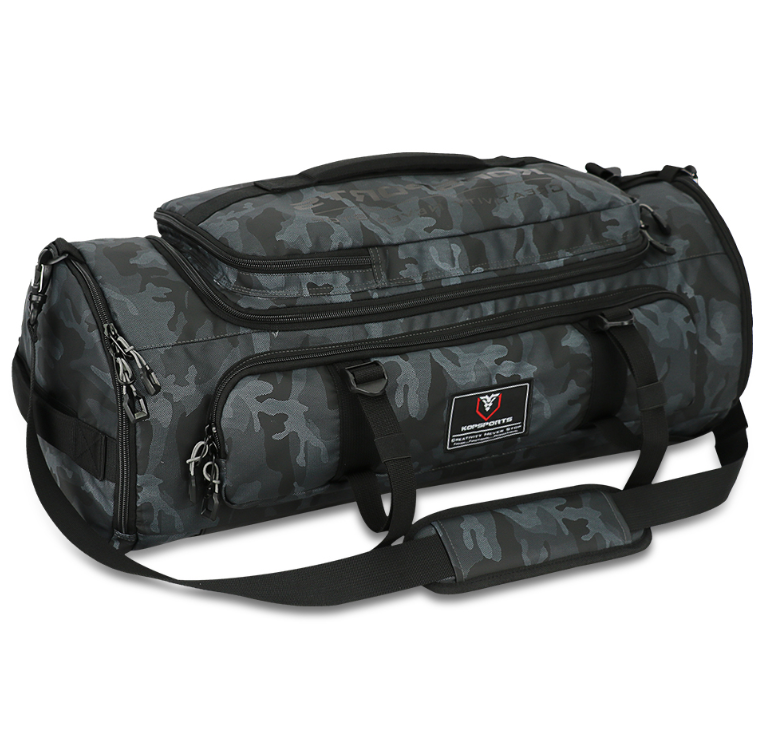
Seam failure rarely starts as a dramatic tear. It often begins with a small gap in stitch density, a thread that slips under load, or a needle that dulls halfway through a shift. A standardized test catches these drift points before they become returns. For example, during a warehouse audit near a humid southern port, a batch of wheeled training duffels showed seam separation after 40 cycles on a mock handling rig. The fabric met specification. The problem was stitch density on a new line, where operators had adjusted tension to compensate for a slightly different thread lot. A final visual check missed it because the seams looked clean when flat. A start-of-shift seam pull test, run to the same clamp speed and recorded against a control limit, exposed the drift within minutes. That case is not unusual. Variability loves small, invisible adjustments.
For gym bags, a credible program does not rely on one heroic test. It builds a matrix that covers fabric strength, seam performance, abrasion resistance, hardware cycling, and structural stability. The table below shows a practical example of how test areas map to failure modes. Thresholds vary by design and market, so the point is not to copy numbers blindly. The point is to use fixed methods, calibrated equipment, and recorded results so that a pass means something across lots and suppliers.
| Test area | Typical method | What it screens | Why a pass matters |
|---|---|---|---|
| Fabric breaking strength | ASTM D5034 | Yarn and weave integrity under tensile load | Flags weak rolls before cutting |
| Seam strength | ASTM D1683 | Stitch slippage and seam rupture | Catches thread and tension drift |
| Abrasion resistance | ASTM D3884 | Surface wear on high-rub panels | Predicts scuff and hole risk |
| Zipper and hardware cycling | Internal cycling rig with fixed cycles | Slider jam, puller fatigue, track wear | Exposes mismatched components |
| Handle and wheel housing pull | Static load hold at defined rate | Reinforcement and anchor stability | Finds structural weak points |
A matrix like this also protects against a common trap: optimizing one variable while damaging another. Heavier thread can raise seam strength but may increase needle heat and cause skipped stitches. A stiffer backing can improve handle pull but add weight and reduce packability. Standardized testing does not make those tradeoffs disappear. It makes them visible.
Final inspection is a photograph of the end of the line. It cannot tell whether the first hour of production ran with the same settings as the last hour. Sampling discipline is what turns a test into a control system. A workable routine includes 1. a pre-production check on each material lot, 2. in-process checks at fixed intervals, 3. a final audit on finished carryalls, and 4. a quarantine trigger when any result falls outside the control limit. The hard part is not writing the checklist. The hard part is refusing to release a lot because one test is pending, even when the ship date is tight. That is where a strict quality control system earns its keep. It separates a documented process from a folder of test reports collected after the fact.
Lab tests are proxies, not real life. A Taber abrasion cycle cannot fully reproduce gym bags being dragged across a bus floor, and a static handle pull cannot mimic a sudden jerk on a crowded train. Honest programs admit that gap and close it with field feedback. Return reasons, repair data, and dealer comments should feed back into the test matrix. If a specific wheel housing keeps cracking in cold weather, the lab protocol may need a low-temperature impact check. If a zipper pull fails after repeated loading, the cycling rig should add a side-load angle. This is not about chasing every outlier. It is about updating the standard when a pattern appears. The limitation is real: no test plan can prove a bag will never fail. A good plan proves that known failure modes are controlled and that new ones get investigated instead of explained away.
A test report without method names, sample sizes, equipment calibration records, and pass or fail criteria is mostly decoration. Buyers should ask which standard was used, how samples were drawn, whether the same protocol ran across production shifts, and what happens when a result fails. A useful answer sounds like a process, not a slogan. For gym bags and similar carryalls, the strongest suppliers treat testing as a line discipline, not a final gate. KOP runs a production base with annual output beyond six million bags, including a large share of wheeled designs, and pairs that capacity with a standardized testing process and strict quality control before release. That combination matters because scale without repeatable checks simply multiplies variation. The practical takeaway is blunt: durable bags are not created by one thick fabric or one dramatic test. They are supported by a boring, repeatable system that catches drift early and keeps honest records.

 EN



 Hot News