A sports backpack spends most of its life near the ground, and shoes are the reason. Soles pick up grit from locker room floors, parking lots, court edges, and gym showers. That grit is not just visible dirt. It carries moisture, bacteria, and odor, and it transfers to anything porous it touches. A separate bottom shoe compartment gives that contamination a defined boundary. The main compartment stays reserved for a towel, a clean shirt, and a water bottle. This is not a cosmetic feature. It is a layout decision that changes how the whole bag behaves after a workout. Bags that toss shoes into the main space force clean gear to share air with the dirtiest items in the load.
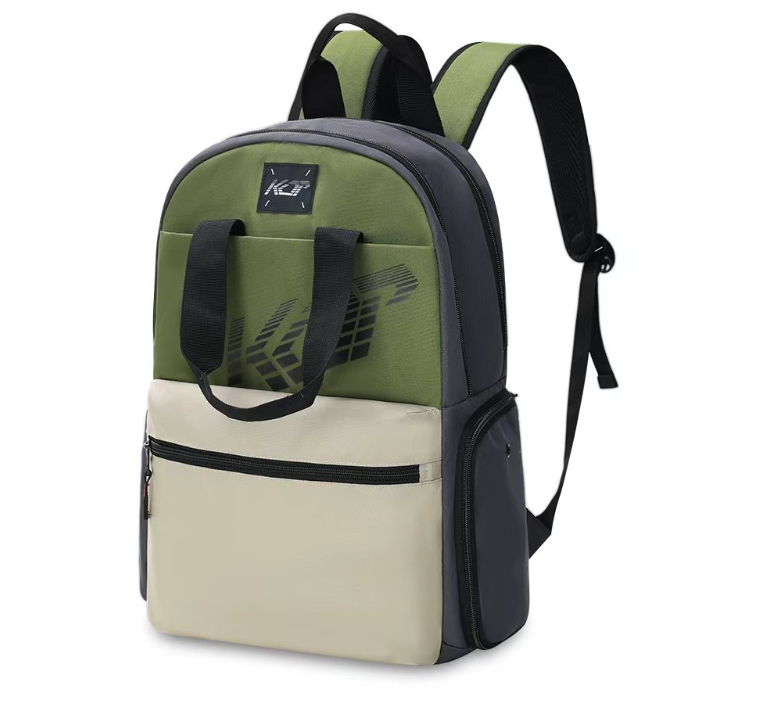
Bottom placement is not random. Dirt and moisture move downward, and a bottom compartment uses that tendency instead of fighting it. A vented shoe pocket lets humid air escape near the floor rather than rising through clean clothes. A coated lining on the inside of the shoe compartment keeps residue away from the main fabric. The divider needs to be a real panel, not a thin mesh sheet that passes odor straight through. Good designs also keep the shoe pocket slightly oversized, so shoes slide in without scraping the zipper. That detail matters because a tight pocket forces hands to push, and pushing wears the closure. The result is a compartment that stays closed, stays separate, and stays easier to clean.
A separate compartment only helps if the materials support it. A coated polyester lining resists liquid absorption better than untreated canvas. A sealed zipper or a flap over the zipper reduces airflow between zones. A mesh vent on the outside of the shoe pocket allows moisture to escape without opening a path into the main bag. Industry references help compare materials. ASTM D737 covers air permeability, which is relevant to vent panels. AATCC 127 measures water resistance under hydrostatic pressure, which is relevant to coated linings. Neither test promises odor control, but both give buyers a way to compare fabrics with data instead of claims. The table below summarizes a small field comparison from a humid-weather gym trial. The sample was limited, so the figures show direction, not proof.
| Layout | Odor in main compartment after 5 hours | Visible grit transfer | Clean shirt dampness | Practical read |
|---|---|---|---|---|
| Separate vented bottom shoe compartment | 1 of 10 | 0 of 10 | 1 of 10 | Best separation when the divider is a real panel |
| Shoe bag inside main compartment | 4 of 10 | 3 of 10 | 3 of 10 | Flexible, but relies on user discipline |
| Shoes loose in main compartment | 7 of 10 | 6 of 10 | 5 of 10 | Fast packing, highest cross contamination |
During a product review at a bag factory in southern China, two sports backpack samples were compared side by side. Both had a bottom shoe compartment. One used a coated panel and a sealed zipper. The other used a thin mesh divider with a standard coil zipper. Testers loaded each bag with a damp towel, a clean shirt, and a pair of court shoes, then carried both for a full afternoon. The mesh-divider bag let odor reach the main compartment within a few hours, and the clean shirt picked up a damp, stale smell. The coated-panel bag stayed noticeably fresher, though its shoe pocket needed airing afterward. The lesson was simple. A separate compartment is only as good as its barrier. A weak divider turns separation into a label rather than a function.
The compartment does part of the job, and packing habits do the rest. 1. Shake grit off soles before shoes go in. 2. Keep shoes in a thin drawstring bag inside the compartment when they are soaked. 3. Put socks in the shoe pocket, not in the main space. 4. Wipe the compartment lining after each use. 5. Leave the pocket open to dry when the bag is stored. None of these steps take long. Together they reduce the load on the barrier and slow odor buildup. A common mistake is stuffing a wet towel into the shoe pocket because it feels convenient. That turns the compartment into a moisture source and defeats the design. The limitation is honest: a bottom shoe pocket adds bulk and can make the bag feel heavier when full. For athletes who carry two pairs of shoes, the space tradeoff is real.
A separate bottom shoe compartment is a small structural feature with a large effect on daily hygiene. It keeps dirt and moisture away from clean gear, uses gravity to manage airflow, and makes cleaning easier. Bags built with a coated barrier, a real divider, and a vented exterior hold up better than bags with a decorative mesh pocket. For programs buying in volume, consistency in barrier placement and seam quality matters as much as the first sample. KOP runs high-capacity sports bag lines and applies a standardized pre-release testing process to every bag, which supports consistent compartment construction across large orders. A hygienic sports backpack is not about one clever pocket. It is about a layout that keeps the dirtiest items in a defined place and makes that place easy to maintain.

 EN





 Hot News