 EN


Why do reinforced grab handles make a wheeled sports bag easier to lift?
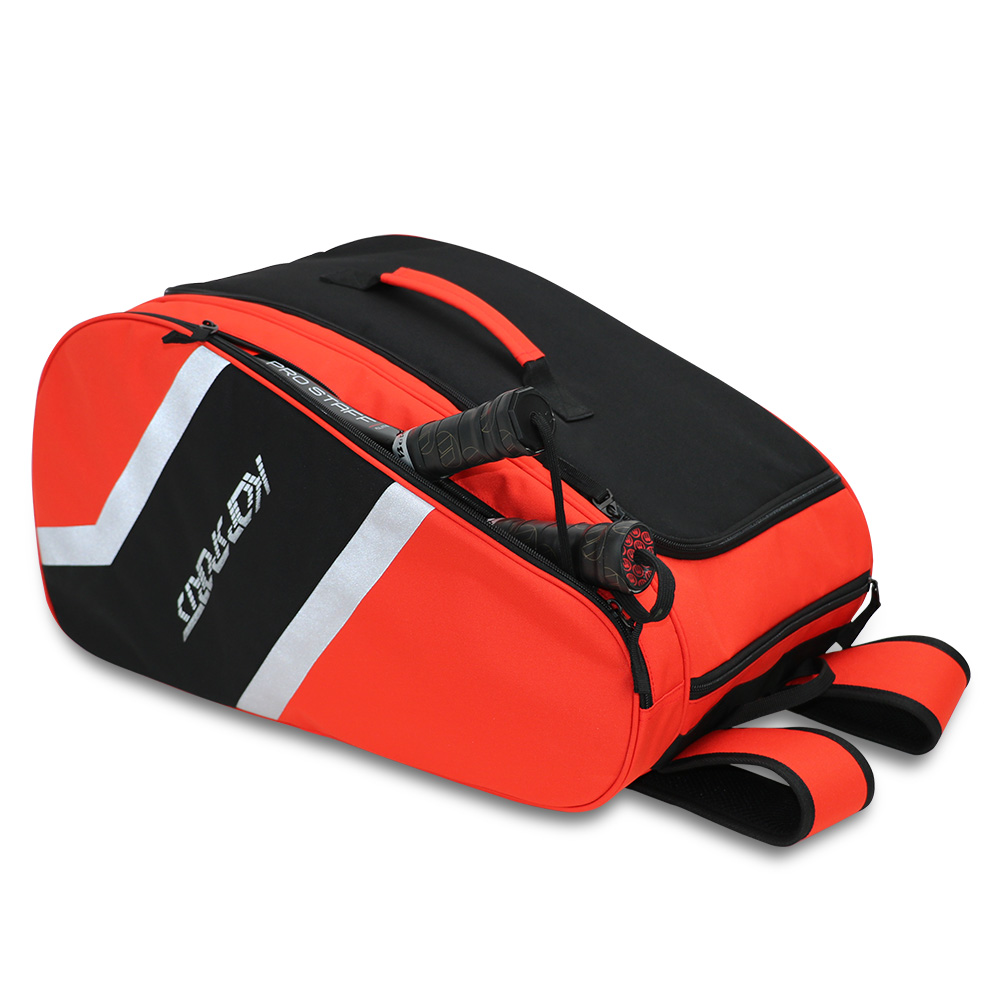
A wheeled sports bag saves effort while it is rolling, but wheels do not remove every carry moment. The bag still has to come out of a car trunk, cross a curb, go up a few stairs, move through a doorway, or sit on a storage shelf. In those moments, grab handles become the working connection between the user and a loaded bag. Reinforced grab handles can make those short lifts steadier because they help transfer hand force into the bag body rather than concentrating stress at one small attachment point.
From a team equipment coordinator’s viewpoint, the useful question is not simply whether a sports bag has handles. It is whether the handle placement, attachment area, and grip shape suit the route from packed gear to the practice area. A handle that feels adequate on an empty bag may feel awkward when footwear, protective equipment, uniforms, and personal items shift together inside.
Rolling helps on level ground; handles take over at transitions
The wheels on a wheeled sports bag carry much of the load across a smooth floor or pavement. Transitions are different. A user may need to lift the bag over a step, angle it into a vehicle, or pull it onto a bench. Those are brief actions, yet they create the moments when a weak or poorly placed handle becomes noticeable.
Reinforcement matters because a handle is not an isolated strip of webbing. When the bag is lifted, force travels from the hand through the grip, into its stitching or anchors, and then into the surrounding panels. A broader, well-secured attachment zone can spread that force over more of the bag structure. That does not create a universal load rating, and buyers should still check the supplier’s specification and sample. It does, however, explain why construction at the handle base deserves as much attention as the visible grip.
How reinforced grab handles improve the lift
They give the hand a more controlled contact point
A loaded sports bag can swing when the contents are uneven. A grab handle lets the user hold the bag close to the intended balance area instead of catching a wheel housing, strap, or loose edge. When the grip is wide enough to grasp comfortably and the two hands can share the work, the bag is easier to guide through a short lift. The goal is control, not a claim that any handle makes a heavy bag effortless.
They help keep the bag from twisting during a short carry
Two grab handles positioned to work as a pair can help a user keep the top of a wheeled sports bag more level when moving it from floor to vehicle. That matters when a bag contains hard or bulky gear. If a load tilts sharply, the user may have to pause and readjust. A handle layout that supports a balanced two-hand lift can reduce that awkward repositioning, provided the contents are packed with heavier pieces near the lower, more stable area of the bag.
They protect the areas that receive repeated pulling force
Every lift places tension on the handle attachment. Reinforced construction commonly means the attachment is designed with more support than a simple edge seam alone, such as an extended webbing path, a layered anchor area, or stitching that connects to a stronger panel zone. The specific construction varies by bag, so it should be reviewed in a drawing or physical sample. What matters to the user is that the handle and the bag body are designed as one load path rather than as unrelated parts.
What to inspect beyond the word “reinforced”
“Reinforced” is useful only when it points to details that can be reviewed. For a wheeled sports bag, ask to see how the handles connect to the body and how the bag behaves when it is packed for the intended sport. A practical review can include:
- Attachment location: Are the grab handles near a sensible balance point for the usual load?
- Attachment span: Does the webbing or anchor area extend into a supported panel rather than ending at a narrow seam?
- Grip clearance: Is there enough room for fingers around the handle when the bag is full?
- Two-hand use: Can two people lift the bag briefly without competing for the same narrow grip?
- Stitching and panel support: Does the sample show orderly stitching and a stable surrounding panel, without loose ends or obvious puckering?
- Routine fit: Can the bag be lifted into the vehicle, over a curb, and onto storage using the same handles the team will rely on?
This changes the conversation from a broad durability statement to a checkable design decision. A sports bag intended mostly for flat indoor travel may prioritize a different handle arrangement from one that repeatedly moves between parking areas, fields, buses, and changing rooms.
Handle placement works with packing, wheels, and the route
It is tempting to judge grab handles separately, but they work as part of a system. Wheel position affects how the bag rests when it is set down. Internal organization affects where the center of the packed load sits. The user’s route determines whether the bag will mostly roll or frequently be lifted. For example, a player who carries light training gear may only need handles for occasional loading. A team manager moving a fuller sports bag with equipment for several players may depend on them at every stop.
That is why a quick packing test is more useful than inspecting an empty sample. Place the typical equipment inside, close the bag, roll it for a short distance, then lift it as it would be lifted into a vehicle or onto a bench. Notice whether the bag leans, whether the handles meet naturally in the hand, and whether the wheels or external components interfere. A small correction to the handle position can be more meaningful than adding another pocket that does not address the actual movement route.
Lift checks to make before choosing a sports bag
Before selecting a wheeled sports bag, recreate the transition that causes concern. Pack the usual gear, roll the bag to the vehicle, and then lift it by the intended grab handles. This simple test shows whether the sports bag stays close to the body, whether the handles meet comfortably, and whether the load pulls to one side.
Next, ask to see the handle construction in the sample review. Look for a grip that is easy to locate, an attachment integrated with the panel, and enough spacing for two hands if the routine calls for a shared lift. If the bag will move on buses, into trunks, or over venue thresholds, put those lift moments in the product brief rather than discovering them after delivery.
A final check is packing discipline. The heaviest equipment should be arranged so the sports bag does not rotate suddenly when it leaves the ground. Reinforced handles help users control the sports bag, but balanced packing makes that control more meaningful. This is especially relevant for a wheeled sports bag because the wheel end and the handle end can encourage users to pack unevenly.
Why reinforcement can support longer service in everyday handling
Repeated short lifts create repeated stress cycles at the handle anchors. A bag may not fail during one controlled lift yet still show wear after many trips. Reinforcement can support longer-term use by giving the stressed connection more structure to work through, especially when users lift the bag by its intended grab points rather than by a pull handle or a loose shoulder strap.
Still, reinforcement is not a substitute for sensible use. Users should avoid dragging a bag by grab handles, lifting a load that exceeds the product’s documented guidance, or using one handle for a lift that the design expects two hands to share. Teams and buyers can also reduce strain by keeping dense equipment low in the bag and using compartments to limit large shifts inside. These habits complement a well-built sports bag; they do not depend on unsupported performance promises.
A practical brief for a wheeled sports bag
If you are evaluating or developing a wheeled sports bag, describe the lifting moments in the brief instead of asking only for “strong handles.” List the typical equipment, the heaviest packed routine, the number of users who may lift it, and the route from storage to transport. Then request a sample review focused on the handle anchors, grip comfort, balance, and interaction with the wheel base.
For a sports bag, the most useful reinforced grab handles are the ones that match the real task: they provide a secure place to grasp, help users control the bag during short transitions, and connect into a bag body built to handle those routine pulls. When the wheels stop being useful, that thoughtful handle design is what makes the next lift feel more manageable.
 Hot News