A tournament weekend is not a single game. It is a sequence of games, each with its own warmup, gear change, and cool down. Midfielders and attackmen carry sticks, helmets, gloves, pads, cleats, water, and spare layers, and they move between fields that can be hundreds of meters apart. A standard duffel works for a single practice. A tournament changes the math. The bag gets packed and unpacked several times a day, dragged across parking lots and grass, and left standing in sun or rain between games. That is the environment where a lacrosse bag with wheels starts to make practical sense. The preference is not about looking professional. It is about reducing the physical cost of a long day and keeping gear organized when there is no locker room.
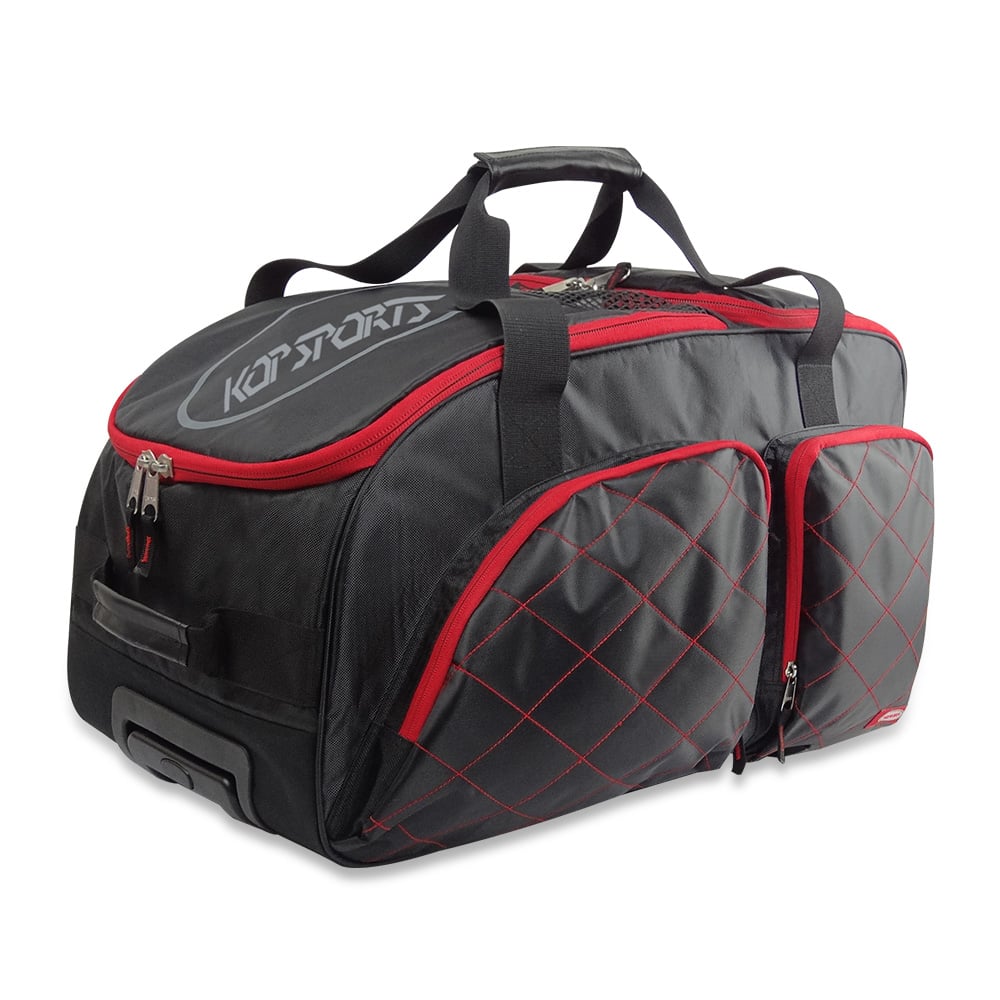
Tournament venues are rarely designed for convenience. Parking is often a field away from the actual fields. Teams arrive early, park wherever there is space, and walk in with everything they need for the day. A midfielder who has already played two games does not want to carry a loaded bag another 300 meters. A wheeled bag turns that walk into a roll. The handle takes the load, the wheels carry the weight, and the player keeps energy for the next game. On rough gravel or wet grass, a cheap wheeled bag can struggle, which is why wheel quality and frame stability matter. A well-built wheeled bag rolls straight and does not dig into soft ground.
| Tournament scenario | Standard duffel | Wheeled lacrosse bag |
|---|---|---|
| Long walk from parking to fields | Weight on shoulder, fatigue adds up | Load rolls, hands free for sticks |
| Multiple games in one day | Repacking and carrying repeatedly | Gear stays organized, bag stands upright |
| Wet grass or gravel paths | Bag gets wet and heavy | Wheels handle terrain, base stays off ground |
| Between-game storage | Bag collapses, gear shifts | Bag holds shape, quick access to gear |
Midfielders cover more ground than any other position, and their gear reflects it. Extra gloves, tape, nutrition, and spare layers are common. Attackmen carry similar loads plus stick maintenance items. Both positions rotate on and off the field, which means more trips to the bag during a game. A wheeled bag keeps those trips efficient because the bag stands upright and the main compartment stays accessible. A duffel that collapses into a pile forces a player to dig for gloves or tape while the clock is running. The wheeled format is not a luxury for these positions. It is a way to keep gear reachable without unpacking the entire bag on the sideline.
A tournament bag is loaded heavier than a practice bag. Helmets, pads, cleats, and water bottles add up, and the bag gets rolled over curbs, roots, and uneven turf. A wheeled bag with a weak base panel will sag under that load, and the wheel housing takes the stress. A stable frame and base keep the bag tracking straight and protect the gear inside. Soft goods testing often references methods like ASTM D5034 for fabric tensile strength and ASTM D1683 for seam strength, and drop tests such as ASTM D5276 help confirm how a loaded bag behaves when it hits a hard surface. Those tests do not guarantee a bag will survive every tournament, but they separate a bag built for load from one built for appearance.
Between games, a tournament bag becomes a mobile locker. Players need quick access to gloves, tape, water, and a dry layer without emptying the bag onto the grass. A wheeled bag with a wide opening, separate shoe compartment, and a few exterior pockets supports that routine. Midfielders and attackmen rotate frequently, so the bag has to work fast. A bag that requires two hands and a knee to close slows down the transition between games. A bag that stands open and upright lets a player grab what is needed and get back to the sideline.
A few checks separate a tournament-ready wheeled bag from a bag that will fail by midday. Roll the loaded bag across a rough surface and watch the wheel housing. Lift it by the handle and check for frame flex. Open and close the main zipper with the bag loaded. Look for a base panel that holds flat and a shoe compartment that vents. A club program in the Southeast once took a set of wheeled bags to a summer tournament played on wet fields. The bags that rolled well had reinforced wheel housings and a stiff base. The bags that struggled had soft bases that sagged into the mud and wheels that clogged with grass. That field test was more useful than any showroom review.
For programs that need consistent bags across a roster, manufacturing controls matter as much as design. Kop Sports runs a production operation built around standardized testing and strict quality control before release, with experience across sports bag and wheeled bag lines. A wheeled bag with a stable frame, a reinforced base, and a clean interior layout supports the way midfielders and attackmen actually use gear on a tournament weekend.

 EN




 Hot News