A phone and a set of keys in the same compartment is a small experiment in abrasion. Every step, every shift of the bag, every time the pack gets set down, the phone slides against whatever hard object is nearby. The screen and camera lens are the most vulnerable surfaces. A sports backpack that treats all pockets the same forces the phone to compete with keys, tools, and water bottles. That competition does not usually end well. Scratches on a screen are not always dramatic. They show up as faint lines in sunlight, then as a dull patch where the oleophobic coating has worn away. A dedicated fleece-lined pocket removes the phone from that competition entirely. It gives the device a soft, stable home instead of a shared hard compartment.
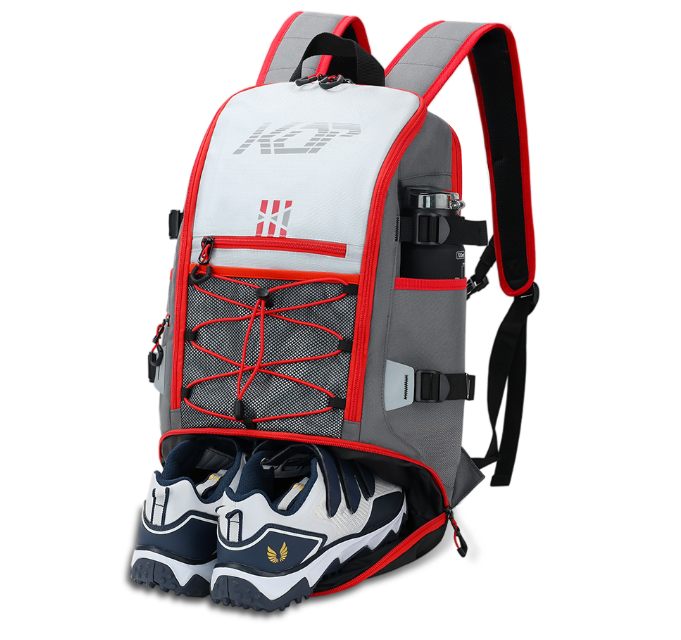
Fleece is not magic. It is a pile fabric with a soft surface that traps small particles instead of dragging them across a screen. The mechanism is simple. A hard liner like nylon or polyester slides against glass and carries dust and grit with it. Fleece fibers give slightly under pressure, so grit tends to settle into the pile rather than roll across the surface. That reduces the chance of a scratch during normal movement. Fleece also cushions light impacts. It does not protect against a drop onto concrete, and it does not make a phone waterproof. Those limits matter. A fleece pocket is a scratch and light-impact solution, not a full protective case. Used correctly, it handles the daily wear that a shared compartment creates.
Sunglasses fail in a different way. The lenses are softer than phone glass, and the frame hinges can press against the lens when the glasses are folded. A fleece-lined pocket gives the lenses a soft surface and keeps the frame from rubbing against hard objects. The pocket also needs some structure. A loose fleece sack lets glasses shift, and the hinge can still contact the lens. A dedicated pocket with a slightly padded back panel and a soft fleece face holds the glasses in one position. That combination protects both the lens coating and the frame finish. It is a small design detail, but it decides whether a pair of sunglasses survives a season in a pack.
| Pocket type | Surface against phone or glasses | Scratch risk | Best use |
|---|---|---|---|
| Unlined main compartment | Nylon or polyester, shared with keys and tools | High | Bulk gear, no fragile items |
| Mesh pocket | Abrasive mesh, open structure | High | Water bottle, small accessories |
| Basic fleece pocket | Soft pile, no backing | Moderate | Phone, light items |
| Fleece pocket with padded backing | Soft pile plus foam backing | Low | Phone, sunglasses, small electronics |
A fleece pocket can still fail if the details are wrong. The most common problem is a pocket that is too small. A phone forced into a tight pocket puts pressure on the fleece, and the pile flattens over time. Another issue is a pocket placed against a hard frame or a zipper track. The fleece protects one side, but the other side still contacts a hard edge. Stitching is another weak point. If the fleece is only stitched at the top and the pocket has no backing, the lining can pull away and bunch up. A good pocket has a padded back panel, a fleece face, a soft zipper pull, and enough room for the device to sit without pressure.
A retailer in the Pacific Northwest once reviewed a run of sports backpacks for a school and club program. The fleece pockets looked correct in photos, but a sample review with a phone inside showed a problem. The pocket zipper had a metal slider with a sharp edge, and the phone sat close to the track. During a shake test that simulated a walk with the pack, the slider contacted the phone screen at the edge. The fix was a change to a covered zipper with a soft pull and a slightly deeper pocket. The revised samples passed the same shake test with no contact. That case is a reminder that fleece alone is not enough. The pocket has to be designed as a system, including the zipper and the pocket depth.
Buyers can check a few things without a lab. Put a phone in the pocket and shake the bag. Listen for contact and feel for pressure points. Check the zipper track and the slider for sharp edges. Look at the pocket depth and the backing panel. A fleece pocket with a padded back and a covered zipper is a better sign than a pocket that only has a soft face. Abrasion testing methods such as ASTM D4966 (Martindale) and ASTM D4157 (Wyzenbeek) are commonly used for fabric wear, and they can be applied to lining materials. Those tests do not simulate every real use, but they give a baseline for how a lining holds up. The standard is a starting point. Checking the finished pocket with a real phone and a real pair of sunglasses is the test that matters.
Kop Sports runs a production operation built around standardized testing and strict quality control before release, with experience across sports bag and backpack lines. A fleece pocket that is properly backed, correctly sized, and paired with a soft zipper is a small feature, but it is the kind of detail that keeps a sports backpack useful over time.

 EN




 Hot News