An oversized lacrosse bag can swallow a full set of gear, which is exactly why packing needs a plan. Start with an empty bag on a clean floor and open it wide. Divide the interior into three zones: a heavy base zone along the back wall, a soft gear zone in the middle, and a ventilated end zone for footwear. This layout keeps weight low and stable without crushing gloves or shoulder pads. A common mistake is filling the bag in the order gear comes off. That approach puts cleats next to clean jerseys and leaves shoulder pads floating on top. A two minute layout plan saves ten minutes of digging at the field.
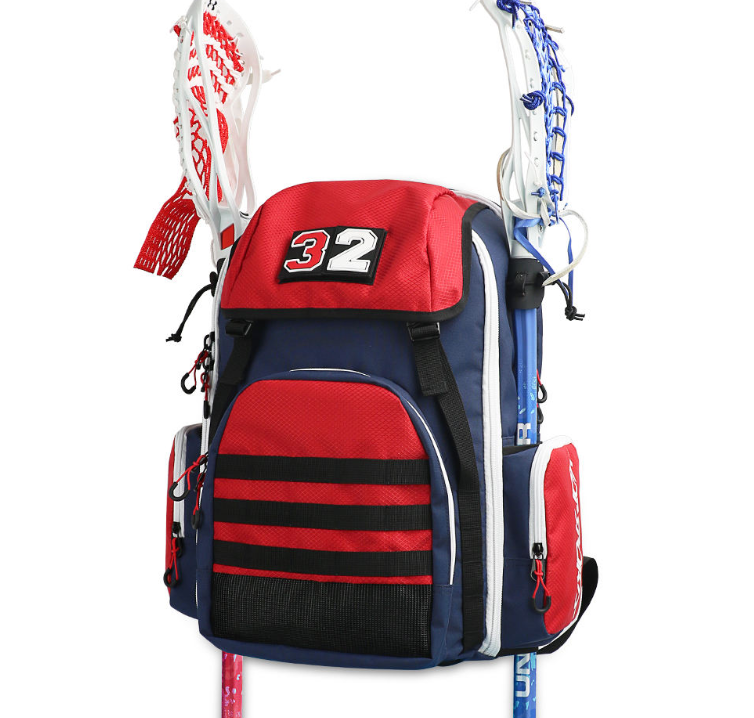
Heavy items belong low, but flat placement is not always best. Shoulder pads and helmets can sit upright along the back wall, where the bag frame and base panel carry the load. Laying pads flat across the entire base seems stable, yet it creates a hard shelf that presses into gloves and smaller items above. The base panel is designed to spread load, not to act as a cutting board. Keep hard edges away from the base seam and wheel housing. If the bag is wheeled, the end near the wheels sees more vibration during transport. Pack soft items there, not sharp cleat studs.
Shoulder pads lose shape when compressed for hours. A dedicated zone along the back wall lets pads stay expanded and keeps straps from tangling with gloves. Place pads with the chest panel facing the bag wall and the shoulder caps pointing toward the center. This orientation uses the bag height and reduces pressure on the foam. If the bag has an internal divider, use it to separate pads from gloves. A divider is not just organization. It spreads contact pressure and keeps hard plastic caps from pressing into softer gear. For a lacrosse bag that travels by van or car, this separation matters more than extra padding.
| Gear item | Best zone | Packing orientation | Main risk if packed wrong |
|---|---|---|---|
| Shoulder pads | Back wall, upright | Chest panel to wall, caps inward | Foam compression, strap tangles |
| Gloves | Middle side pocket | Palm to palm, fingers flat | Creased foam, crushed fingers |
| Cleats | Ventilated end zone | Sole down, studs away from fabric | Stud pressure, moisture spread |
| Helmet | Top or dedicated hard zone | Face mask up, shell supported | Shell contact with hard edges |
Gloves are the most overlooked item in a packed lacrosse bag. They get stuffed into gaps and end up under pads or cleats. Palm foam creases when pressed for hours, and fingers can fold into unnatural shapes. Use a side pocket or a soft middle zone where gloves can sit palm to palm with fingers flat. Do not stack gloves under shoulder pads. If the bag has a fleece lined pocket, use it for gloves and keep keys or tools out of that space. Moisture is another issue. Wet gloves left in a closed main compartment can soften the liner and spread odor. A ventilated pocket or a mesh sleeve helps air move.
Cleats carry dirt, moisture, and hard studs. They belong in a ventilated end zone with the soles down and studs facing the bag wall, not the fabric. Placing cleats on top of gloves or jerseys transfers dirt and pressure. If the bag has a separate shoe compartment, use it every time. If not, place cleats in a breathable shoe bag before they go into the end zone. The end zone near the wheels is a practical spot because it is easy to reach and away from shoulder pads. Just check that studs do not press against the wheel housing or base seam.
A packed bag should close without force. If the zipper needs two hands and a knee, the load is wrong. Zip the bag and lift it by the handle. It should hang level, not tilt toward one end. Set it down and press the top. A soft top is fine, a hard lump under the shell is not. Open the bag and check that no cleat stud or pad edge is pressing into gloves. Soft goods testing often references ASTM D5034 for fabric tensile strength and ASTM D1683 for seam strength, but those tests do not replace a simple balance check after packing.
A club program in the Pacific Northwest once packed two dozen oversized bags for a travel weekend. The first van load put shoulder pads flat on the base and cleats on top. By arrival, cleat studs had pressed into glove palms, and two glove pairs showed creased foam. The fix was a zone plan: pads upright along the back wall, gloves in a padded side pocket, cleats sole down in a ventilated end compartment. The revised load arrived with no glove damage and closed without force.
For programs that pack bags week after week, a reliable bag makes the zone plan easier to repeat. Kop Sports runs a production operation built around standardized testing and strict quality control before release, with experience across sports bag and wheeled bag lines. A bag with a stable base, a clear divider, and a ventilated end zone supports the packing method instead of fighting it.

 EN



 Hot News