A heavy lacrosse bag is not hard to lift because of one big weight. It is hard to move because of friction, leverage, and the way load transfers through a handle and a shoulder strap. High-tech roller wheels change that equation. A wheel does not remove mass, but it replaces sliding friction with rolling resistance. That shift is why a loaded lacrosse bag that feels brutal on a shoulder can move with two fingers on a retractable handle. The wheel diameter, bearing quality, tread material, and housing stiffness all decide how effortless that motion actually feels. A cheap wheel can make a heavy bag feel like a shopping cart with a bad caster. A well-engineered wheel set makes the same load track straight, roll over cracks, and stay stable when the bag is pulled at an angle.
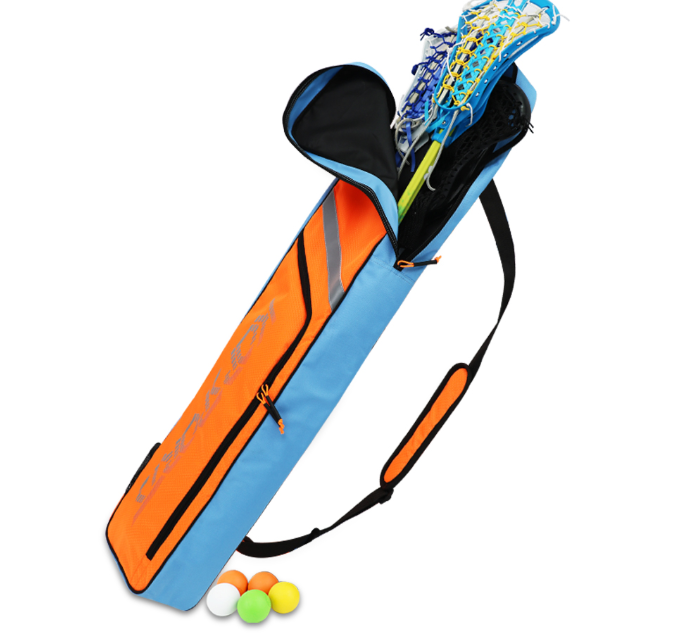
Rolling resistance is the force that fights forward motion. A larger wheel rolls over small obstacles instead of hitting them. A 75 mm wheel clears a sidewalk crack better than a 50 mm wheel, and the difference is obvious when a bag is loaded with pads, sticks, and a helmet. Bearing quality is the second factor. A sealed cartridge bearing keeps grit out and spins with less drag than a loose ball bearing in a plastic race. The third factor is tread hardness. A soft tread grips smooth floors but wears fast on concrete. A harder tread lasts longer but transmits more vibration. The table below compares common wheel builds using representative ranges, not a single pass or fail rule.
| Wheel build | Typical diameter | Bearing type | Rolling feel on concrete | Grit tolerance | Weight and cost |
|---|---|---|---|---|---|
| Standard plastic wheel | 50 to 60 mm | Loose ball bearing | Rough, noisy | Low | Low |
| Mid-size PU wheel | 65 to 75 mm | Sealed cartridge | Smooth, stable | Moderate | Moderate |
| Large PU wheel with tread | 80 to 90 mm | Sealed cartridge, double | Very smooth over cracks | High | Higher |
| Removable wheel set | 75 to 85 mm | Sealed cartridge | Smooth, serviceable | High | Moderate to high |
A wheel is only as good as the housing that holds it. A thin plastic housing flexes under a heavy load, which misaligns the wheel and adds drag. A reinforced housing with a metal insert keeps the axle square and spreads load into the base panel. Chassis stiffness matters too. A soft base panel sags between the wheels, which changes the angle of the handle and pulls the bag off line. A semi rigid base with a defined wheel mount keeps the load path straight. The handle is part of the same system. A wobbly telescoping handle wastes effort because every correction at the hand becomes a side load at the wheel. A tight handle with a locking detent and a reinforced mounting bracket makes the whole bag feel more controlled.
A wheel set that feels great in a store aisle can fail on a gravel path, a wet turf sideline, or a curb. Small wheels drop into gravel and stop. Soft tread picks up mud and loses grip. Sealed bearings matter most in wet grass and dust, because grit and moisture are what kill a bearing first. A wheel with a simple dust cap is not the same as a sealed cartridge. Buyers should also think about where the bag is stored. A wheel that sits in a hot trunk for months can crack if the compound is cheap. Honest limits matter. No wheel makes a heavy lacrosse bag weightless, and no wheel set makes stairs easy. The goal is to reduce effort on the surfaces a bag actually meets, not to promise magic on every surface.
At a bag plant in southern China, a run of wheeled lacrosse bags moved from a standard plastic wheel to a larger PU wheel with a sealed cartridge bearing. The first samples rolled cleanly on a smooth concrete floor and passed a basic pull test. On a gravel and sand test track, two samples developed a grinding noise after repeated runs. The wheel itself was fine. Grit had entered the housing through a gap at the axle cap, and the housing screws had started to loosen under vibration. The line added a lip seal at the axle cap, switched to a thread-locking compound on the housing screws, and thickened the mounting plate. The grinding stopped. That case is a reminder that wheel performance is a system problem. The bearing, housing, fastener, and base panel all share the load path.
Before release, every single bag should go through a standardized testing process paired with a strict quality control system. For wheeled bags, that means wheel testing cannot be a quick spin by hand. A useful flow includes a loaded rolling test on concrete, gravel, and wet turf, a wheel drop test, a handle pull test, and a housing fastener check after vibration. The quality system needs uniform, predefined assessments for material durability, craft accuracy, and structural stability. Industry references help set the frame. ASTM D4169 covers distribution cycle performance testing for shipping units, ASTM D4060 covers abrasion resistance by Taber abraser for wheel compounds, and ISO 9001 sets requirements for a repeatable quality management system. Those standards do not simulate every curb and trunk, but they separate a tested wheel system from a decorative one. Kopsports runs a sports bag production line with thousands of skilled workers, annual output above six million pieces, and roughly forty percent wheeled bags. That scale supports repeatable wheel, housing, and handle testing across large production runs, which is what a heavy lacrosse bag needs when it leaves smooth floors behind.

 EN




 Hot News