A pickleball bag takes more structural punishment than many players realize. It gets dropped on hard courts, packed with paddles and balls, shoved into car trunks, and rolled over curbs. Structural stability is not one property. It is the combined result of frame rigidity, seam strength, handle attachment, zipper anchorage, and base support. A bag can look fine on a shelf and still fail after weeks of real use because one seam slips or one handle root stretches.
Testing standards matter because they turn vague claims into repeatable checks. Labs rarely rely on a single test. A sensible protocol combines material tests, seam tests, dynamic load tests, and drop tests. The goal is to find the weakest link before the bag reaches a player.
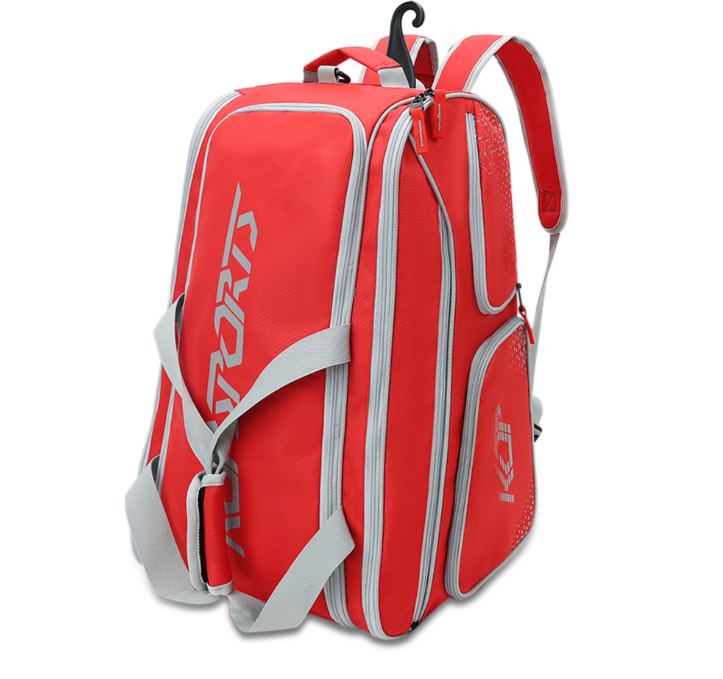
Static load testing checks how a bag behaves when packed and lifted. A typical setup fills the bag to a defined weight, lifts it by the main handle, and holds it for a set period. The test looks for handle elongation, stitch pullout, and frame bending. Dynamic load testing adds motion, often a repeated lift and swing, to simulate carrying a loaded bag across a court.
Drop testing is equally practical. ASTM D5276 covers free-fall drop tests for loaded containers. For a pickleball bag, drops are usually performed on corners, edges, and the base. A bag that survives a flat drop may still crack at a corner or pop a wheel housing. Test labs record damage after each drop, then repeat on another sample. One pass on one bag proves little. Consistency across samples is the real signal.
Seams are where structural claims often break down. ASTM D1683 measures seam slippage, which is the tendency of yarns to pull apart under load. ASTM D5034 covers tensile strength of textile fabrics. ASTM D2061 evaluates stitch tear resistance. These tests do not mimic every real load, but they expose weak thread, loose stitch density, and poor seam construction.
A bag can pass a fabric tensile test and still fail at the seam because the stitch pattern is wrong for the load direction. For a pickleball bag, handle roots and shoulder strap anchors deserve extra attention. Those zones carry concentrated force, and a small stitch defect can grow into a tear.
| Test area | Common reference | What it reveals | Typical failure mode |
|---|---|---|---|
| Seam slippage | ASTM D1683 | Yarn pullout under load | Open seam at handle root |
| Fabric tensile | ASTM D5034 | Base material strength | Tear near stress point |
| Stitch tear | ASTM D2061 | Thread and stitch performance | Broken stitches along zipper |
| Drop resistance | ASTM D5276 | Corner and base impact | Cracked frame or wheel housing |
| Abrasion | ASTM D3884 | Surface wear | Worn base fabric |
Zippers and hardware are structural connectors, not just access points. A zipper that separates under load can dump paddles onto a court. Repeated open and close cycles, lateral pull tests, and slider retention checks are useful. Hardware such as D rings, hooks, and buckles should be pull tested at the attachment point. Corrosion checks matter for outdoor use, especially in coastal areas.
On a pickleball bag, the zipper should be tested under load, not just when empty. Load changes the geometry. A zipper that runs smoothly when empty may bind when the bag is packed. Test teams should record slider force, tooth separation, and tape pullout after cycling. Slider pull force and tape anchorage are often more telling than a visual check.
Rolling pickleball bags add another structural layer. Wheel housings, axles, and base plates take impact and vibration. A common approach is to run a loaded bag over a defined obstacle course, then inspect the base, wheels, and mounting points. Vibration testing can reveal loosening hardware or fatigue cracks. Base abrasion testing, such as ASTM D3884 Taber abrasion, helps predict how the bottom holds up on concrete.
During a club equipment review in the Southwest, staff inspected twenty rolling pickleball bags after three months of league play. Several bags showed loose wheel screws and compressed base panels. One batch had side seams that slipped near the handle root, even though the fabric itself looked intact. The review did not need a full lab. It needed a loaded bag, a curb, and a checklist. That field evidence matched what seam slippage tests are designed to catch.
A useful structural stability protocol combines several checks rather than chasing one headline number.
Define the load and use cycle before choosing tests.
Test seams and handle roots, not just flat fabric.
Run drop tests on corners, edges, and base.
Cycle zippers and hardware under load.
Check wheel mounts and base abrasion for rolling models.
Compare results across multiple samples for consistency.
Limitations deserve honesty. Lab tests cannot reproduce every player habit. A bag that passes all tests can still wear out under extreme use. The point is to reduce predictable failures, not promise perfection. A test report should state sample size, load weight, and pass criteria so buyers can compare results.
For buyers specifying a pickleball bag program, Kopsports supports consistent structural testing with large scale bag output, specialized roller equipment, and a strict quality control system before release. The company short name is a practical reference when repeat orders need uniform checks.

 EN





 Hot News