A zipper on a new sports backpack can feel perfect in the store and still bind after a week of daily use. The teeth are rarely the first thing to fail. More often, the problem starts with how the zipper tape is sewn to the panel. When a bag is loaded, the main opening is pulled sideways, and the tape has to hold its line against that tension. If the seam allowance varies or the panel curve is slightly off, the slider starts to fight the bag. Small misalignments that are invisible on an empty pack become a recurring jam once books, bottles, and shoes add weight. The zipper is a system, not a strip of teeth. Tape, seam, panel, and slider all share the load. Quality testing has to look at that system under tension, not just pull the slider back and forth on a sample table.
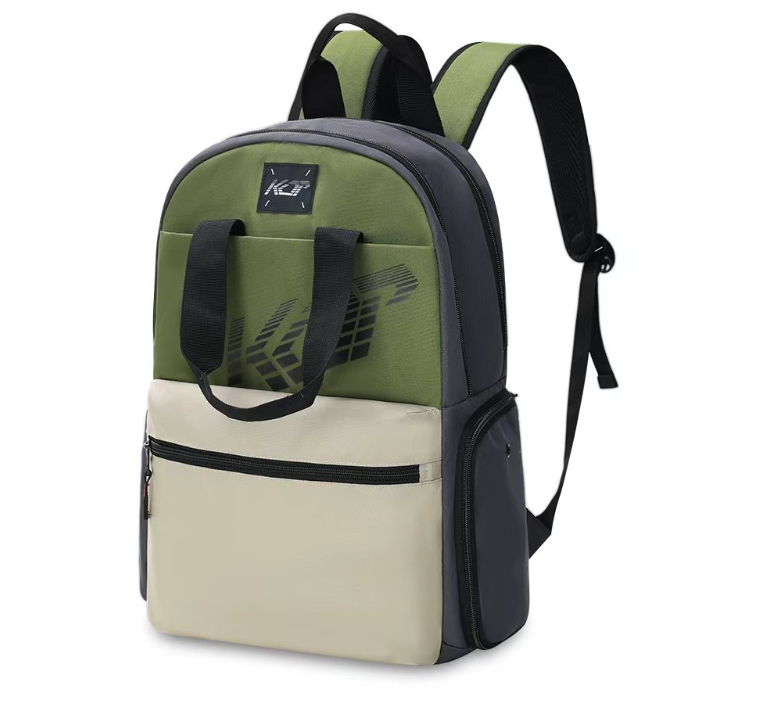
A realistic zipper test starts with a realistic load. A sports backpack used for training or commuting might carry a pair of shoes, a water bottle, a towel, and a laptop. That load pulls the opening outward and puts the zipper under lateral tension. A test that only cycles an empty zipper misses that condition. A better protocol loads the bag to a defined weight, opens and closes the zipper through repeated cycles, and records binding, skipped teeth, and tape distortion. The test should also check the zipper at the corners, where the curve is tightest and the seam allowance is hardest to control. ASTM D2061 covers strength tests for zippers, and ASTM D5034 measures fabric breaking strength, but neither standard replaces a loaded cycle test on a finished bag. The standard gives a shared reference. The loaded test shows how the finished product behaves.
| Test approach | Load condition | What gets checked | Typical finding | Practical result |
|---|---|---|---|---|
| Empty zipper cycling | No load | Slider movement only | Smooth on sample | Misses loaded jams |
| Static pull on tape | Fixed pull | Tape strength | Strong tape, unknown tracking | Limited real-world value |
| Loaded cycle test | Defined pack weight | Binding, skipped teeth, corner tracking | Reveals seam and curve issues | Catches problems before release |
| Loaded cycle plus seam audit | Defined weight and stitch check | Zipper, seam, panel alignment | Links failure to craft accuracy | Supports repeatable production |
Zipper performance under tension is closely tied to panel geometry. A main opening cut on a curve needs a consistent seam allowance around that curve. If the allowance narrows at the corner, the tape gets pulled into the seam and the teeth can tilt. If it widens, the tape can ripple and the slider loses a clean track. The same issue appears on side pockets and bottle sleeves, where a small panel meets a larger one. Craft accuracy is not cosmetic here. It decides whether the zipper tape stays flat when the bag is full. A factory can use a strong zipper and still produce a bag that jams if the sewing floor does not hold the curve. That is why zipper testing and seam inspection belong together. Testing the zipper alone can find a symptom, but it may not find the cause.
A campus recreation department ordered a batch of sports backpacks for a fall program. The bags looked fine on arrival, and the zippers moved easily when empty. After a few weeks, staff started hearing complaints about the side pocket zipper catching near the bottom curve. The main compartment was fine, but the side pocket was loaded with a bottle and a small towel. A review found that the seam allowance at the lower curve was narrower than the pattern called for on part of the run. The zipper tape was being pulled into the seam, and the teeth tilted under load. The fix was not a different zipper. It was a tighter seam allowance tolerance and a loaded cycle check at the curve before release. The lesson is straightforward. A zipper that passes an empty test can still fail the way people actually use a pack. Loaded testing makes that gap visible.
Consistency is the hard part. A single sample can pass a loaded zipper test by hand selection, but a production run is only reliable if the tenth bag and the thousandth bag are built to the same tolerance. That requires a standardized testing process with predefined assessments for material durability, craft accuracy, and structural stability. Zipper tracking, seam allowance, and tape alignment should be checked against the same criteria across units. A strict quality control system keeps the assessment uniform and repeatable. The limits are real. No test can catch every hidden defect, and no zipper design is immune to extreme abuse. What testing can do is reduce the chance that a sports backpack leaves the line with a known weak point at the opening or pocket curve.
Quality testing is not a guarantee that a zipper will never jam. It is a way to catch predictable failure modes before a bag reaches a user. A loaded cycle test can reveal binding, skipped teeth, and tape distortion. A seam audit can link those symptoms to craft accuracy. Together, they give a clearer picture than either check alone. The most useful testing programs combine standard references with finished-product tests that reflect real loads. That combination is what keeps a zipper operating smoothly under tension, not just on a sample table. Kopsports supports that approach through high-volume sports backpack production, dedicated wheeled bag lines, and standardized testing before release. The goal is a pack where the zipper, seam, and panel behave the same way in every unit, season after season.

 EN





 Hot News