A coach shows up with more than a paddle and a water bottle. There are demo paddles, a ball tube, a mini net, a scoreboard, first aid items, a towel, and often a spare layer for cool mornings. A wheeled pickleball bag for this job has to carry a small kit, roll across parking lots and gym floors, and still let a coach grab a ball tube without unpacking the whole load. That is a different design brief from a player bag. The ideal teaching bag starts with the working load and the teaching routine, not with a fashion silhouette.
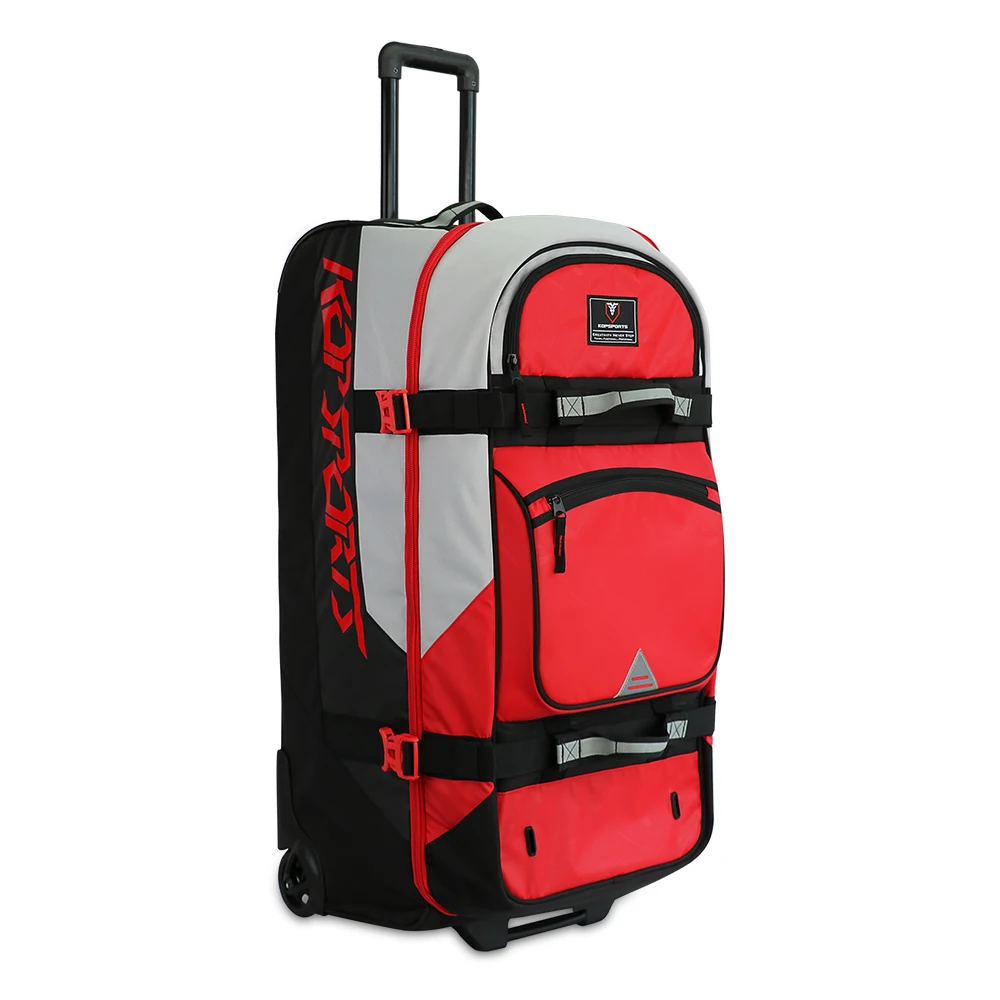
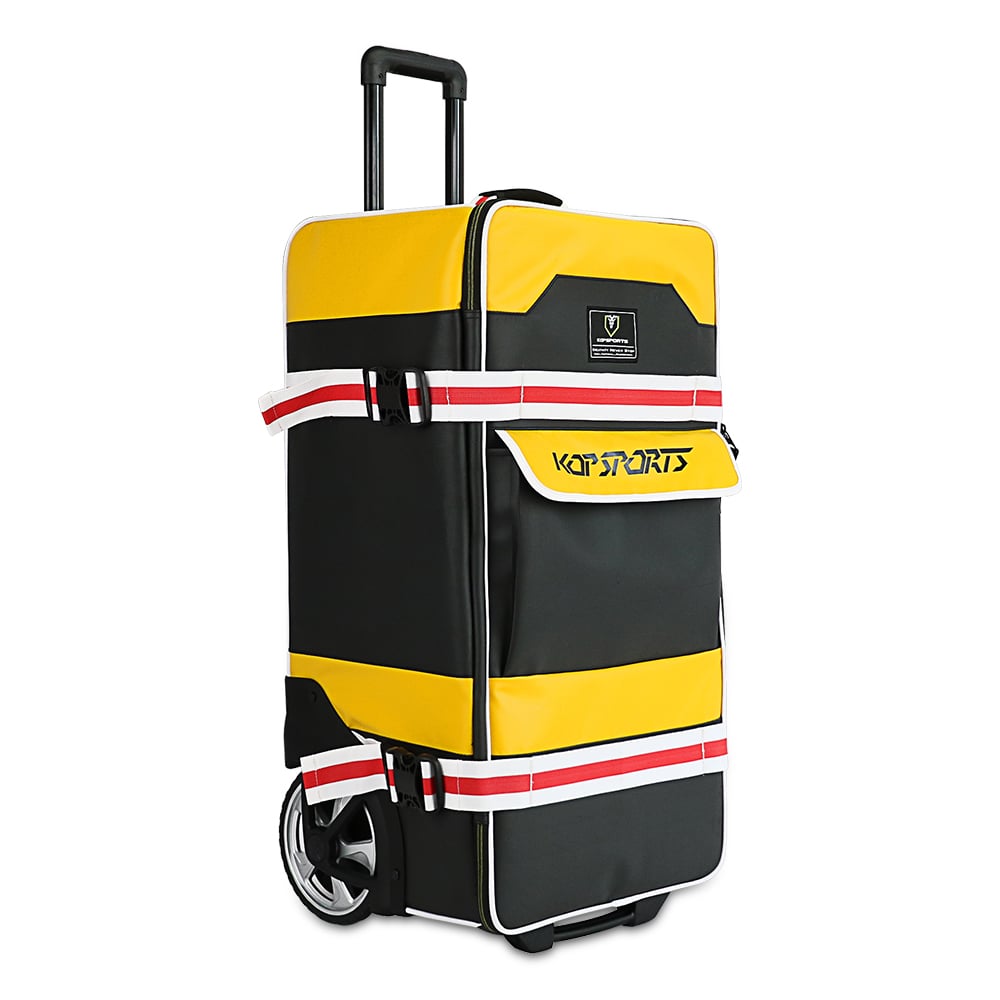
The rolling system is the first place a teaching bag earns or loses its keep. Small hard wheels roll fast on smooth gym floors but chatter on asphalt and catch on expansion joints. Larger wheels with a modest tread roll better outdoors but add weight and bulk. Wheelbase matters too. A narrow wheelbase tips when the bag is loaded unevenly, which happens when a coach packs a net on one side and balls on the other. A wider stance tracks straighter and resists tipping.
Handle height is just as important. A telescoping handle that is too short forces a stoop, and a stoop repeated across a long teaching day adds up. A handle that is too long makes the bag feel unwieldy when turning. The practical test is simple: load the bag, extend the handle, and walk a normal pace. If the bag pulls to one side or the wrist bends awkwardly, the geometry is wrong for that user. There is no universal height, which is why adjustable handles matter for shared coaching staffs.
A coaching kit has a predictable core, and the bag should have a place for each item. Paddles need a padded sleeve or a dedicated paddle compartment so faces do not rub against each other. Balls need a breathable pocket or a tube slot, because loose balls roll to the bottom and get lost under everything else. A small wet zone helps with towels and damp shirts. A quick-access top pocket is useful for a whistle, a phone, and a pen. A mesh side pocket can hold a water bottle, but it needs a drain hole and enough depth that the bottle does not launch out when the bag is set down.
| Teaching item | Ideal compartment | Design detail that matters | Common weak point |
|---|---|---|---|
| Demo paddles | Padded paddle sleeve | Separate slots, soft lining | Faces rub and edge tape wears |
| Balls and ball tube | Breathable ball pocket | Elastic or cinch top, drain hole | Loose balls roll under net bag |
| Mini net and posts | Long main compartment | Reinforced base, strap to hold net | Net hardware pokes seam |
| Towel and damp shirt | Small wet pocket | Wipeable lining, sealed seam | Dampness spreads to paddles |
| Scoreboard and whistle | Quick-access top pocket | One-hand reach, soft lining | Pocket blocked by handle |
| Water bottle | Side mesh pocket | Depth and drain hole | Bottle falls out on rough ground |
A wheeled pickleball bag lives in a harsher environment than a court-only tote. It gets set down on asphalt, dragged over curbs, and packed into a trunk. The base panel takes the most abuse, so a reinforced abrasion-resistant base is worth the weight. Zippers need to handle repeated opening under load, especially on the main compartment. Seam strength matters at handle anchors and wheel housings, where load concentrates.
Useful reference points include ASTM D1683 for seam strength and ASTM D2061 for zipper strength. Those tests do not guarantee a bag will last forever, but they give buyers a way to compare constructions. A bag can look sturdy and still fail at a bar tack or a wheel housing if the stitch pattern is too sparse. The test data matters more than the thickness of the fabric alone.
During a regional pickleball training camp, a group of eight instructors tested three wheeled bag layouts across five days of lessons on mixed surfaces. The first bag had small hard wheels and a narrow base. It rolled well indoors but tipped on a sloped outdoor walkway when a net was packed on one side. The second bag had larger wheels and a wider base, which fixed the tipping, but the internal layout had one large cavity. Ball tubes ended up under paddles, and instructors spent time digging during rotations. The third layout kept the wider wheelbase and added a dedicated paddle sleeve, a cinch-top ball pocket, and a small wet pocket. Setup and pack-down time dropped noticeably, and the paddle faces showed less edge wear. The lesson was not that one feature solved everything. It was that wheel geometry and internal layout have to be designed for the same teaching routine.
A wheeled bag is not always the right answer. Stairs, gravel paths, and crowded car trunks can make wheels a liability. A wheeled bag is also heavier than a carry bag before anything goes in. Coaches who teach at one facility with a short walk may not gain much from wheels. The better question is whether the daily route includes enough pavement, parking lots, or long hallways to justify the rolling system.
Buyers should test the loaded bag, not the empty one. 1. Load it with the real teaching kit. 2. Roll it on the worst surface in the daily route. 3. Check handle height at a normal walking pace. 4. Open every pocket with one hand. 5. Look at seam and wheel housing construction, not just fabric color. A wheeled pickleball bag that passes those checks is more likely to survive a teaching season.
KOP’s production base supports that kind of wheeled bag development with annual output above 6,000,000 pieces, about 40 percent wheeled bags, thousands of skilled workers, and professional roller equipment. Every bag goes through a standardized testing process under a strict quality control system before release, covering material durability, craft accuracy, and structural stability. For coaching and instruction programs, the value is a wheeled pickleball bag built around real teaching loads and real rolling surfaces.

 EN


 Hot News