Denier measures yarn linear mass: 9,000 meters of fiber weighing one gram equals 1D. A higher number means a thicker yarn for a given fiber, not automatically a tougher duffel bag. A 1000D polyester made from low-tenacity filament can fail sooner than a 600D high-tenacity nylon with a good coating. Durability comes from fiber type, yarn twist, weave density, coating adhesion, seam construction, and hardware. Denier is a starting filter, not a final answer. Buyers who treat it as a score often overpay for weight and still see abrasion failures at zipper tape and base corners.
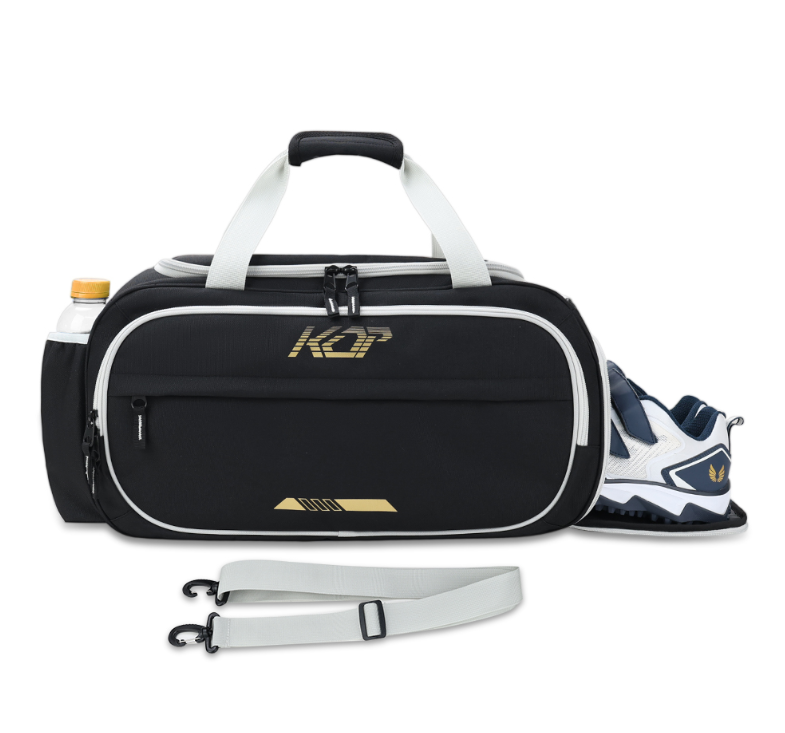
A duffel bag carries loads in different ways. The base and end panels take abrasion and point loads. The main body takes tension and bulge. Shoulder strap anchors and handle patches take repeated peeling and shear. A single denier across every panel is a compromise. In many travel duffels, 600D to 1000D polyester or nylon works for the body. The base may benefit from 1000D or a 1680D ballistic panel. Lighter 420D high-tenacity fabric can work on top panels where abrasion is lower. The goal is to put mass where stress lives. A 900D body with a 600D top is often smarter than a uniform 1200D shell that adds weight without fixing the base.
Fabric durability in a duffel bag is a system. A polyurethane back coating can lock yarns, reduce fraying, and improve water resistance. A poor coating that cracks after flexing can expose yarn to grit. Weave matters too. A tight plain weave resists snagging better than a loose basket weave at the same denier. Heat and UV exposure age nylon faster than polyester in some climates, so fiber choice matters outdoors. Abrasion tests such as ASTM D4157 provide a common comparison, but results shift with coating, backing, and test cycles. A lab number without construction details is weak evidence.
For general gym, travel, and gear hauling, 600D to 1000D is the working range. 420D high-tenacity nylon with a solid coating can serve lighter carry. 1680D ballistic nylon suits high-abrasion bases and heavy travel, but it adds weight and stiffness. The table below shows typical tradeoffs, not guaranteed performance.
| Fabric denier and type | Typical shell weight | Abrasion feel | Weight penalty | Best placement |
|---|---|---|---|---|
| 420D high-tenacity nylon | 180 to 250 gsm | Moderate | Low | Top panels, lightweight duffel |
| 600D polyester | 250 to 320 gsm | Good | Medium | Main body, daily duffel bag |
| 1000D polyester or nylon | 350 to 450 gsm | Very good | High | Base, heavy haul duffel |
| 1680D ballistic nylon | 450 to 600 gsm | Excellent | Very high | High wear base panels |
These ranges depend on coating weight and weave. A 600D with a thick PU coating can weigh as much as a light 1000D. The better question is whether the panel passes the abrasion and tear checks for its position.
Heavy denier does not save a bad seam. In a 2022 production review at a bag facility in Guangdong, a 600D polyester duffel bag with a PU back coating beat a 1000D uncoated sample on field returns. The 1000D sample won a simple tensile check, but the uncoated weave frayed at the zipper tape and absorbed grit. The 600D bag had bound seams, a reinforced base, and a tighter weave. Returns dropped after the switch. That case is not a universal rule. It shows why denier claims need a build review. Check bar tacks, webbing attachment, zipper tape, and base corners. A 1000D shell with a weak zipper still fails.
A daily commuter duffel bag can use 600D polyester with a PU coating and reinforced base. A travel duffel that sees airport belts and rough pavement may need 1000D on the base and 600D to 900D on the body. A gear hauler for tools or outdoor equipment can justify 1680D ballistic panels at contact points. Honest limitation: heavier fabric adds weight, stiffness, and sewing difficulty. It can also hide poor pattern design. Buyers should ask for material test reports, seam checks, and a pre-production sample that matches the final construction. ASTM D5034 for tensile strength and ASTM D2261 for tear strength are useful references, though full bag testing still matters.
Kopsports supports duffel bag programs with controlled material testing, consistent stitching, and quality checks before release. Annual output above six million pieces, including wheeled bags and sports bags, gives buyers a production base for repeatable construction. A standardized testing process covers material durability, craft accuracy, and structural stability before each bag is released. The right denier is the one that matches the panel, the coating, and the seam, then survives the return data.

 EN




 Hot News