Daily training puts a sports backpack through a predictable but messy routine. A wet shirt goes in after a session, shoes come off at the gym door, a water bottle leaks a few drops, and a phone charger tangles with a towel. A pack with one large opening forces all of that into the same space. The result is not just clutter. Moisture spreads to clean clothes, shoes grind against fabric, and small items disappear into the bottom of the main compartment.
A multi-purpose sports backpack solves that problem through compartment logic, not through extra padding or a bigger shell. The right layout separates wet from dry, dirty from clean, and quick-access items from gear that stays packed all day. That separation is what makes a training pack usable on a Tuesday evening and still organized on a Saturday morning.
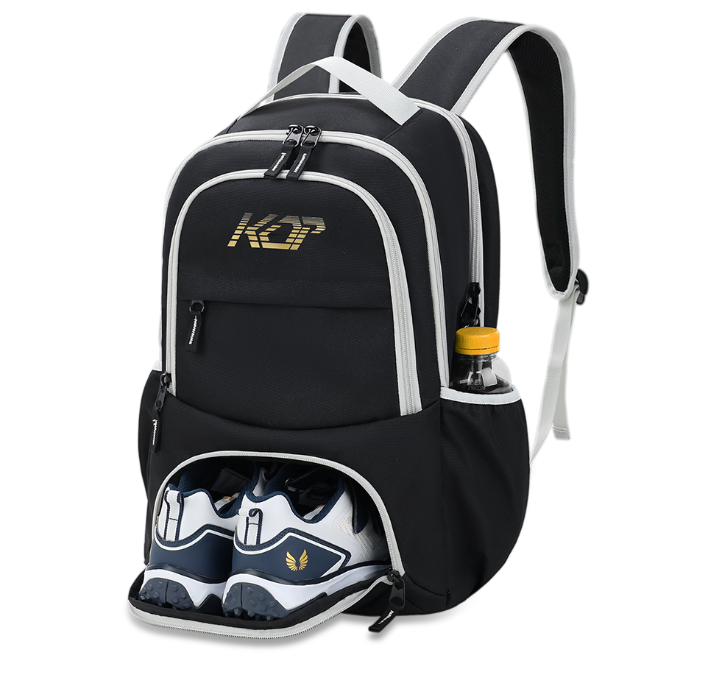
The first compartment that matters is a dedicated shoe zone. Shoes carry dirt, moisture, and odor, and they should not share space with a clean shirt or a towel. A side-entry shoe compartment with a ventilated panel keeps footwear isolated while allowing air to move. That vent does not sterilize the shoe, but it reduces the humidity that drives odor inside the pack.
The second is a wet pocket, usually a small sleeve with a waterproof or water-resistant lining. A damp towel or a sweaty base layer can go in without soaking the main compartment. The limitation is honest: a wet pocket holds moisture in, so it needs to be emptied and dried after use. It buys time during a commute, not permanent storage.
The third is the main dry compartment. That space should hold clean clothes, a towel, and any gear that needs to stay dry. A simple divider or a light mesh sleeve inside the main compartment keeps small items from sliding around without turning the pack into a suitcase.
Access speed matters more than raw volume in daily training. A U-shaped opening that lays the main compartment flat is easier to pack than a top-loading drawstring design. Internal mesh sleeves and a shallow admin panel help separate a wallet, keys, and a phone from a change of clothes. Load balance also depends on layout. Heavy items should sit close to the back panel, not at the bottom of a deep pocket.
Capacity claims deserve scrutiny. ASTM F2153 provides a repeatable method for measuring backpack volume, and it is useful when two packs claim similar liter ratings but feel different in use. A pack with a well-planned 25 liter layout can carry more usable gear than a 30 liter pack with one deep cavity, because the divided space is easier to load and unload.
| Compartment Setup | Typical Usable Capacity | Best Daily Use | Main Advantage | Honest Limitation |
|---|---|---|---|---|
| Single main compartment | 20 to 28 liters | Minimal gym carry | Light and simple | Wet gear mixes with clean clothes |
| Main plus shoe compartment | 24 to 32 liters | Daily gym and commute | Shoes isolated from clothing | Shoe zone reduces main volume |
| Main plus wet pocket plus shoe zone | 26 to 35 liters | Training with a towel and shower | Clear wet and dry separation | Wet pocket needs regular cleaning |
| Three-zone pack with admin panel | 28 to 38 liters | Work, gym, and short travel | Fast access to small items | More pockets add weight and cost |
| Modular divider system | 30 to 40 liters | Mixed equipment loads | Layout adapts to the day | Dividers can shift if not secured |
The difference between a useful training pack and a frustrating one often comes down to small pockets. A side bottle pocket with elastic retention keeps a water bottle upright and reachable. A fleece-lined top pocket protects sunglasses or a phone screen. A key clip near the top opening prevents the daily search through the main compartment. A cable loop or small zip mesh pocket keeps a charging cord from tangling with a towel.
There is a limit to this logic. Too many tiny pockets create their own confusion, and deep narrow pockets can be harder to use than a single shallow admin panel. The practical rule is to add pockets for items that are carried every day, not for every possible item a buyer might own.
A corporate fitness center once ordered a batch of packs for employee use, starting with a simple main compartment plus a laptop sleeve. The first month of feedback showed a recurring problem: members placed shoes and damp towels in the main compartment after lunchtime workouts, and clean clothes picked up odor and moisture. The center switched to a layout with a side shoe zone and a small wet pocket, and the complaints about damp clothing dropped.
That case is not a controlled study, but it shows how compartment design maps to behavior. People pack quickly after training, and they follow the path of least resistance. If the wet pocket is obvious and easy to reach, it gets used. If the shoe zone is hidden under a flap, shoes end up in the main compartment.
No single layout fits every routine. A commuter who trains at lunch needs a slim pack with a shoe zone and a laptop sleeve. A strength athlete who carries knee sleeves, a belt, and a shaker bottle needs a wider main opening and a sturdy base. A swimmer needs a wet pocket that can handle a towel and a suit without leaking into the main bag.
Buyers should also check how the pack behaves when it is not full. A pack with too many rigid dividers can feel empty and floppy when only a few items are inside. A pack with soft mesh dividers and a compressible main compartment tends to adapt better across light and heavy days. The best compartment system is the one that matches the items a user actually carries, not the maximum list of features on a spec sheet.
Kopsports plans compartment layouts into the production line rather than treating pockets as an afterthought, with annual output above six million bags, a dedicated roller equipment bag facility, and a standardized testing process that checks material durability, craft accuracy, and structural stability before release. The combination of skilled production workers and a strict quality control system helps keep compartment construction consistent from one batch to the next.

 EN



 Hot News