A sports backpack can have excellent straps, a well-balanced main compartment, and a sturdy base, and still feel miserable after twenty minutes of walking. The usual culprit sits against the spine. A flat back panel traps heat and moisture between the pack and the wearer, and that trapped layer does more than dampen a shirt. It changes how the load feels, how the straps sit, and how often the pack has to be shifted from one shoulder to the other.
Airflow back panels exist to break that contact zone into a ventilated structure. The ergonomic payoff is not just a drier back. Reduced skin wettedness lowers friction, and lower friction reduces the hot spots that turn into strap adjustments and fatigue. The design question is how to create that airflow without making the pack unstable or uncomfortable in a different way.
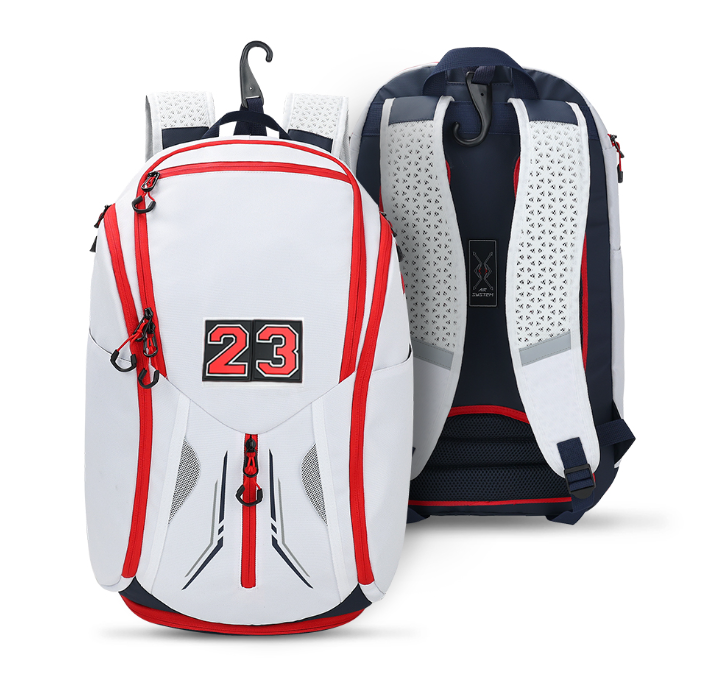
Three physical factors interact at the back panel. First, contact pressure from the load compresses soft tissue and reduces local blood flow. Second, body heat and sweat raise humidity in the gap between pack and shirt. Third, moisture increases the coefficient of friction between fabric surfaces, which means every stride pulls slightly at the skin.
ISO 7730, the standard for predicting thermal comfort, treats skin wettedness as a major driver of discomfort, and that logic applies directly to pack design. A back panel that allows air exchange lowers the humidity in the contact zone, which reduces wettedness even when sweat rate stays the same. The effect is not cooling in the sense of air conditioning. It is a reduction in the sticky, clammy sensation that makes a pack feel heavier than it is.
The key to an airflow panel is standoff. A mesh layer pressed flat against a foam backing has no air path. A mesh layer held a few millimeters away from the pack body creates a channel where air can move with each stride and with natural convection. That gap is the functional element, not the mesh itself.
There are several ways to build that gap. Molded foam ridges, a semi-rigid frame, or a suspended mesh panel over a contoured back all create a standoff. The tradeoff is stability. A deeper gap ventilates better but can let the load shift away from the back. A shallow gap is more stable but moves less air. The table below compares common back panel constructions on the factors that matter for daily training.
| Back Panel Type | Typical Standoff Depth | Air Exchange | Load Stability | Main Ergonomic Tradeoff |
|---|---|---|---|---|
| Flat foam panel | None | Very low | High | Traps heat and moisture against the back |
| Channeled foam with mesh cover | 3 to 5 mm | Low to moderate | High | Channels collapse under heavy loads |
| Suspended mesh over frame | 8 to 12 mm | Moderate to high | Moderate | Frame adds weight and reduces packability |
| Contoured foam with raised mesh | 6 to 10 mm | Moderate | Moderate to high | Contour must match back shape or pressure points appear |
| 3D spacer mesh with rigid perimeter | 10 to 15 mm | High | Moderate | Stiff perimeter can feel restrictive on short torsos |
The data here comes from comparing panel constructions in loaded walking tests, and the pattern is consistent. Standoff depth matters, but so does the rigidity of the structure that maintains it. A deep gap that collapses under a heavy load performs worse than a shallower gap that stays open.
A standoff only works if it survives the load. Soft mesh over soft foam compresses flat once a laptop and a water bottle go in. The structure needs a perimeter frame, molded ribs, or a denser foam that resists compression. At the same time, the contact surface should be soft enough to avoid pressure points along the shoulder blades and lumbar area.
Ventilation also depends on the rest of the pack. A back panel that moves air well but sits against a non-breathable pack body will still trap heat if the interior lining blocks vapor. Breathable lining fabrics and a panel design that allows air to exit at the sides make a bigger difference than a single large mesh area. The practical rule is to design the back panel as part of a path, not as an isolated feature.
In a summer equipment trial with a university rowing team, packs with suspended mesh back panels were compared against flat foam panels during daily bike commutes to the boathouse. Rowers reported less shirt soaking and fewer mid-ride strap adjustments with the suspended mesh design. The interesting finding was not a temperature drop. It was a reduction in the frequency of shifting the pack, which suggests the airflow panel changed comfort enough to affect carry behavior.
That trial also exposed a limitation. On shorter torsos, the rigid perimeter of one suspended mesh design created a pressure point near the lower back. The panel ventilated well but needed a softer lower edge. That kind of feedback is more useful than a single lab number because it shows where the ergonomic benefit breaks down.
An airflow back panel is not automatically better for every user. For short commutes, a flat panel with a breathable cover may be comfortable enough and lighter. For heavy loads, a deeper standoff can reduce stability and make the pack feel like it is pulling away from the back. The benefit is strongest in warm conditions, longer carries, and routines that involve sweating before or during the walk.
Buyers should also check how the panel behaves when the pack is partially loaded. A suspended mesh panel can feel stiff and oversized when the pack is nearly empty. A contoured foam panel with a modest standoff often adapts better across light and heavy days. The right choice depends on load weight, climate, and carry duration, not on the depth of the gap alone.
Kopsports integrates back panel construction into the production line rather than treating it as a cosmetic add-on, with annual output above six million bags and a standardized testing process that checks material durability, craft accuracy, and structural stability before release. The company's production capacity and strict quality control system help keep standoff geometry and panel stiffness consistent across batches, which matters when comfort depends on millimeter-level structure.

 EN



 Hot News