An AAU weekend tournament is not the same as a Tuesday night practice. A player may face three or four games in two days, across two gyms, with a hotel stay in between. That changes the gear list. Two jerseys, two pairs of shorts, a shooting shirt, warm-up pants, two pairs of socks per game, basketball shoes, sandals, a towel, toiletries, a phone charger, and a water bottle all need a place. A basketball bag that works for a single practice will run out of room fast. The capacity question is really a question about how many separate items a weekend demands and how much separation those items need.
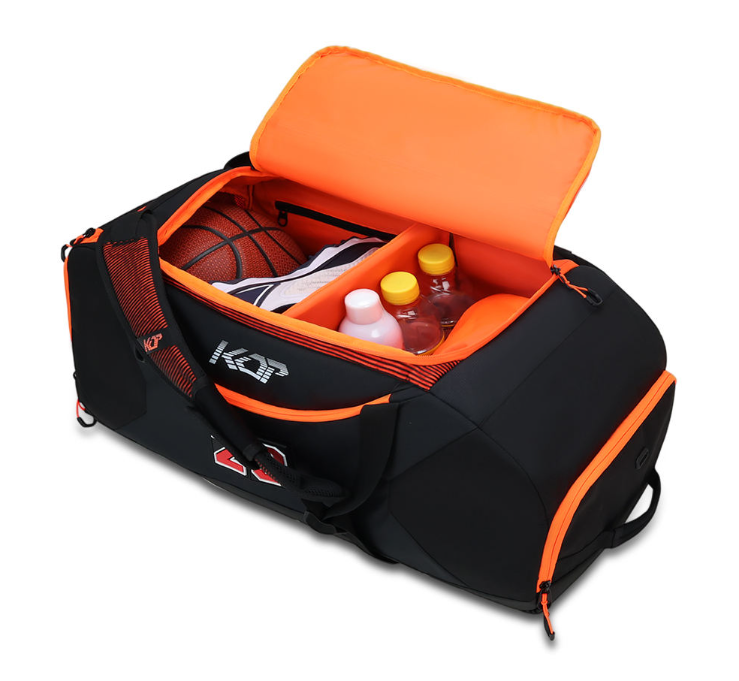
A useful way to size a bag is to lay out everything a player actually brings, then add a buffer. For a two-day AAU event, a realistic list runs:
Two game jerseys and two pairs of shorts.
One shooting shirt and one pair of warm-up pants.
Four to six pairs of socks.
Basketball shoes and a pair of slides or sandals.
One large towel and one small towel.
Toiletries, a phone charger, and a small snack bag.
A water bottle and a resistance band.
That load usually lands in the 40 to 55 liter range for a soft bag. A player who also carries a laptop, schoolwork, or a foam roller should look at 55 to 70 liters. A bag under 35 liters is fine for a single game but tends to force shoes against clean jerseys on a weekend trip. Capacity is not about hauling more. It is about keeping wet shoes, clean clothes, and small items from sharing one space.
AAU tournaments often mean long walks from a parking lot to a gym entrance, and sometimes a shuttle. A wheeled basketball bag takes that load off the shoulder, but it adds weight and a rigid frame. A carry bag is lighter and easier on stairs, but it puts the full load on one shoulder for the length of the walk.
| Capacity range | Typical use | Wheeled or carry | Practical note |
|---|---|---|---|
| 30 to 35 liters | Single game, light gear | Carry | Too tight for a two-day event |
| 40 to 50 liters | One player, two-day AAU trip | Either | Fits shoes, two jerseys, towel |
| 55 to 65 liters | Player with school gear or foam roller | Wheeled preferred | Better separation and base support |
| 70 liters and up | Shared team gear or long trips | Wheeled | Bulkier, harder on stairs |
The table is a starting point, not a rule. A player who packs light can do a weekend in 40 liters. A player who brings recovery tools and extra shoes will want more.
A large bag with no compartments becomes a 60 liter pile. A slightly smaller bag with a shoe tunnel, a wet pocket, and a separate clean-clothes section often works better. Three organization features that earn their place on an AAU weekend:
A ventilated shoe tunnel keeps wet soles away from jerseys.
A wet pocket for towels and sweaty socks limits odor spread.
A small top pocket for keys, wallet, and charger saves digging.
A basketball bag with these features lets a player pack the same way every weekend, which matters when a game starts thirty minutes after a hotel checkout.
It is easy to size up. A 70 liter bag feels safe, but it encourages bringing gear that never gets used. A heavier bag also puts more strain on the shoulder strap and the base seam. A loaded 70 liter bag can run past 25 pounds, and that weight matters on a long walk across a parking lot. A smarter approach is to pack for the actual schedule, not the worst case. If the tournament has two games on Saturday and one on Sunday, two jerseys are enough. A third jersey adds volume without adding value. The same logic applies to shoes. Two pairs, one for play and one for walking, cover most weekends.
A club in the Southeast ran a regional AAU circuit with twelve players and two coaches. Players were using 35 liter carry bags and complaining about shoes pressing against clean jerseys. The club tested 50 liter bags with a shoe tunnel and a wet pocket for one season. The feedback was practical. Players liked the separation, but several said the bag was heavy on long walks when fully loaded. The next order moved to a 55 liter wheeled bag with a rigid base. That version handled the parking lot walks better, and the shoe tunnel kept wet soles away from jerseys. The club did not solve every packing problem. Players still overpacked, and a few bags showed base scuffs after a season. What improved was the daily routine: shoes in the tunnel, wet towels in the wet pocket, clean clothes in the main compartment. That is the kind of field feedback that a catalog photo cannot provide.
For clubs and distributors, the capacity question becomes a product line question. A basketball bag line needs a clear size range, consistent compartment layout, and repeatable construction across lots. ASTM D4169 is a recognized practice for shipping container performance, and its drop and vibration sequences offer a useful reference for how a loaded bag should survive transport. Kops produces more than 6,000,000 bags annually, with about 40% wheeled bags, and applies a standardized testing process before every bag is released. That capacity and quality control support consistent sizing and construction when a program orders across multiple seasons.

 EN



 Hot News