A soccer bag spends its life on grass, turf, gravel, and pavement. It gets dragged across a parking lot, dropped on a wet bench, and stuffed into a car trunk with cleats still muddy. Rain, sun, and repeated loading cycles work on seams, zippers, and base panels. A bag that looks fine on a showroom floor can fail after a month of daily practices. A soccer bag is not just a sack. It is a load-bearing system that has to work with a player's body and a coach's schedule. Strict production testing matters because it simulates the wear that outdoor training delivers, not just the wear that looks good in a photo. The goal is not an indestructible bag. The goal is a bag that holds up to the route a player actually takes.
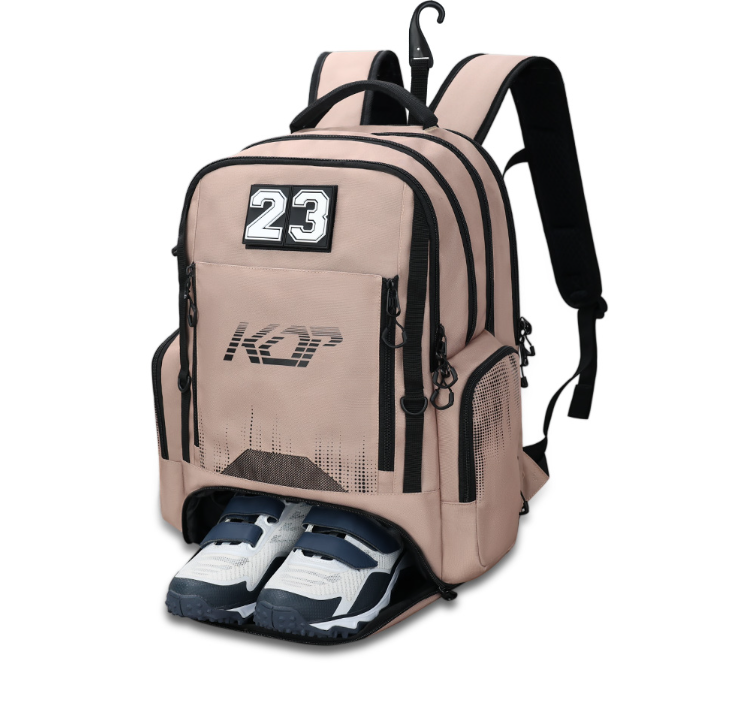
A production test for a soccer bag goes beyond a visual check. It covers material durability, craft accuracy, and structural stability. That means abrasion resistance on the base fabric, tensile strength on webbing and handles, and cycle testing on zippers. Stitching is checked at stress points like shoulder strap anchors and handle mounts. A standardized testing process uses the same fixtures, the same load weights, and the same pass or fail criteria for every batch. Without that consistency, one shift might pull harder on a seam than another, and a weak lot can slip through. The test is not a single heroic stress test. It is a repeatable routine that catches variation before the bag reaches a field. ASTM D4169 is a recognized practice for shipping container performance, and its drop and vibration sequences offer a useful reference for how a loaded bag should survive transport. That standard does not tell a buyer how a specific bag will age, but it gives a common language for transport durability. Material testing is not the same as finished bag testing. A fabric can pass a lab abrasion test and still fail at a seam because the stitch pattern is wrong. A strict process tests both the components and the assembled bag.
Many factories pull one bag, tug the handle, and call it good. That is a spot check. A full testing protocol is a system. It defines sample size per lot, equipment, test cycles, and what happens when a sample fails. A useful comparison:
| Check | Spot check | Strict production testing | What it changes |
|---|---|---|---|
| Sample size | One or two bags | Defined sample per lot | Catches batch variation |
| Abrasion test | Visual rub by hand | Taber or Wyzenbeek cycles | Finds weak base fabric |
| Strap strength | Hand pull | Tensile test to a set load | Prevents handle failure |
| Zipper cycle | Open and close a few times | Repeated cycles under load | Exposes slider wear |
| Record keeping | Notes or none | Logged results and batch trace | Supports root cause review |
| Failure response | Rework if noticed | Hold, inspect, and correct | Stops repeat defects |
The table is not a scorecard. It shows where a spot check ends and a system begins. A spot check can miss a batch with slightly off-spec webbing or a brittle zipper slider. A system catches that pattern because it compares results across lots and shifts.
A youth soccer club in the Pacific Northwest ran daily training through a wet fall. Players packed cleats, shin guards, a ball, and a water bottle into soccer bags that had passed a quick factory tug. By midseason, a stack of bags had failed at the shoulder strap anchor and the base seam. The fabric had abraded through where the bag met pavement. The club switched suppliers and asked for test records per lot, including abrasion cycles and strap tensile results. The new bags were not perfect. After months of daily use, a few zippers needed lubrication, and the base fabric showed scuffs. What changed was the failure rate. Bags stopped failing at the strap anchor because weak webbing was caught before shipment. The club also noted that bags with a reinforced base panel lasted longer, which led to a specification change for the next order. The club started rinsing mud off the base before storage, which helped the fabric last longer. That field feedback is more useful than a lab photo because it shows where a test earns its place and where user care still matters.
A production test cannot simulate every real condition. Sharp gravel, repeated soaking, and overloading can shorten the life of any soccer bag. A bag that passes a lab test can still fail if it is dragged across asphalt with a full water bottle and a wet towel inside. Buyers should treat testing as a filter, not a guarantee. Field care still matters: empty the bag after training, rinse off mud, and let it dry before storage. A simple wipe down with fresh water after a muddy session removes grit that would otherwise grind into the fabric. Do not force a zipper past a snag. Do not hang the bag by one strap for hours. The honest position is that strict testing reduces risk. It does not remove the need for sensible use. That is a more useful promise than a claim that a bag will never fail.
For clubs and distributors, the weak points show up first at the base, the handle mount, and the zipper. A soccer bag line needs consistent fabric abrasion resistance, webbing strength, and stitching density from lot to lot. Kops produces more than 6,000,000 bags annually, with about 40% wheeled bags, and applies a standardized testing process before every bag is released. That capacity and quality control support repeatable construction when a program orders across multiple seasons. The testing does not make a bag bulletproof. It makes the failure rate predictable, which is what a coach or a player needs when the next practice is already on the calendar.

 EN



 Hot News