A baseball bag is not a simple sack with a logo. It is a small protective structure that travels in trunks, on carts, and across parking lots. The bats inside are often the most expensive items in the load. A single dented barrel or scuffed knob can turn a good session into a bad day. The shell fabric is the first line of defense, and the difference between a heavy-duty weave and a lightweight fashion fabric shows up fast at corners, zipper ends, and wheel housings.
Heavy-duty fabric does not mean stiff canvas with no thought behind it. It means a woven or coated material with enough tear strength, abrasion resistance, and flex life to take repeated contact. The fabric also has to work with the pattern, seam construction, zippers, and hardware. A tough shell on a weak frame just moves the failure point.
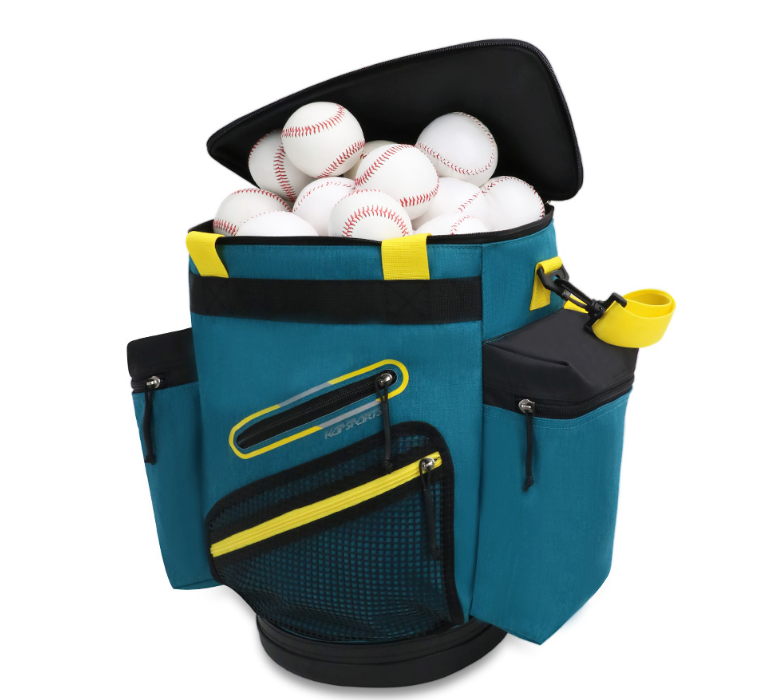
Most field failures do not start in the middle of a panel. They start where load concentrates. Corner seams take drop impact. Zipper tape takes lateral pull when a bag is overpacked. Wheel housings take vibration and grit. Bat sleeves rub against barrels during transport. A heavy-duty shell helps, but only when seam engineering matches the fabric.
There is a useful rule from textile testing. ASTM D5034 covers grab tensile strength of fabrics, and ASTM D751 covers coated fabrics. Those tests do not simulate every real bag, but they create a baseline. A fabric that passes a lab number can still fail in a bag if stitch density, needle size, and thread type are wrong. That is why fabric selection and sewing trials belong in the same conversation.
A practical comparison helps. The table below uses representative mill ranges, not a single pass or fail specification. Actual numbers vary by weave, coating, and finishing.
| Fabric | Typical weight | Grab tensile, ASTM D5034 range | Abrasion resistance, relative | Common role in a baseball bag | Cost index |
|---|---|---|---|---|---|
| 600D polyester | 180 to 220 gsm | 180 to 260 lbf | Moderate | Light training bags, dividers | 1.0 |
| 1000D nylon | 260 to 320 gsm | 300 to 420 lbf | High | Main shell, bat sleeves | 1.4 |
| 1680D ballistic nylon | 400 to 520 gsm | 550 to 750 lbf | Very high | High-wear corners, wheel areas | 1.9 |
| 900D PVC-coated polyester | 350 to 450 gsm | 250 to 380 lbf | High, with moisture barrier | Wet fields, easy-clean shells | 1.3 |
The table points to a simple truth. Putting 1680D ballistic nylon on every panel adds weight and cost without solving every problem. A mixed build in a baseball bag often works better. Use 1000D nylon on the main body, 1680D at abrasion zones, and a coated fabric where moisture is a real concern. That approach protects expensive bats without turning the bag into a shipping crate.
Before release, every single bag should go through a standardized testing process paired with a strict quality control system. That sounds like a slogan until the steps are defined. Material durability checks, craft accuracy checks, and structural stability checks need uniform, predefined assessments. The quality system should oversee the whole procedure so one shift does not test differently from another.
A useful test flow has three layers. First, incoming fabric and hardware get checked against agreed specifications. Second, in-process checks catch seam slip, needle cutting, zipper alignment, and wheel housing fit. Third, finished bag checks cover drop impact, handle pull, zipper cycling, and a visual audit. The goal is not to test hero samples. The goal is to catch drift before a production run becomes a pile of returns.
During a line change at a bag plant in southern China, a wheeled bat bag moved from 600D polyester to 1000D nylon. The first run looked clean on the table. In drop tests, corner seams on two sample bags began to grin after repeated impacts. The fabric was not the problem. The sewing recipe had stayed on the old setup, so an oversized needle was cutting the heavier weave at the seam line.
The fix was not more fabric. The line moved to a smaller needle, a bonded nylon thread, and a slightly longer stitch. Corner bar tacks were repositioned to spread load. That change reduced seam failure without adding weight. The lesson is blunt. Heavy-duty fabric is only heavy-duty when the needle, thread, and seam pattern respect it.
The best baseball bag for a travel team is not automatically the best bag for a weekend player. A wheeled baseball bag that spends time in truck beds and airport cargo needs tougher corners, better wheel protection, and more stable structure. A carry bag that moves from car to dugout can use a lighter shell and save weight. Honest limits matter. No fabric choice makes a bag indestructible, and no test program can simulate every curb, tailgate, and overhead bin.
Kopsports runs a sports bag production line with thousands of skilled workers, annual output above six million pieces, and roughly forty percent wheeled bags. That kind of volume makes standardized testing and material control practical rather than theoretical. For buyers comparing baseball bags, the real advantage is not a single fabric name. It is a build where heavy-duty shell fabric, seam engineering, and quality control all point in the same direction.

 EN




 Hot News