Tournament softball is a game of hurry up and wait. Between games, players dig through gear, swap bats, and repack in dusty parking lots. A softball bag that cannot hold the bats a player actually brings becomes a daily annoyance. Sleeve capacity is not just a number on a spec sheet. It is the difference between a bat sliding out cleanly between innings and a handle getting scratched against a zipper.
Capacity has three parts: how many sleeves, how long each sleeve runs, and how much padding surrounds the bat. A bag with four short sleeves may hold four bats, but if the barrels rub together or the end caps press against the zipper, the extra capacity does not help. Tournament players should think about the bat rotation first, then match sleeve count and dimensions to that rotation.
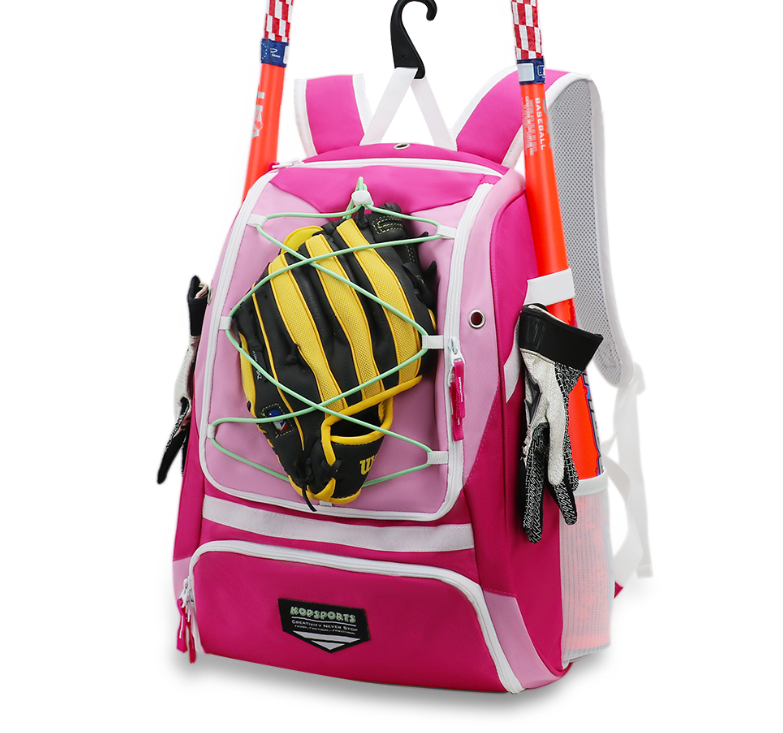
Most tournament players carry two to four bats. A typical rotation includes a game bat, a backup with a similar swing weight, and a practice bat for warmups. Slappers and utility players may add a second profile. That rotation suggests two to three sleeves for many players, and four sleeves for those who bring a full lineup of options.
More sleeves add bulk and weight. A four-sleeve bag can become clumsy if the frame is not stiff. The useful question is not how many bats a bag can hold but how many bats a player needs access to during a tournament day. For most, two well-padded sleeves plus one external clip cover the real need. Serious tournament teams may prefer four padded sleeves to reduce shuffling.
| Sleeve configuration | Typical bat load | Access speed | Bulk and weight | Best fit |
|---|---|---|---|---|
| Two padded sleeves | Two bats | Fast | Low | Weekend players and light tournament use |
| Three padded sleeves | Three bats | Fast to moderate | Moderate | Most tournament players with a backup |
| Four padded sleeves | Four bats | Moderate | High | Players rotating multiple profiles |
| Two sleeves plus external clips | Two to four bats | Moderate | Moderate | Players who want flexible capacity |
The table is a guide, not a rule. A player who walks to the plate with one bat does not need four sleeves. A team player who lends bats to teammates will feel the difference.
Adult softball bats commonly run 32 to 34 inches, with barrel diameters around 2.25 inches. A sleeve should be long enough to cover the barrel and end cap without forcing the knob against the zipper. In practice, an internal sleeve length of 34 to 36 inches gives enough clearance for most adult bats. A short sleeve leaves the end cap exposed and lets the bat shift.
Diameter matters as much as length. A sleeve that is too tight creates friction during insertion and removal, which wears the grip and the sleeve lining. A sleeve that is too loose lets the bat rattle, and rattling bats bang into each other. A padded sleeve with an internal diameter around 2.5 to 3 inches balances access with secure hold. Players with youth bats or unusual barrel sizes should measure before buying.
At a regional tournament in central Texas, an equipment manager noticed a pattern on day two. Several players were struggling to pull bats from their softball bag between innings. Short sleeves let end caps catch on zipper tape, and handles showed scratches from friction. One player missed a warmup swing because a bat was stuck.
The fix was straightforward. The team switched to bags with longer padded sleeves, zipper guards, and dividers between bats. Scratches did not vanish, since fields are dusty and bats get bumped. But access improved, and the players stopped forcing bats past exposed zipper teeth. Sleeve capacity helps only when length and padding match the bats in use. A generous sleeve count with poor dimensions is just a bigger bag with the same flaw.
Padding does two jobs. It cushions impacts when the bag is set down, and it reduces friction between bats. A thin fleece lining is better than bare nylon because it holds less grit. Dividers matter for players who carry multiple bats, since they stop barrels from rubbing against each other. Zipper guards or reversed zippers keep metal teeth away from bat handles and grips.
Ventilation is another detail that gets overlooked. A bag that traps moisture can leave grips slick and promote mildew in the lining. Mesh panels or a vented bat compartment help, though no bag stays dry in a rainstorm. Players should also check how the bag distributes weight. A four-sleeve bag loaded with bats can become top heavy if the sleeves sit high and far from the back panel.
A softball bag with good sleeve capacity still needs durable construction. Stitching at sleeve seams, zipper strength, and lining abrasion resistance all affect how long the bag holds its shape. Buyers can ask about standardized testing. ASTM D5034 covers grab tensile strength for textile fabrics, and ASTM D4169 outlines distribution cycle testing for shipping. These standards do not promise a perfect bag, but they give a shared baseline for durability claims.
A standardized testing process with strict quality control should check material durability, craft accuracy, and structural stability before release. For a bat compartment, that can include seam pull tests, zipper cycle tests, and a sleeve alignment audit. No sleeve design prevents all scratches, and no padding makes a bag waterproof. Matching capacity to the real bat rotation is still the most reliable upgrade.
KOP Sports brings relevant scale to this category. Annual output exceeds 6,000,000 bags, with about 40% wheeled. The company operates a specialized roller equipment bag facility, skilled production lines, and a standardized testing process before every single bag is released. That combination of capacity and process control supports consistent sleeve construction across production runs.

 EN






 Hot News