A basketball bag gets judged in the small moments: timeout, halftime, the walk from the car to the gym. External dual water bottle holders solve a specific pain point by moving bottles to the outside, where a hand can reach them without unzipping the main compartment. That sounds minor until a player is sweating through a tournament day and the bag is packed with shoes, a towel, a hoodie, and snacks. Digging through that pile every time costs patience and lets heat out of the bag's main zone.
The practical advantage is not just speed. It is repeatable access. A bottle sits in the same sleeve, at the same height, with the same retention lip. Players do not need to remember where the bottle ended up after the last stop. Coaches handing out water to a bench also spend less time sorting through bags. For youth programs, that small bit of order matters because bags get opened and closed dozens of times per event.
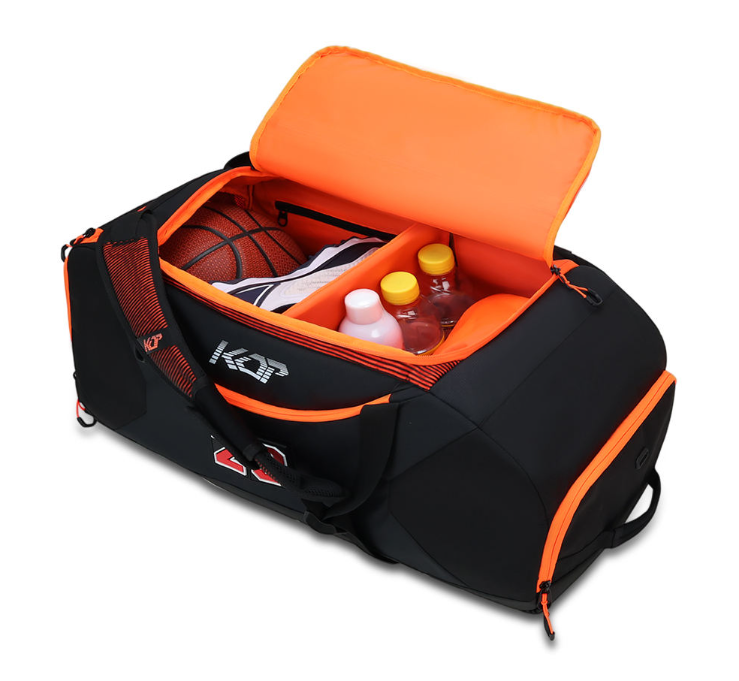
A single side bottle creates an unbalanced load. The bag wants to rotate, the shoulder strap digs in, and the bottle pushes against the hip. External dual holders split that weight across two anchor points. The effect is easy to feel on a long walk through a parking lot or up gym stairs. The bag hangs straighter, and the bottle mass stays closer to the body's center line when the holders are placed on the front or lower sides.
A small field observation during a humid weekend clinic in a southern city made this concrete. Equipment staff watched 48 recreational players use three bag layouts during warmups and halftime. The table below shows what stood out. The sample is small, so the numbers are directional, not a lab result. Still, the pattern matched common shop-floor feedback: placement and attachment quality matter more than the label on the fabric.
| Setup | Median bottle access time | Drips reaching main compartment | Load shift complaints | Practical read |
|---|---|---|---|---|
| External dual holders | 2.9 s | 0 of 16 | 1 of 16 | Bottles stay outside, weight splits across two anchor points |
| Single side sleeve | 4.6 s | 4 of 16 | 4 of 16 | Simple layout, but one-sided pull can swing the bag |
| Internal bottle sleeve | 5.4 s | 7 of 16 | 5 of 16 | Bottle is protected from bumps, wet gear risk rises |
Cold bottles sweat. That is physics, not a design flaw. The question is where the moisture goes. External dual water bottle holders keep condensation, sports drink residue, and minor spills outside the main compartment. A jersey, wrist wraps, and a spare pair of socks stay drier. That matters on back-to-back game days when wet gear sits in a car or locker between rounds.
The tradeoff is honest: external holders expose bottles to bumps and dust. A bottle can snag on a bench or scrape against a door frame. Retention cords, elastic lips, and reinforced stitching reduce that risk, but they do not remove it. For players who carry glass bottles or leak-prone lids, an internal sleeve with a waterproof liner may still be the safer choice. For typical screw-top sports bottles, external holders usually win on daily convenience.
Tournament days create a strange packing problem. Players need more water, but they also need more gear. External dual holders add bottle capacity without stealing space from shoes or a warmup layer. One bottle can hold water, and the second can hold an electrolyte mix. That separation is useful because drink powders and sugary mixes leave residue that is annoying to clean from a main compartment liner.
There is also a team logistics angle. Club staff can pre-load bottles before players arrive, then check which bags still have full holders. That simple visual cue speeds up bench setup. The limitation is weight. Two full 32 oz bottles add noticeable mass, so the shoulder strap, back panel, and attachment points need to be built for that load. A lightweight fashion bag with decorative mesh pockets is not the same product as a basketball bag designed for repeated gym use.
The weak point is rarely the bottle. It is the seam, the bartack, the elastic, or the fabric around the holder. A useful reference point is ASTM D6775, which covers breaking strength and elongation of textile webbing, tape, and braided material. Another is ASTM D5264, a common abrasion test for printed materials and fabrics. These standards do not guarantee a good holder, but they give buyers a vocabulary for asking better questions about webbing strength and surface wear.
Look for bar-tacked stress points, a reinforced backing panel, and a holder depth that covers at least one third of the bottle. Shallow sleeves let bottles tip out when the bag is set down hard. Overly tight elastic makes access slow and wears out faster. The best setups use a combination: a structured pocket for the base, a soft retention lip, and a drain hole at the bottom. Without a drain hole, water pools in the sleeve and weakens the seam over time.
Before choosing a bag with external dual holders, test the real use case. Fill both bottles, load the main compartment with shoes and a towel, then put the bag on. Check whether the bottles press into the lower back or hip. Swing the bag from side to side. A good setup stays quiet and stable. Also check doorways and locker space, because external pockets increase the bag's profile.
For programs buying in volume, consistency matters as much as the first sample. KOP's bag manufacturing operation runs high-volume sports bag lines and puts every bag through a standardized pre-release testing process, which is relevant when attachment quality and fabric durability need to hold across large orders. External dual water bottle holders are not a magic feature. They are a smart layout choice when the attachment is strong, the drain path is real, and the bag is built for loaded gym use.

 EN



 Hot News