A basketball bag spends most of its life around sweat. Socks come out damp, insoles hold moisture, and outsoles pick up dust from a gym floor that has seen three games in one afternoon. The shoe is not just wet on the surface. Foam and fabric layers hold water, and a closed compartment traps that moisture against the upper and the lining. Ventilated shoe tunnels give that moisture a path out instead of letting it sit. The goal is not to dry a soaked shoe in minutes. The goal is to keep a damp sole from turning into a sour, mildewed problem before the next practice.
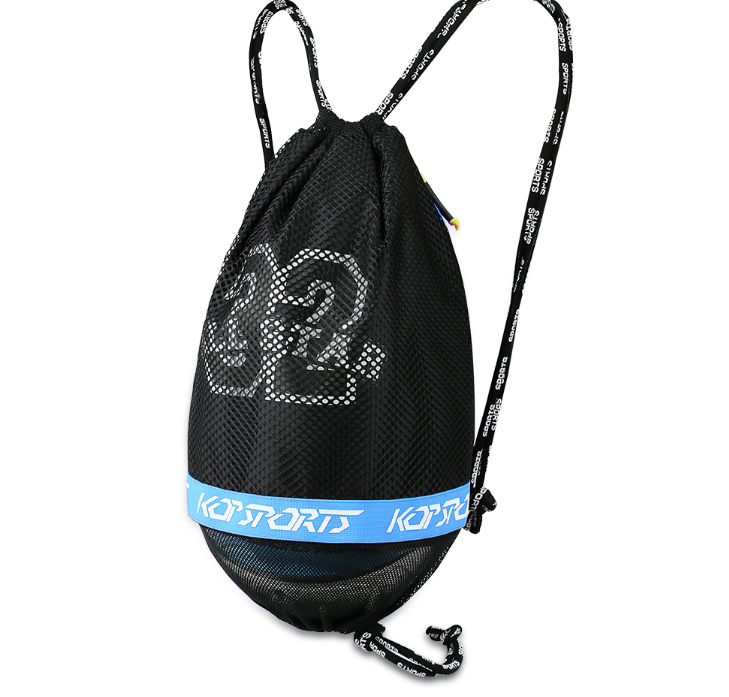
A ventilated shoe tunnel is a separate channel, usually on the side or base of a basketball bag, with mesh panels at both ends and a structure that keeps the shoe from sealing the opening. Air moves because warm, humid air rises and because the bag is handled, carried, and tossed into a trunk. That movement is small, but it is enough to exchange moisture when the tunnel has an inlet and an outlet. A single mesh window on a closed pocket does much less. The chimney effect matters: one opening lets air in, another lets it out. When a wet shoe sits in a dead end pocket, the air around it reaches saturation and drying stops.
The difference between a useful tunnel and a cosmetic vent comes down to a few construction choices. Mesh size, standoff, drainage, and access all affect performance.
A tunnel should hold the shoe off the fabric wall so air can pass around the sole.
Mesh should be durable enough to resist abrasion from cleats and gritty outsoles.
A drain hole or gusset helps liquid water leave instead of pooling.
The opening should be reachable without unpacking the whole bag.
A common mistake is placing the tunnel against the wearer's back, where body contact blocks the mesh. Another is using a fine mesh that clogs with dust. ISO 9237 is a recognized method for measuring air permeability in textiles, and it is a useful reference when comparing mesh specifications. The standard does not tell a buyer how a finished bag will perform, but it gives a common language for fabric airflow.
| Feature | Closed shoe pocket | Single mesh window | Ventilated shoe tunnel | Practical effect |
|---|---|---|---|---|
| Air exchange | Near zero | Limited to one face | Inlet and outlet | Moves humid air out |
| Shoe position | Pressed against fabric | Can seal the mesh | Standoff holds shape | Air passes around sole |
| Water handling | Pools at base | Slow to drain | Drain gusset | Less standing water |
| Debris control | Traps grit | Grit blocks mesh | Removable or wipeable base | Easier cleaning |
| Structure | Collapses | Soft panel | Semi rigid channel | Keeps passage open |
During a summer league in a coastal southern city, a high school program ran three games a day in a gym with weak air conditioning. Players packed wet shoes into the main compartment of a basketball bag, and by the second day the locker room smelled like a wet towel left in a car. The staff moved shoes into ventilated tunnels, pulled insoles out, and loosened laces before packing. The smell did not vanish overnight, and soaked shoes still needed airing at home. What changed was the daily buildup. Shoes came out of the bag cool and mostly surface dry, and the main compartment stopped holding a pocket of humid air against clean jerseys.
Ventilated tunnels are strongest for daily practice, back to back games, and travel where shoes go in and out of the bag several times. They are less effective when a shoe is truly soaked, because no passive vent can remove that much water quickly. In heavy rain or a wet locker room floor, a waterproof bag or a separate dry bag for electronics matters more than airflow. A tunnel also adds bulk and a place for dirt to collect. That tradeoff is real. For players who keep shoes in a car trunk for hours, a tunnel helps only if the bag is not sealed inside another closed container. Honest limits keep expectations reasonable.
Buyers should test a bag with the actual shoe size and a wet sole. Check whether the tunnel collapses when the bag is full, whether the mesh touches the shoe, and whether the base can be wiped. Look for bar tacked seams at the tunnel opening and a lining that does not hold odor. A small pilot batch in real gym conditions will show more than a catalog photo. For volume programs, consistency in mesh, foam, and stitching is the quiet factor. Kops produces over 6,000,000 bags a year, about 40% wheeled, and puts every bag through a standardized testing process before release. That scale supports steady quality control when a basketball bag line needs repeatable ventilation details across seasons.

 EN




 Hot News