A baseball bag packed for a tournament is not a light object. Two bats, a helmet, cleats, a glove, a few balls, a water bottle, and a change of clothes can push a bag past fifteen pounds. Carried on one shoulder through a parking lot, up a set of bleachers, and across a field, that load starts to show. A wheeled baseball bag changes the mechanics of that trip. Instead of hanging weight from one side of the torso, the bag rolls and the body pushes rather than carries. That shift is small on a single trip and meaningful across a season of travel.
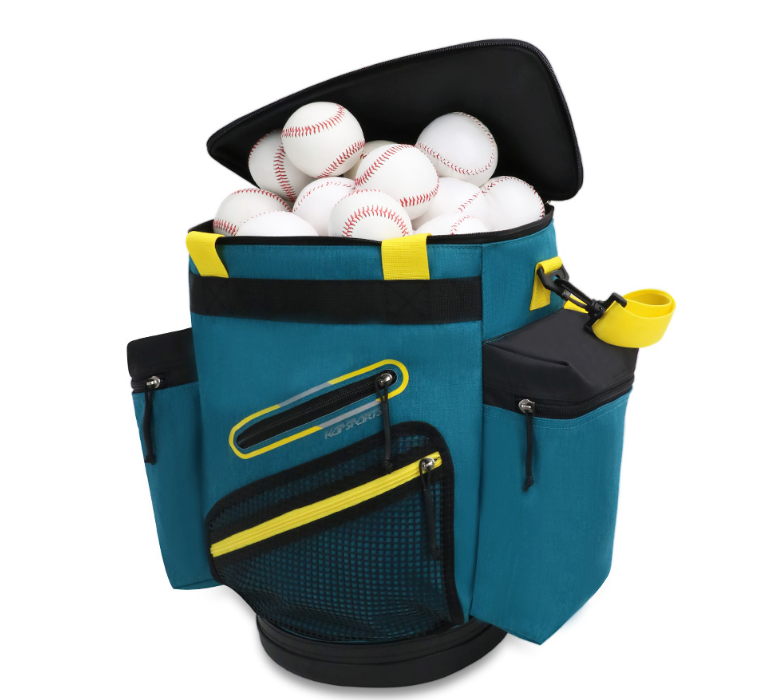
A loaded bag on one shoulder creates an asymmetric load. The spine leans away from the weight, the opposite hip hikes up, and the shoulder on the loaded side drops. Over a short walk this is minor. Repeated across practices and weekend tournaments, it can contribute to neck, lower back, and shoulder discomfort, particularly in younger players whose bodies are still developing. Research on backpack load carriage, including work summarized by the American Academy of Orthopaedic Surgeons, generally recommends keeping carried loads modest relative to body weight and distributing weight across both shoulders when carrying is unavoidable. A single strap over one shoulder is the least favorable version of that load.
Wheels are not a universal upgrade. On smooth concrete, airport floors, and paved walkways, a wheeled bag is clearly easier on the body. On loose gravel, sand, wet grass, or stairs, the wheels become a liability, and the bag still has to be lifted. A realistic view is that wheels help most of the way and the handle and lift points handle the rest. Players who travel by car to a nearby field may gain little. Players hauling gear through terminals, across large complexes, or between fields at a multi day event gain a lot.
| Travel scenario | Wheeled bag benefit | Main limitation |
|---|---|---|
| Airport terminal and parking garage | High | None significant |
| Paved complex walkways | High | Wheel wear over time |
| Loose gravel or sand | Low | Wheels sink, bag must be carried |
| Stairs and bleachers | Low to moderate | Lift handle and weight matter |
| Wet grass fields | Low | Wheels clog with mud and turf |
A wheeled bag only reduces strain when its rolling system works well. The wheel diameter matters, since small hard wheels catch on cracks and transmit vibration up the handle. A wider wheel with a slightly softer tread rolls more smoothly on uneven pavement. The telescoping handle needs a rigid frame, because a wobbly handle forces the wrist and forearm to correct constantly. The base panel carries the load, so it needs a reinforced plate or molded shell rather than a soft fabric bottom. Handle and wheel housing attachments take concentrated stress, which is why seam and hardware testing matters. ASTM D5034 for fabric strength and ASTM D1683 for seam strength are useful references when comparing construction.
At a regional tournament complex in the Midwest, a youth program tracked player reports of shoulder and back soreness across a three day event. Players using single strap bags reported noticeably more discomfort than those using wheeled bags, especially on the long walk from remote parking to the fields. The program did not change training or game schedules. It simply recommended wheeled bags for players carrying full tournament loads and added a lift handle check to its equipment list. Soreness reports dropped at the next event. The result is not a clinical trial, and other factors likely played a role, but it matches what most traveling teams already suspect.
Wheels add weight and complexity. A wheeled bag is heavier than a comparable carry bag before anything is packed, and wheel housings create corners where dirt collects. Repair options are also narrower, since a damaged wheel assembly is harder to replace than a strap. A buyer should check whether the wheel housing is replaceable, whether the base is reinforced, and whether the bag still has comfortable carry handles for the sections where rolling is impossible. For players who mostly drive to local fields, a well built carry bag may be the more practical choice. For players who travel often and carry heavy loads, the tradeoff usually favors wheels.
The right choice starts with an honest look at travel patterns. A player who flies to showcases, walks long parking lots, and hauls a full tournament load benefits from a wheeled design with a rigid handle, a reinforced base, and durable wheels. A player who drives ten minutes to a local field and carries a light bag may not. The decision is less about fashion and more about the actual route from car to dugout. Kopsports, the short name behind the site, supports this kind of practical selection with production lines making more than 6,000,000 bags a year, about 40% wheeled, plus skilled workers, roller equipment, and standardized testing before release. A wheeled baseball bag does not eliminate effort, but matched to real travel, it moves strain off the shoulder and onto the ground where it belongs.

 EN



 Hot News