A padel bag is often judged by zippers, straps, and how well it holds a water bottle. The racket inside is where heat does quieter damage. Padel rackets use a foam core, usually EVA or a blended cellular material, bonded to a face. That foam is viscoelastic. Heat does not just make it warm. Heat lowers stiffness and raises creep, so the core can take a compression set after hours in a hot car or a metal storage container. Once the foam loses rebound, the racket feels dull. Cracks can start at the edge or around holes. Cold is less dramatic but still matters. Repeated swings between hot and cool conditions can fatigue the bond lines. A thermal compartment in a padel bag is not a cooler. It is a buffer against the worst swings.
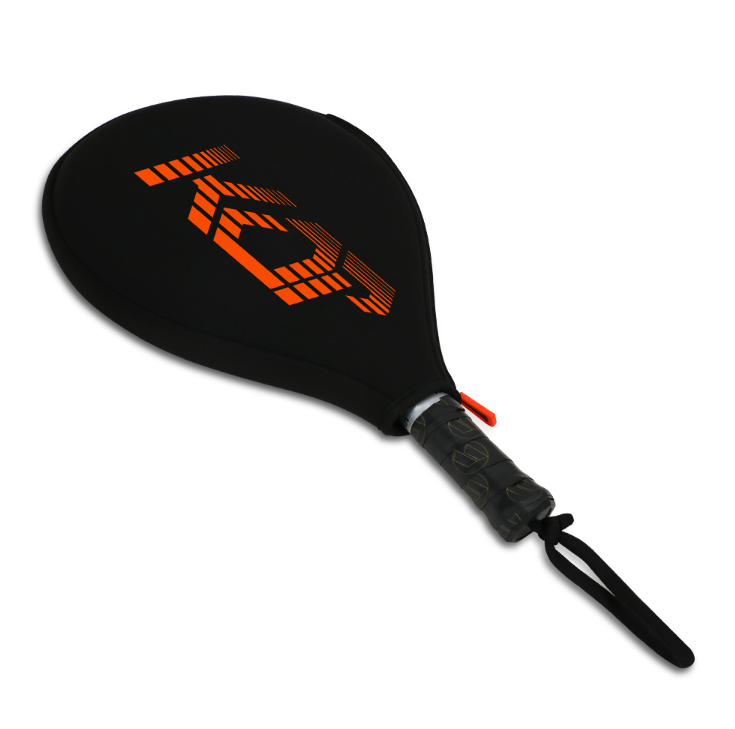
A useful thermal compartment works on three layers: reflective lining, closed-cell foam or felt padding, and a tight closure. The reflective layer cuts radiant heat from sun-loaded surfaces. The padding slows conductive heat from a trunk floor or a seat. The closure limits hot air exchange. A simple foil pocket with a loose zipper is mostly theater. A proper compartment has a defined gusset, a flap that overlaps the zipper, and enough volume to keep the racket away from the bag wall. The goal is not to hold ice for a match. The goal is to reduce peak temperature and slow the rate of change. That distinction matters. A bag that keeps a racket at 41 C for six hours is more useful than one that starts at 20 C and climbs to 55 C in ninety minutes.
During a summer club fit-out in Phoenix, a batch of rental rackets was stored in a steel shipping container while courts were being resurfaced. Surface temperature on the container wall hit 71 C by early afternoon. Rackets in ordinary nylon bags showed a soft, tacky face after six hours. The team moved the same model into bags with insulated racket pockets and placed them in the same container on the following day. Internal pocket temperature peaked around 43 C instead of 62 C. The rackets still felt warm, but the faces did not take a visible set. The case is not a lab study. It does show the practical gap between a pocket that is merely lined and one that is built with closure discipline and padding. The team also found that a dark bag left in direct sun gained more heat than a light bag in shade, which is obvious but easy to forget when bags are stacked near a court gate.
Insulation adds weight. A dense foam panel can add 180 to 350 grams depending on size. Bulk is another cost. A thermal pocket that is too thick makes the racket hard to slide in, and players stop using it. The better design uses a thinner closed-cell layer around the head and more padding near the edge, where impact and heat meet. Ventilation matters too. A sealed pocket can trap moisture from a wet grip or a towel. That moisture plus heat is bad for foam and worse for glue lines. Some designs add a small breathable panel away from the racket face. The tradeoff is honest: a thermal compartment slows heat gain, but it cannot beat a closed car in full sun for an entire afternoon. It buys time and reduces peak exposure. That is the realistic promise. A padel bag with a well-built pocket should feel like normal gear, not like a cooler with straps.
Foam response can be checked with standard methods. ASTM D3574 covers flexible cellular materials and includes compression force deflection and indentation tests. Those tests are not padel-specific, but they give a common language for hardness change and compression set. A bag maker can run a simple chamber test: put a racket in the pocket, hold the outside at a set temperature, and log the internal air and foam surface every 30 minutes. The table below comes from representative field checks, not a certified lab report. It is directionally useful because it compares the same racket model and the same exposure time.
| Storage scenario | Peak air temp near racket | Foam hardness change after 6 hours | Common result |
|---|---|---|---|
| Shaded club rack | 32 C | +2% | No visible change |
| Car trunk at midday | 58 C | +9% | Softer face, slower rebound |
| Steel container, direct sun | 68 C | +14% | Surface tack, compression set |
| Insulated pocket in trunk | 41 C | +4% | Stable feel, less creep |
A thermal pocket is only as good as the sewing and materials around it. A foil lining that wrinkles or delaminates leaves gaps. A zipper that snags gets left open. A padded panel that shifts in the shell creates thin spots. That is why production control matters more than a single spec sheet. KOP runs high-volume bag lines with more than 6,000,000 pieces a year, including a large share of wheeled bags, and each unit goes through standardized testing before release. Material durability, craft accuracy, and structural stability are checked under a strict quality control system. For a padel bag, that discipline shows up in small things: the pocket gusset stays square, the lining is bonded flat, and the closure lines up after repeated use. The result is not a magic cooler. It is a bag that gives foam a fair chance in real weather.

 EN



 Hot News