A sports bag rarely dies from a clean hole in the middle of a panel. It dies at the seam, the zipper tape, or the bottom corner where load concentrates. The fabric may still look decent while the stitch line has already started to slip. That gap between appearance and performance is why strict material testing matters. Testing is not a paperwork ritual before a sports bag leaves the factory. It is the only reliable way to know whether a fabric and its seam recipe can take tearing and abrasion together. A tough shell with the wrong needle, thread, or stitch density can fail faster than a lighter fabric built with the right seam engineering.
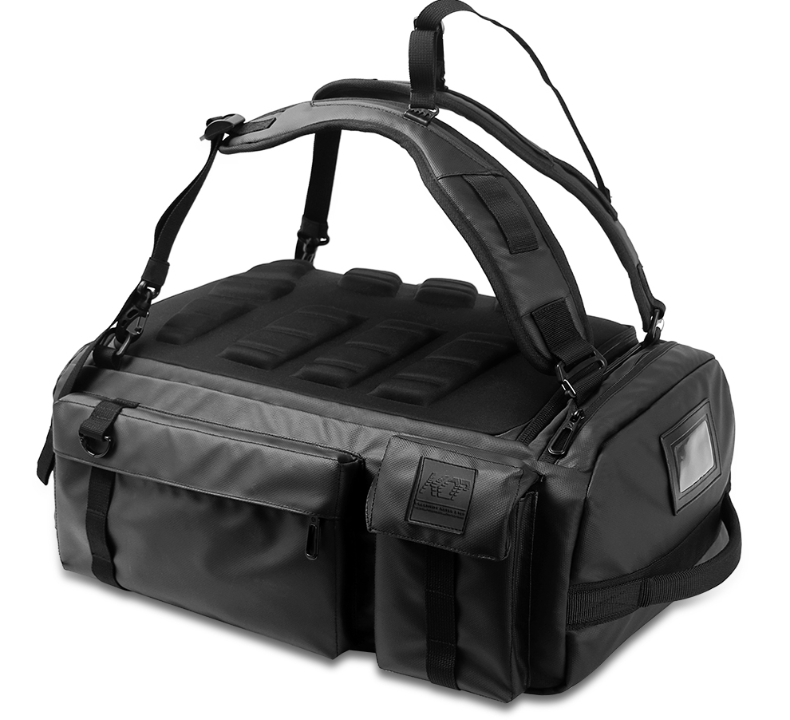
Tear strength and abrasion resistance are often treated as one number. They are not. Tear strength is about a cut or nick propagating under load. Abrasion resistance is about surface loss over repeated rubbing. A bag that slides across concrete needs abrasion resistance. A bag that gets snagged on a bench edge needs tear strength. A wheeled bag bottom panel needs both, plus flex fatigue at the housing. ASTM D5034 covers grab tensile strength of fabrics, ASTM D2261 covers tongue tear, and ASTM D4157 covers oscillatory abrasion. Those standards do not simulate every real bag, but they create a baseline that separates a serious material from a lookalike. The table below compares common test methods and what they actually catch.
| Test method | Standard reference | What it catches | Limitation for bag design |
|---|---|---|---|
| Grab tensile | ASTM D5034 | Peak load at a gripped section | Does not show seam slip after cycling |
| Tongue tear | ASTM D2261 | Tear propagation from a nick | Does not reflect abrasion at corners |
| Oscillatory abrasion | ASTM D4157 | Surface wear under rubbing | Does not test seam or coating adhesion |
| Coated fabric flex | ASTM D751 | Coating cracking under flex | Does not cover wheel housing vibration |
A useful testing flow starts before fabric reaches the cutting table. Incoming rolls should be checked against agreed specifications for weight, weave, coating, and tensile strength. Hardware gets checked for plating thickness and pull strength. Thread gets checked for tensile and elongation. Then the fabric and seam recipe are tested together. A seam slip test on a production-like sample tells more than a fabric data sheet alone. Before release, every single bag should go through a standardized testing process paired with a strict quality control system. That system needs uniform, predefined assessments for material durability, craft accuracy, and structural stability. The quality system oversees the whole procedure so one shift does not test differently from another. Without that oversight, a test result becomes a number without context.
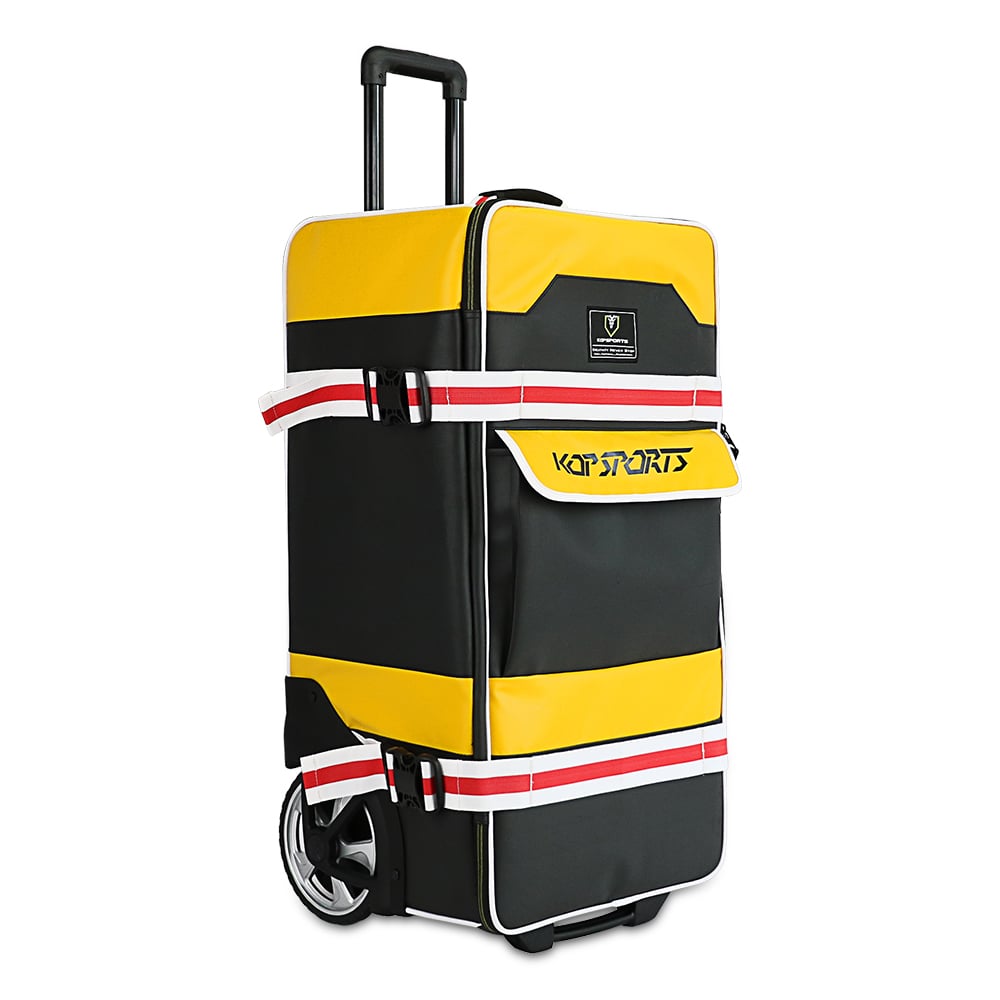
At a bag plant in southern China, a wheeled sports bag line moved its bottom panel from 600D polyester to 1000D nylon for better abrasion resistance. The first samples passed a flat-table abrasion check. After a loaded rolling test across a rough concrete yard, the coating on two bottom panels began to crack near the wheel housing. The nylon itself was not worn through. The coating had failed under repeated flex and grit. The line changed to a different coating adhesion recipe and added a small reinforcement patch at the housing contact point. Abrasion performance improved without increasing panel weight. That case is a reminder that a material test number is only useful when the test path matches the load path. A flat abrasion test did not catch the flex and grit combination at the wheel housing.
Test data is most useful when it is tied to a specific failure mode. A shoulder strap attachment needs pull strength and cycle testing. A zipper end needs lateral load and repeated cycling. A bottom panel needs abrasion, tear, and flex. A main shell needs tear strength and coating durability. The mistake is testing everything to the highest possible number. That approach adds weight, cost, and stiffness without solving the real failure. Honest limits matter. No test program can simulate every curb, tailgate, and overhead bin. A sports bag can be built to resist common tearing and abrasion modes, but it is not indestructible. The goal is a build where fabric, seam, and hardware are tested against the same load path the bag will actually see.
Consistency is the hard part. A single good test result on a sample bag means little if the next production run uses a different thread lot or a new operator on the seam. Kopsports runs a sports bag production line with thousands of skilled workers, annual output above six million pieces, and roughly forty percent wheeled bags. That scale supports standardized material testing and tight control over seam construction. For buyers comparing sports bag samples, the useful question is not just which fabric is listed. It is whether the supplier can show a repeatable test flow that catches seam slip, coating failure, and abrasion drift before the bags ship.

 EN



 Hot News