A sports bag can look tough on the outside and still waste time every morning. The problem is rarely the shell fabric. It is the inside. When shoes, a water bottle, a towel, and a mouthguard all share one open cavity, the bag becomes a pile with handles. Smart internal dividers change that experience. They turn a standard sports bag into something closer to a locker, with a place for each item and a clear path to reach it. The design work is not about adding pockets for the sake of pocket count. It is about separating loads, keeping clean gear away from dirty gear, and making the bag easy to pack when someone is in a hurry.
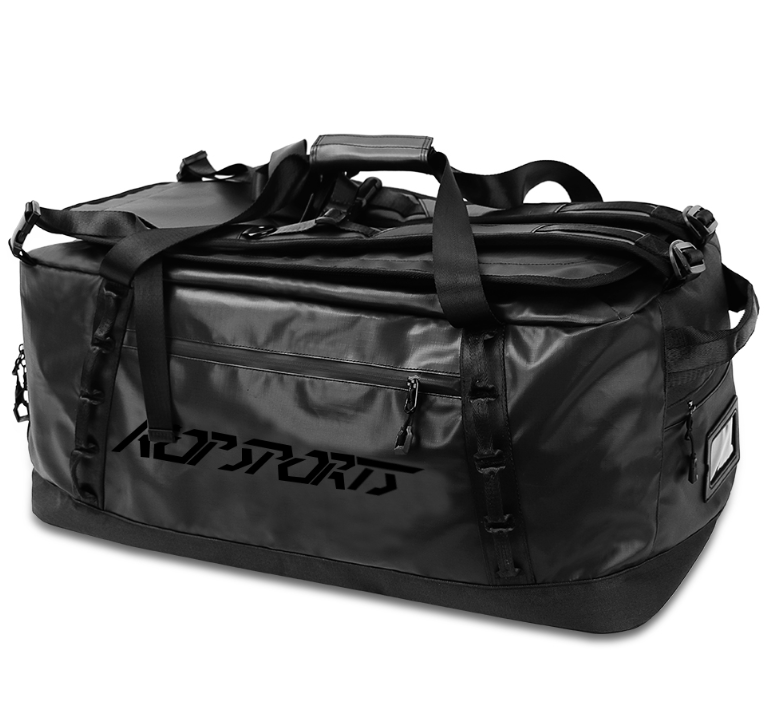
A divider that only looks neat is a decoration. A useful divider carries load and keeps it from shifting. A shoe compartment needs a bottom panel that can take repeated pressure. A wet pocket needs a barrier that does not wick moisture into dry clothes. A bottle sleeve needs a seam that can handle lateral pull. Material choice matters, but so does the seam. ASTM D5034 covers grab tensile strength of fabrics, and ASTM D751 covers coated fabrics. Those standards give a baseline for shell and liner materials. They do not prove a divider will survive a loaded bag. Stitch density, thread type, and bar tacks decide whether the panel stays flat or starts to grin. The table below compares common internal layouts using representative ranges, not a single pass or fail rule.
| Internal layout | Typical partition count | Access time under load | Cleanability | Added weight | Best fit |
|---|---|---|---|---|---|
| Open main cavity | 0 | Slow, items mix | Easy | Low | Light carry, short trips |
| Simple mesh pockets | 2 to 3 | Moderate | Moderate, mesh traps grit | Low to moderate | Small accessories |
| Stitched fabric panels | 4 to 5 | Fast for main items | Hard at seams | Moderate | Daily gym and team use |
| Adjustable divider system | 5 to 7 | Fast, configurable | Moderate, needs removable base | Moderate to high | Travel and mixed gear |
Most divider failures start at the bottom seam or the zipper end. A loaded shoe compartment pushes down and out. A wet pocket pulls on its tape. A padded sleeve rubs against a hard object. At a bag plant in southern China, a run of sports bags with stitched divider panels moved from 600D polyester to 1000D nylon for better abrasion resistance. The first samples looked clean on the table. After a loaded drop test, the bottom seam on two divider panels began to slip. The fabric was not the weak point. The sewing setup had stayed on the old recipe, so the needle size and stitch length were wrong for the heavier weave. The line moved to a smaller needle, bonded nylon thread, and a backstitch at the panel base. The failure rate dropped without adding a second layer of fabric. That case is a reminder that a divider is a structural part, not a sewing afterthought.
A practical layout does not need ten compartments. It needs zones that match how gear is actually used. A workable setup often includes:
A ventilated shoe zone at one end, with a wipeable liner.
A dry pocket for a phone, keys, and cards.
A wet pocket with a sealed or coated barrier.
A main cavity with one or two adjustable panels.
A reinforced base panel that keeps the bag from sagging.
Too many dividers create dead corners and make cleaning harder. Too few bring back the pile. The right count depends on bag size and carry style. A small carry bag may need three zones. A wheeled team bag may need five or six, plus a rigid base. Honest limits matter. No divider layout fixes a bag that is overloaded beyond its frame. The goal is order, not infinite capacity.
Before release, every single bag should go through a standardized testing process paired with a strict quality control system. For dividers, that means more than a visual check. A useful test flow covers material durability, craft accuracy, and structural stability. Loaded drop tests, zipper cycling, handle pull, and panel pull checks should use uniform, predefined assessments. The quality system needs to oversee the full procedure so one shift does not test differently from another. A divider that passes a flat-table inspection can still fail when a sports bag is packed for a tournament. Testing has to mirror the load path. If a shoe compartment carries the weight, the bottom seam and base panel should be the focus. If a wet pocket carries a bottle, the zipper tape and barrier seam should be the focus. That approach is slower than a quick look, but it catches drift before a production run turns into returns.
Internal dividers add weight, labor, and material cost. A stitched panel needs cutting, seam allowance, reinforcement, and sometimes a binding tape. An adjustable system adds hook-and-loop or zipper tracks, plus a removable base. Those parts are small, but they add assembly time and quality checkpoints. A buyer comparing samples should ask where the divider attaches, how the base is reinforced, and whether the panel can be removed for cleaning. A bag with a smart layout can feel like an organized locker, but it is not a hard case. Soft panels still flex, and mesh still traps dust. The tradeoff is real. Kopsports runs a sports bag production line with thousands of skilled workers, annual output above six million pieces, and roughly forty percent wheeled bags. That scale supports standardized testing and tight control over divider construction, which matters when a simple panel has to survive years of daily packing.

 EN



 Hot News