A velvet-lined pocket inside a pickleball bag feels like a thoughtful touch. The soft texture suggests protection, and it does reduce direct abrasion compared with a bare nylon pocket. But velvet is not a magic barrier. Lenses still scratch when keys, a phone, or a ball tube press against them through the lining. Frames still bend when the pocket is squeezed between a paddle and a water bottle. The lining helps, but it is only one part of the protection system.
The real risk comes from three sources: hard objects sharing the pocket, pressure from adjacent gear, and movement during carry. Velvet addresses none of those on its own. A pocket that is soft but loose lets eyewear slide against whatever else is inside. A pocket that is soft but thin transmits pressure from the bag's contents. Protecting eyewear properly requires thinking about what surrounds the pocket, not just what lines it.
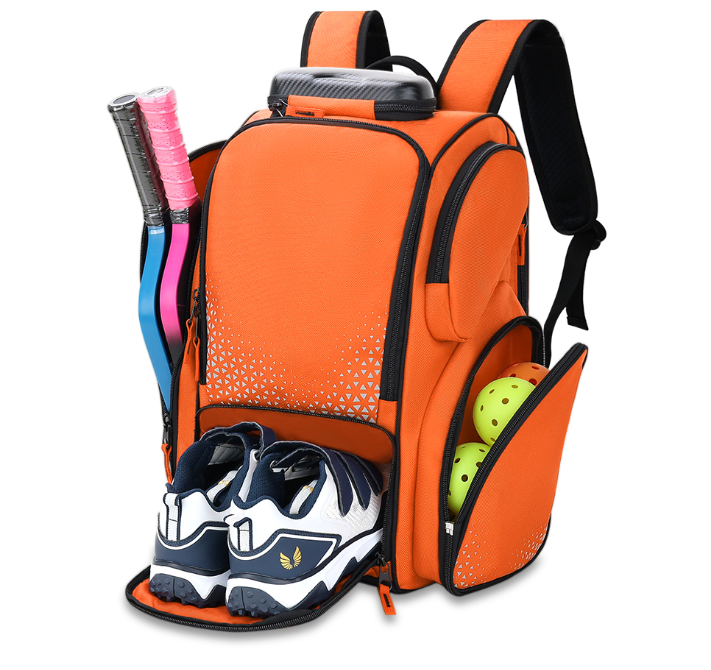
Eyewear lenses are vulnerable to two main damage modes. The first is abrasion from contact with harder materials. A key edge, a zipper pull, or a phone corner can leave a permanent scratch even through a soft lining if the lining is thin or the object is pressed firmly. The second is pressure deformation. Frames, especially plastic or thin metal, can bend when a heavy bag compresses the pocket against a hard object.
Dust and grit make abrasion worse. Court surfaces and outdoor courts leave fine particles on hands and gear, and those particles work into the pocket fabric. Once embedded, they act like sandpaper against a lens. A velvet lining that is not cleaned regularly can hold grit and become an abrasive surface itself. The protection strategy has to include isolation from hard objects and a way to keep the pocket clean.
Pocket location matters as much as lining. A pocket placed against a rigid back panel or a padded divider is less likely to be compressed than one in the middle of a crowded main compartment. A pocket on the inner side of a lid or near the top opening avoids contact with heavy gear at the bottom of the bag. A pocket with a foam backing behind the velvet adds a pressure buffer without much weight.
The table below compares common pocket designs against the protection they offer for eyewear.
| Pocket Design | Abrasion Protection | Pressure Protection | Isolation from Hard Objects | Main Limitation |
|---|---|---|---|---|
| Velvet lining only, no padding | Moderate | Low | Low | Grit and hard objects still contact lenses |
| Velvet lining with foam backing | Moderate to high | Moderate | Low | Foam adds bulk and stiffness |
| Velvet pocket with rigid outer shell | High | High | Moderate | Shell adds weight and reduces flexibility |
| Velvet pocket separated by a padded divider | High | Moderate to high | High | Divider takes up interior volume |
| Velvet pocket with a dedicated case loop | Very high | High | Very high | Requires the user to carry a case |
The pattern is clear. Velvet alone is a starting point. A foam backing or a rigid outer shell adds pressure protection. A padded divider or a separate case loop adds isolation. The strongest protection comes from combining a soft lining with a structural buffer and a dedicated place for the eyewear.
A pocket that opens accidentally during carry is worse than no pocket at all. Eyewear that falls out can hit a court surface or get crushed under the bag. A zipper closure with a protected pull is more secure than an open slip pocket. A flap with a magnetic or snap closure is faster to use but less secure under pressure.
The closure should also be easy to operate without forcing the eyewear against the pocket edge. A zipper that runs along the top of a soft pocket can drag the lining against the lenses as it opens and closes. A zipper placed slightly away from the pocket opening, or a flap that lifts clear of the eyewear, reduces that abrasion. Small design details like a soft zipper guard or a lining that extends past the zipper teeth make a measurable difference over time.
A pickleball club that hosts weekly leagues noticed a recurring complaint: players were scratching their glasses and sunglasses after storing them in the bag's velvet-lined pocket alongside keys and a phone. The pocket was soft but thin, and the lining had worn in spots where zipper pulls had rubbed. The club ordered replacement bags with a redesigned pocket that included a foam backing, a padded divider separating the pocket from the main compartment, and a soft zipper guard.
After a season of use, the club reported far fewer eyewear damage complaints. The redesign did not eliminate the need for a case, and players who used a hard case still had the best outcomes. But the padded pocket reduced the most common failure mode, which was pressure and abrasion from adjacent hard objects. That case shows why pocket design has to be evaluated as a system, not as a single lining material.
No pocket design can guarantee that eyewear will never be damaged. A heavy impact, a dropped bag, or a lens that is already stressed can still cause problems. What a well-designed pocket can do is reduce the most common risks: abrasion from hard objects, pressure from adjacent gear, and accidental opening during carry.
Players who wear prescription glasses daily should consider a dedicated hard case inside the pocket, because the pocket is a secondary layer of protection, not a substitute for a case. Players who use sunglasses occasionally may find a padded, isolated pocket sufficient. Buyers should check how the pocket is positioned, whether it has a foam or rigid backing, and how the closure works. A velvet lining is a nice signal of care, but it is the surrounding structure that determines whether eyewear actually stays safe.
Kopsports builds pocket structure into the bag design through a standardized testing process that checks material durability, craft accuracy, and structural stability before release, with annual output above six million bags and a strict quality control system. The company's production capacity and roller equipment bag facility help keep lining quality and pocket construction consistent across batches, which matters when eyewear protection depends on small details staying in place after repeated use.

 EN





 Hot News