 EN


How to pack a wheeled baseball bag for travel tournaments?
When an travel tournament has an early check-in, a long drive, and more than one game on the schedule, packing is part of preparation. A wheeled baseball bag can carry a substantial load, but a full bag is only useful when you can find what you need without emptying it in a parking lot. The goal is not to bring every item you own. It is to create a repeatable system that protects equipment, keeps essentials reachable, and makes the walk from car to field less awkward.
Whether you are packing for one player or helping organize team gear, start with the game sequence. Think about what is needed at arrival, during warmups, in the dugout, after the game, and at the hotel. That sequence gives each section of a wheeled baseball bag a job.
Start with a tournament inventory, not an empty bag
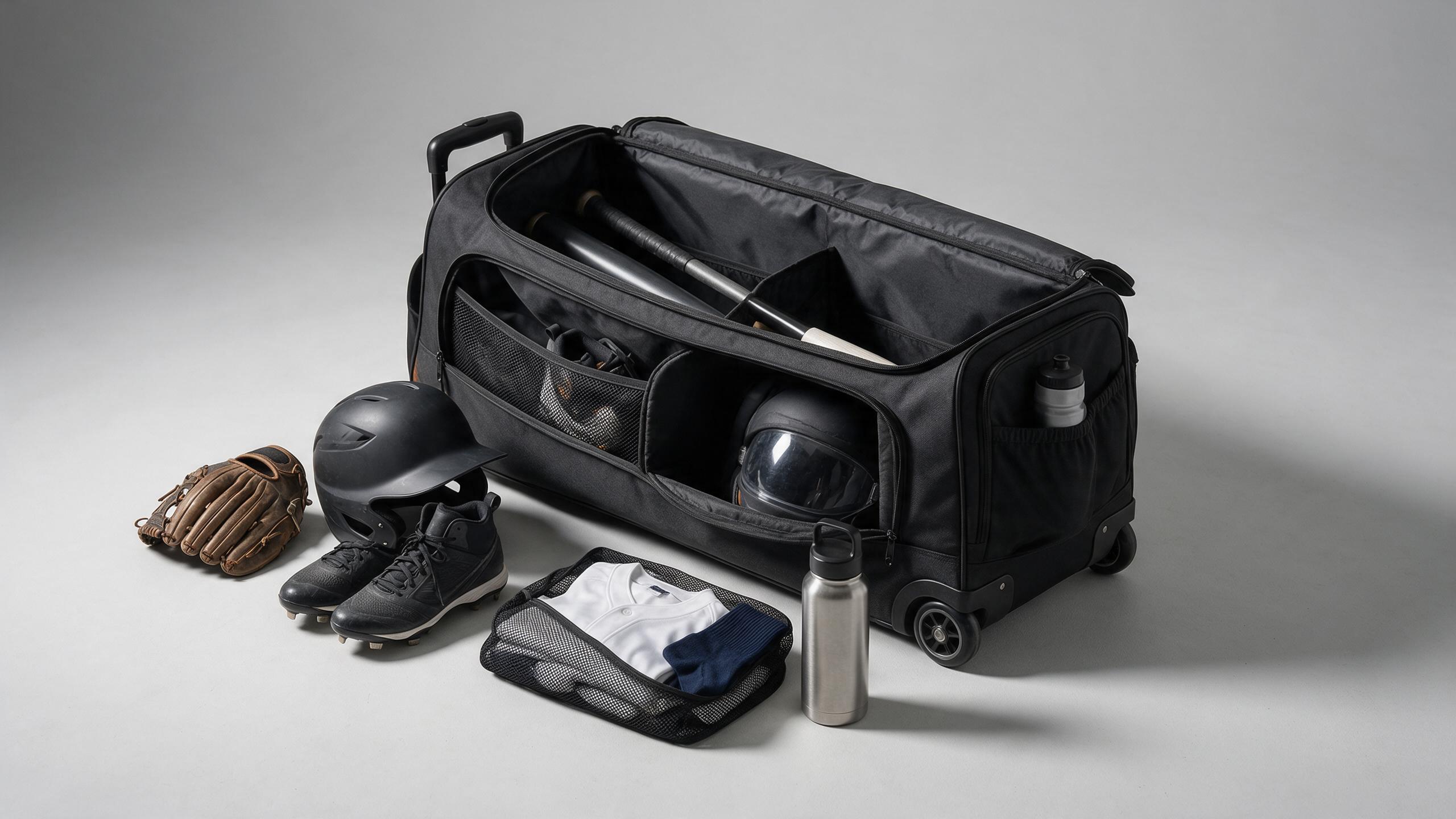
Lay equipment on the floor before it goes into the bag. A useful player list includes a glove, batting helmet, primary bat, backup bat if the player uses one, cleats, belt, uniform pieces, socks, batting gloves, water bottle, snack, sunscreen, and a small towel. Catchers or pitchers may need additional equipment, so their list should be checked separately. A travel-baseball packing checklist often includes a primary bat, backup bat, fielding glove, and helmet; use your league and coach requirements as the final authority.
Separate the pile into three groups:
- Game-critical gear: glove, helmet, bats, cleats, uniform, protective equipment, and any required medication.
- Between-game items: water, snacks, towel, spare shirt, rain layer, and charger.
- Recovery and reset items: plastic bag for wet clothes, wipes, deodorizer, and a simple laundry pouch.
This quick sort prevents small items from disappearing under heavier equipment. It also shows whether your baseball bag is being asked to carry personal gear, shared team supplies, or both.
Pack heavy gear low and close to the wheel end
A wheeled bag moves more predictably when the densest items sit low, near the wheel end. Place cleats in a ventilated shoe compartment or a washable shoe pouch first. If the bag has a large lower compartment, use it for shoes, a helmet, and other bulky protective equipment. Keep hard edges from pressing directly against sunglasses, electronics, or a phone.
Next, nest flexible items around the heavier core. Rolled socks, a spare shirt, and a light rain layer can fill open spaces and reduce shifting. Avoid stacking every heavy item at the handle end: the bag may tip when it is pulled over curbs or through a crowded complex. Close the main compartment, stand the bag upright, and give it a gentle pull test before adding smaller items.
Give each pocket one purpose
The advantage of a wheeled baseball bag is not just capacity. Compartments can reduce the pregame search. Use the pockets in the same way every weekend so your hands learn where to reach.
| Bag zone | What to pack | Why it belongs there |
|---|---|---|
| Bat sleeves or side channels | Primary bat and backup bat | Keeps long items stable and separate from loose gear. |
| Top quick-access pocket | Lineup card, keys, phone, small first-aid basics, sunscreen | These items are needed before or between innings. |
| Front organizer pocket | Batting gloves, wristbands, tape, hair ties, scorebook pencil | Small pieces stay visible instead of falling to the bottom. |
| Large main compartment | Helmet, glove, uniforms, extra layers | Protects core gear while leaving room for a simple packing order. |
| Shoe or wet-gear area | Cleats, damp towel, used socks | Contains dirt and moisture separate from clean clothing. |
If your baseball bag has no dedicated shoe compartment, use a washable zip pouch. Do not put muddy cleats next to the next day’s uniform and hope they stay clean.
Keep the first 15 minutes of the day accessible
At arrival, players commonly need their glove, helmet, bats, cleats, water, and a uniform layer before anything else. Build the top layer of the bag around that first window. Put the glove in a protected, easy-to-reach position rather than beneath shoes. Put the uniform for the first game in its own labeled pouch; it avoids a rushed search when the tournament changes field assignments.
A small clear pouch works well for batting gloves, tape, sunscreen, and a spare pair of laces. It is not about making the bag look pristine. It makes a missing item obvious while there is still time to solve the problem. For younger players, attach a simple name tag to the bag and label removable pouches with the player’s initials.
Plan for weather, food, and long gaps
Travel tournaments often mean waiting between games. Check the forecast and tournament rules before loading extras. A compact rain shell, cap, dry socks, and a towel can be more practical than several bulky changes of clothing. Use a separate insulated cooler for perishable food rather than crowding it into the baseball bag; reserve the bag for equipment and shelf-stable snacks that will not leak.
Keep a refillable water bottle in an exterior holder when the bag design allows it. If it must go inside, ensure the cap is secure and place it upright in a separate sleeve. Avoid packing loose drinks beside electronics, scorebooks, or clean uniforms.
Use a two-minute post-game reset
The final packing step happens after the game, not the night before. Before returning to the car, take two minutes to separate wet clothing, brush loose dirt from cleats, and put the glove back in its usual protected spot. Empty food wrappers and check that bats and the helmet are present. If another game is scheduled the same day, replenish water and snacks before leaving the complex.
At the hotel or at home, open the bag enough to air out damp gear. Remove wet clothes and towels, then repack the next uniform once it is dry and ready. This small reset keeps odors and moisture from taking over a wheeled baseball bag during a multi-day weekend.
Practice the baseball bag routine before tournament day
Use a short rehearsal at home to make the packing system automatic. Set the empty baseball bag upright, then name each zone as you load it: the baseball bag wheel end holds cleats; the baseball bag main area holds the helmet and uniform pouch; the baseball bag top pocket holds essentials needed at check-in. This simple language helps a player or parent notice when an item lands in the wrong place.
- Open the baseball bag and check the glove position before adding any other item.
- Load cleats low in the baseball bag, then close the shoe area.
- Place the helmet in the baseball bag where it will not press on small gear.
- Put bats in the baseball bag sleeves before filling the center compartment.
- Keep the first-game uniform in the baseball bag within easy reach.
- Use the baseball bag organizer pocket for batting gloves and tape.
- Check that water is secure beside, not loose inside, the baseball bag.
- Roll the baseball bag after loading to check balance.
For a two-day event, repeat the routine after game one. Remove wet gear from the baseball bag, air it out, and place the next uniform in the same baseball bag location. Before departure, use the same quick check: glove, helmet, bats, cleats, uniform, and water. A consistent baseball bag routine reduces last-minute searches without making the packing process complicated.
A final loading check before you leave
Use the same short check every time: glove, helmet, bats, cleats, uniform, water, and required protective gear. Then pull the handle, roll the bag across a hard surface, and confirm that zippers are closed and the load does not tip. If the bag feels unstable, move the heaviest item lower or closer to the wheel end.
A well-packed baseball bag supports calm arrivals and faster transitions, even when the schedule changes. Build the system around your player’s gear and tournament routine, keep the high-priority items accessible, and reset the bag after every game. Once the locations are consistent, packing for an travel weekend becomes a quick habit rather than a last-minute scramble.


 Hot News