A sports backpack with thick straps and a padded back panel feels reassuring in the store. Load it badly and the spine still pays. The real driver of back strain is not padding depth. It is where the center of mass sits relative to the body and how far it hangs from the spine.
Think of the torso as a lever. A heavy load placed low and far from the back creates a longer moment arm, and the lower back muscles have to work harder to keep the trunk upright. Move that same load up and close to the spine, and the moment arm shortens. Research on backpack loading has shown that peak lumbar forces can rise substantially when load placement shifts away from the body, even at the same total weight. The bag is not the problem. The packing geometry is.
That is why two people carrying the same 20-pound load can feel very different levels of fatigue. One has a tight, high, close load. The other has a sagging pack with a kettlebell at the bottom.
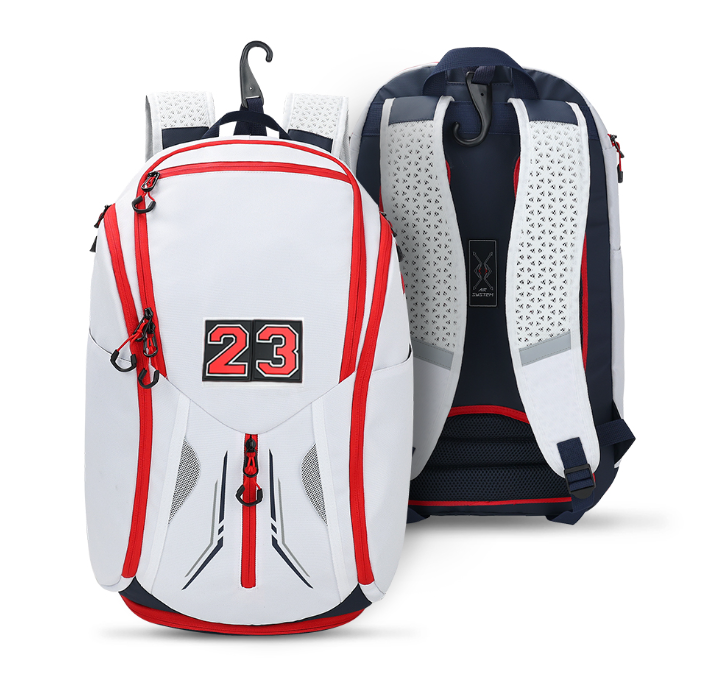
Before stuffing anything into a sports backpack, sketch a quick zone plan. The idea is to keep the heaviest items centered between the shoulder blades and pressed toward the back panel, not dangling at the lumbar curve.
A practical three-zone layout looks like this:
Heavy zone: water bottles, tools, dense shoes, or a laptop, placed against the back panel at mid-to-upper back height.
Medium zone: clothing, towels, and mid-weight gear, packed around and above the heavy core.
Light zone: snacks, a cap, and soft layers, filling the outer pockets and the very top.
The top of the pack should not be the heaviest point, because a high load that sits far behind the shoulders can pull the trunk into extension and strain the neck. The bottom should not be the heaviest point either, because a low load tugs at the lumbar spine and encourages a forward lean.
| Packing layout | Center of mass height | Approx. lumbar moment | Subjective feel |
|---|---|---|---|
| Heavy item at bottom, far from back | Low, posterior | High | Bag sags, shoulders round forward |
| Heavy item mid-back, close to panel | Mid, close | Moderate | Stable, easier breathing |
| Heavy item top, far from back | High, posterior | Moderate to high | Pulls trunk backward, neck tires |
The numbers are illustrative, but the pattern is consistent. Mid-back placement close to the spine is the most forgiving position for most daily carries.
During a fall equipment handoff at a high school athletic program, a trainer noticed a cluster of athletes complaining about lower back tightness after the morning commute. The packs were identical models with the same stated capacity. The difference was packing habit. Several athletes had loaded a heavy pair of cleats and a full water bottle at the very bottom, then stuffed soft gear on top. The pack hung low, the base swung out, and the lower back had to fight the load with every step.
A simple change was tested over two weeks. Heavy items went against the back panel at mid-back height, straps were shortened so the pack sat higher, and the bottom was reserved for light layers. Reports of tightness dropped noticeably, though not to zero. The lesson is honest: packing changes help, but they do not erase poor fitness, long carries, or an overloaded bag.
Packing is only half the job. A well-packed sports backpack that hangs loose still swings and pulls. The straps should be snug enough to keep the pack against the back without cutting circulation. The sternum belt, often ignored, is the quiet hero here. It stops the shoulder straps from splaying outward and keeps the load from swaying side to side.
A few fit checks worth doing before a long carry:
The pack sits high enough that the bottom rests near the top of the hips, not below the belt line.
Shoulder straps wrap around the torso without a gap at the collarbone.
The sternum belt sits across the chest, not at the throat.
The load does not shift when the torso twists.
Load lifters, the small straps at the top of the shoulder harness, can pull the pack closer to the upper back when adjusted correctly. Many users never touch them. On a heavy carry, those few inches of adjustment change how much work the lower back does.
Good packing geometry needs a bag that holds its shape. A floppy back panel lets the load sag into a hammock shape, which drags the center of mass down and away from the spine. A structured back panel, a firm base, and a waist belt that transfers some load to the hips all help.
Fabric and stitching matter here too. A 600D polyester shell with reinforced bar tacks at strap anchors will tolerate repeated heavy loads better than thin webbing sewn with single rows. Zippers on a heavy compartment should be sized for the load and backed by a storm flap or a reinforced tape. None of these features make a bag magical, but they keep the load map intact after weeks of use.
The limit is real. No strap design turns a 40-pound pack into a comfortable daily carry for a smaller frame. Lighter loads and shorter carries remain the most reliable spine protection.
Buyers evaluating a sports backpack for load-bearing use should ask how the bag is tested, not just how it looks. Before release, a standardized testing process paired with a strict quality control system should cover material durability, craft accuracy, and structural stability. For load-bearing packs, that can include static load tests on strap anchors, seam strength checks, and cycle tests on zippers and buckles.
Industry references help frame expectations. ASTM D5034 covers grab tensile strength of textile fabrics, and ASTM D4169 outlines distribution cycle testing for shipping containers and systems. These standards do not promise comfort, but they give buyers a shared baseline for durability claims.
KOP Sports brings relevant scale to this category. Annual output exceeds 6,000,000 bags, with about 40% wheeled. The company operates a specialized roller equipment bag facility, skilled production lines, and a standardized testing process before every single bag is released. For brands sourcing load-bearing packs, that combination of capacity and process control supports consistent packing performance across production runs.

 EN





 Hot News