A straight strap cuts across the shoulder at a fixed angle. When a sports backpack is loaded, the strap line does not match the slope of the trapezius. The contact area shrinks to a narrow band, and pressure concentrates there. That is why a bag can feel fine when empty and painful after a walk across campus. The shoulder is not a flat shelf. It slopes, curves, and changes shape as the arm swings. A straight strap ignores that geometry. The fix is not simply more foam. It is a strap line that follows the body, so the load has more surface to spread across.
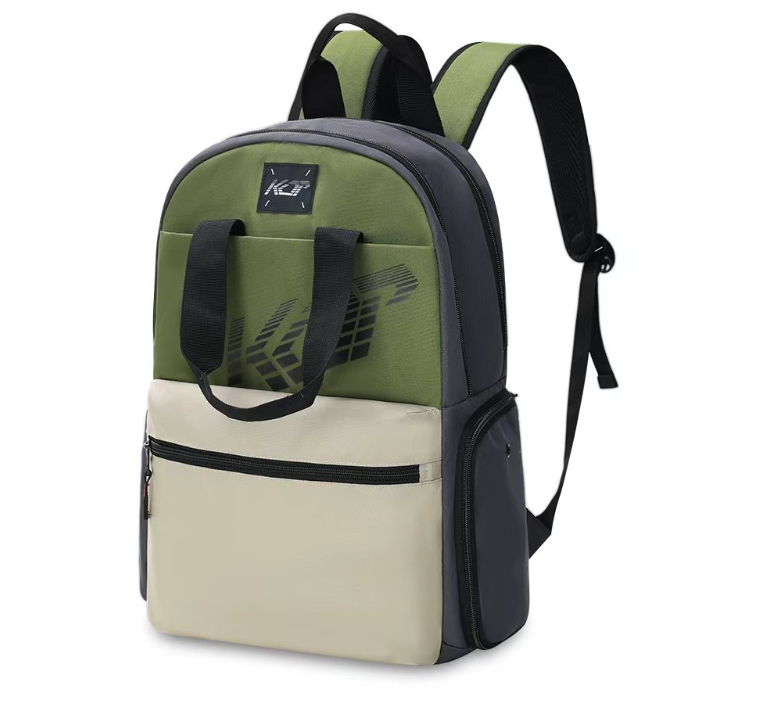
An S-curve strap is shaped to track the shoulder from the neck side down toward the chest. The upper curve clears the side of the neck, and the lower curve wraps toward the front of the shoulder. That shape keeps the strap from riding into the neck or sliding off the outer edge. It also keeps the load centered over a broader part of the shoulder. The curve is not decorative. It changes the angle at which the strap meets the body, and that angle decides whether the load pulls straight down or cuts inward. A well-shaped curve lets the strap sit flat instead of digging in at one edge. The result is less shifting, less edge pressure, and a more stable carry.
Weight distribution on a shoulder strap comes down to two variables. The first is contact area. A wider, flatter contact patch lowers peak pressure. The second is angle. A strap that meets the shoulder at a tangent spreads force along the surface instead of pushing into it. An S-curve improves both by matching the strap path to the shoulder contour. This is why two bags with the same total weight can feel very different. The load is the same, but the pressure is not. Pressure mapping is a common way to compare designs. Sensors record peak pressure and contact area, and the difference between a straight strap and a curved one often shows up at the inner edge near the neck. A curved strap can reduce that hot spot without adding much thickness.
| Strap design | Contact area on shoulder | Peak pressure location | Load stability during walk | Typical comfort result |
|---|---|---|---|---|
| Straight strap, narrow pad | Small | Inner edge near neck | Shifts with arm swing | Early hot spot and edge pressure |
| Straight strap, wide pad | Medium | Center of strap | Moderate shifting | Better, but edge pressure remains |
| S-curve with medium pad | Large | Spread across shoulder | Stays centered | Balanced pressure, less shifting |
| S-curve with wide pad and firm foam | Largest | Distributed broadly | Stable under heavy load | Strong choice for daily carry |
A campus recreation team ran a simple comparison during a fall semester. Two groups of staff carried sports backpacks loaded with the same weight for a fixed route across campus. One group used bags with straight straps and soft padding. The other used bags with S-curve straps and medium-density foam. Pressure mapping pads recorded contact pressure at the shoulder. The straight strap group showed a concentrated peak near the inner edge, and several participants reported adjusting the strap repeatedly. The S-curve group showed a broader contact area and fewer adjustments. The study was small and not a formal lab trial, so the results should be read as directional. Still, the pattern matched what the staff felt. The curved strap did not make the bag lighter. It made the same load easier to carry because the pressure was spread out.
An S-curve is only useful if the rest of the strap supports it. Foam density matters because soft foam compresses and lets the curve collapse against the shoulder. Medium-density foam holds the shape and keeps the contact patch open. Width matters because a narrow strap concentrates force even when the curve is right. Stitch placement matters because a seam that runs through the padding can create a hard ridge along the shoulder. Reinforcement at the anchor point matters because a curved strap pulls at an angle, and a weak anchor will distort the curve over time. These details work as a system. A good curve with poor foam or a bad seam will not deliver the comfort the shape promises.
Strap geometry is easy to get right on a sample and hard to keep right in production. Curve shape, foam density, seam allowance, and anchor placement all need to hold steady across units. Standardized testing helps. Material durability checks can reference ASTM D5034 for fabric breaking strength, and seam behavior can be compared against ASTM D1683 for seam slippage. Those standards do not measure comfort directly, but they support the structural side of a strap that is meant to carry load. The comfort side comes from consistent geometry and assembly. Kopsports supports that consistency through high-volume sports backpack production, dedicated wheeled bag lines, and standardized testing before release. An S-curve strap in a sports backpack distributes weight evenly only when every unit is built to the same shape and tolerance, and that is where repeatable manufacturing earns its keep.

 EN



 Hot News