A basketball bag has a simple job until shoes enter the picture. A size 7 ball measures about 9.4 inches across, and a pair of oversized court shoes can run 13 to 14 inches long and 5 to 6 inches tall when stacked. Put both in one main compartment and the bag becomes a puzzle with a zipper. A dedicated ball pocket solves a volume allocation problem, not just a convenience problem. The ball gets a fixed home, usually an external rounded panel or an end-cap compartment, so the main cavity keeps a cleaner rectangular shape for shoes, towel, bottle, and tape. Soft luggage loses usable volume when a round object pushes fabric into corners. Moving the ball out of the main cavity frees interior length and height for shoes, and it keeps court grit away from clean gear.
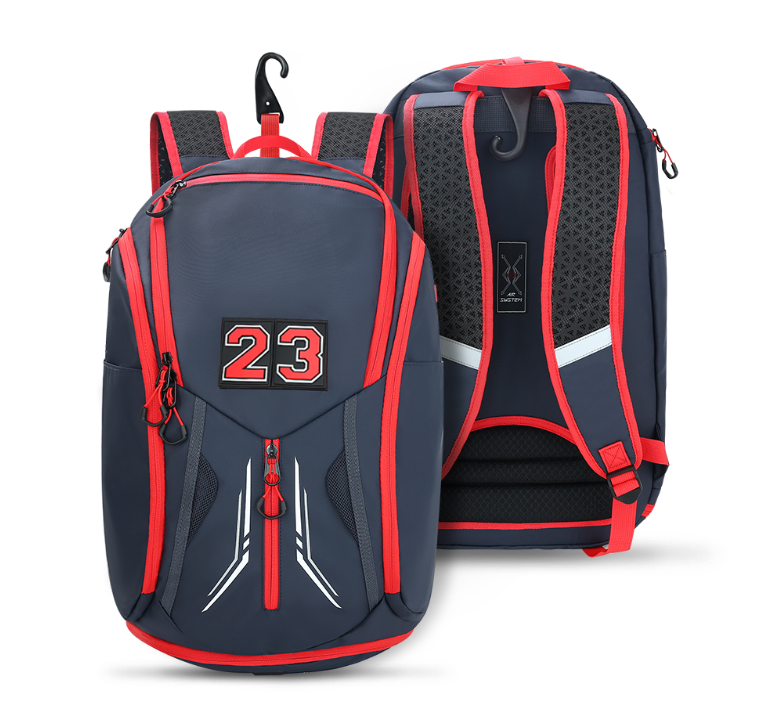
Basketball size 7 circumference is 29.5 inches, which gives a diameter near 9.4 inches. Inflated weight sits around 20 to 22 ounces. Oversized shoes, say US 14 to 16, often need a 13.5 inch by 9.5 inch footprint per pair, plus height for a high collar. A main compartment that is 18 inches long can hold shoes, but a loose ball eats 9 to 10 inches of that length and rolls into the shoe zone. A dedicated pocket works best when it has a rigid or semi-rigid back panel, a curved zipper path, and a base that carries the ball's weight without pulling on the main zipper. External pockets add bulk, and a poorly placed one can make the bag tip or snag in a locker. Good pattern design keeps the pocket close to the bag body and reinforces the attachment line.
| Layout choice | Interior length kept for shoes | Ball access | Main compartment clutter | Main tradeoff |
|---|---|---|---|---|
| Ball loose in main cavity | None, ball rolls into shoe space | Slow and awkward | High | Cheap and simple |
| Fixed internal sleeve | About 2 to 3 inches | Medium | Medium | Sleeve can crush and trap dirt |
| External round pocket | About 4 to 6 inches | Fast | Low | Adds exterior bulk |
| End-cap ball compartment | About 3 to 5 inches | Fast | Low | Uses up end pocket space |
A ball pocket is not free volume. It adds material, labor, and exterior bulk, so the pattern has to earn its place. The attachment seam takes repeated load from a 20 to 22 ounce ball, especially when the bag is set down or swung by a handle. A reinforced bar tack at each end of the pocket zipper is basic, but it is often the first detail to disappear when a factory chases a lower price. Separate lining helps keep mud and dust out of the main cavity. A drain grommet can help in wet weather. A curved opening needs a flexible coil zipper or a well-set molded zipper, plus a guard that keeps fabric out of the teeth. ASTM D5034 covers fabric breaking strength, and ASTM D1683 addresses seam slippage. Those standards do not guarantee a good pocket, but they give a buyer a common language for comparing fabric and seam performance before a sample is approved. A pocket that carries a ball against a zipper tape should be checked at the seam and at the attachment points, not just at the main body fabric.
During a spring league equipment audit in a humid southern gym, a coach compared two duffel-style bags on a locker room bench. One had a loose ball in the main cavity. The other had an external ball pocket. Both carried a size 15 shoe pair, a towel, a bottle, and tape. The loose-ball bag required diagonal loading, and the shoe pair pressed against the main zipper. The bag with the separate pocket let the shoes sit flat, and the ball stayed out of the clean gear zone. The audit also found a downside. The external pocket made the second bag wider at the base, so it fit a crowded bench less neatly. That tradeoff is real. A ball pocket helps most when the bag is designed around the shoe volume, not when a pocket is added to an existing pattern without adjusting the base.
A standardized testing process matters because a ball pocket is a stress concentrator. Material durability, craft accuracy, and structural stability all need a uniform check before release. A useful test flow includes seam pull, zipper reciprocation, handle drop, and a loaded shape check with a ball and a shoe pair in place. The loaded shape check is often skipped, yet it catches the problem that matters most to a player: whether the bag still sits flat when both items are packed. A strict quality control system should also track the attachment seam and the pocket lining, since those areas are hard to inspect after assembly. Factories with a high-volume sports bag line can run these checks in batches, but the sample plan has to be fixed, not improvised.
A dedicated ball pocket is a strong fit for players who carry oversized shoes, coaches who move gear between gyms, and wheeled bags that need a stable base. It is less useful for a small drawstring bag, a minimal gym sack, or a player who already carries the ball in a separate tote. The pocket also adds cost and bulk, and on a narrow bag it can make the load feel wider than expected. A ball pocket bolted onto a generic duffel can create a new problem while solving an old one.
Kopsports, the short name used by this sports bag manufacturer, builds sports bags at a scale that supports this kind of pattern work. Annual output runs above six million bags, with roughly 40 percent wheeled bags. The production line uses thousands of skilled workers and a specialized roller equipment bag facility, and every bag goes through a standardized testing process with strict quality control before release. That mix of capacity, materials testing, and process discipline is what makes a small design detail like a ball pocket worth getting right.

 EN



 Hot News